Healthy strides









China aims to transform medicine through big data, with goal of providing smart care for everybody
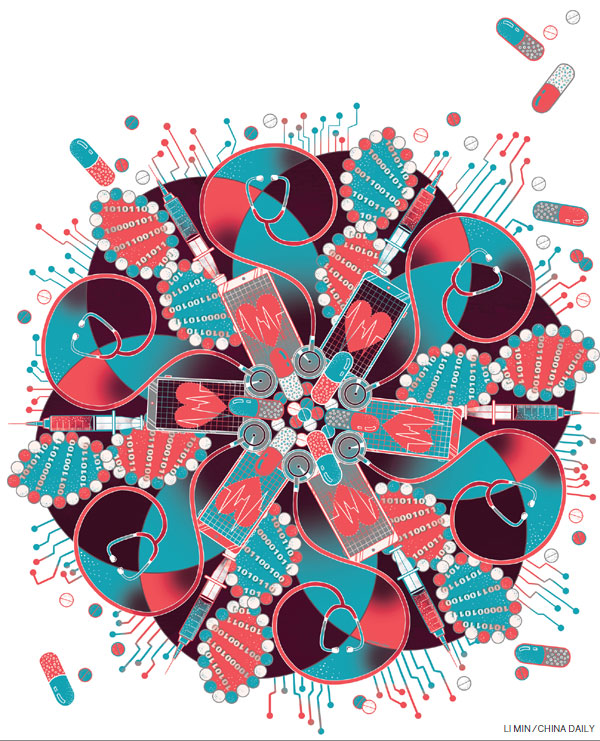
Rapid advances in an array of technologies are coming together to enable a tipping point that will fundamentally change medical capabilities over the next decade. But experts say changes in healthcare systems are needed to provide the benefits of these advances to the whole population.
Genomics, the study of the impact of genes on health, is moving quickly because new big data analytical techniques and databases are allowing scientists to explore complicated relations among hundreds or thousands of genes. Pharmaceutical companies are working on "precision medicines" that can target cancers in an individual. Artificial intelligence routines, developed through machine learning, can provide more accurate diagnoses than most physicians.
A key concern about smart health is whether it will be cost-effective and affordable for ordinary people. Developing precision cancer drugs especially designed for a patient's genome now requires highly skilled scientists and technicians and is expensive - maybe too expensive to be widely used.
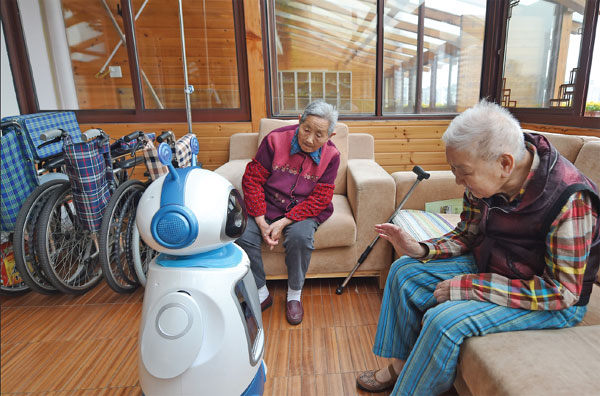
On the other hand, some smart health technologies may both save money and improve treatment. For example, wearable body sensors combined with artificial intelligence routines may lead to cheaper and more effective treatment of diabetes. Artificial intelligence programs may allow all doctors, including family doctors, to make better diagnoses. Telemedicine makes treatment easier and more convenient. Robots may be able to help take care of handicapped and elderly people.
Dong Chaohui, vice-director of the National Institute for Social Security of the Ministry of Human Resources and Social Security, says the ministry is "already thinking about including precision medical drugs and genetic tests in basic coverage. The concern is that genetic tests are still expensive. If we use this technology, it should be available to everybody."
Similarly, Jay Siegel, dean of the Health Science Platform at Tianjin University, emphasizes the need to prioritize expenditures on healthcare. "The question that remains is how broadly the benefits of smart health will be distributed. Right now, it is in the research labs, it has not had a major effect on public health, it has not even been launched in any major public health sector. Certainly the use of genomics to plan personalized medicine has an enormous push in China and will have clinical applications relatively shortly, but they are going to be high-cost. We should celebrate that there will be some people who have access to frontier treatments.
"But a universal healthcare policy still has to be cost-based if it wants to achieve the vision of making development people-centered and balanced," Siegel says.
Applying big data to health
In June 2016, China announced a 60 billion yuan ($9.05 billion; 7.81 billion euros; £6.89 billion) precision medicine research and investment program - by far the largest such program in the world. Guidelines issued by government agencies, including the National Health and Family Planning Commission, say that a big data system including a unified and interconnected public health information platform should be created by 2020. The State Council, China's Cabinet, also issued guidelines that encourage a greater development role for "socially innovative forces", such as startups and other internet-based healthcare companies.
"The initiative won't just help improve related public health services, but will also play a big role in economic and social development," says Jin Xiaotao, vice-minister of the National Health and Family Planning Commission.
Chinese companies and researchers are leading the world in some types of smart health technology. The Beijing Genome Institute, iCarbonX and WuXi NextCODE are among the leaders in genomics and data analysis.
Siegel sees collecting, analyzing and applying data flows as the key to transforming medicine.
"Think of all the ways that you could collect data," he says. "Body sensors, genotyping, clinical trials. It all goes into this huge well of information. The question is how do you distill an essence out of the pool and to what end? There are various AI methods, and statistical methods, and they serve different purposes. They can lead to personalized diagnoses, effective clinical trials, broad validation of efficacy, or analyses of post-launch efficacy, just to name a few. If you are monitoring a patient continuously, you can watch the effects of the drug on a much tighter regime. Therefore, you can control dosage and treatment regimes. So big data is at the center. "
China has a big comparative advantage in big data because it has the world's largest data sets. Even some individual big city hospitals might have thousands of beds, making very large clinical trials possible. But access and usability of that data can pose a problem. Much of the data is not standardized and there is no clear legal procedure to allow researchers or government officials to gain access to it.
Li Lanjuan, an academic with the Chinese Academy of Engineering, says China by 2020 would have the world's largest health data pool, covering more than 1.4 billion people. "Assessment of data helps authorities devise more targeted disease prevention and health management plans," she says.
Currently, each large hospital has its own data platform, making data sharing difficult, she says.
Siegel says: "China has huge leads in genomics research. In AI, they are both leading and trailing. They are leading because there is a lot of really sophisticated research going on, but limitations in internet and computer access are hindering the way this information is distributed."
Dong, of the Ministry of Human Resources and Social Security, says: "The main issue about how China can be the world leader in smart health is the data sharing mechanism. Every department has a lot of big data and perfect records. But no policy makes it easy to share the data in different departments. Every department has perfect data, but it is very hard to get data across to a different department."
He says the central government now requires doctors to provide data to the health insurance agency in order to get reimbursed. But the health insurance fund is collected by the local government, not the central government. "Each city has its own data standard. The central government just provides a guideline."
Luo Guoen, professor of economics and director of the China Center for Health Economics Research of the National School of Development at Peking University, says: "One big condition for the development of big data in China is legal regulation and legal procedures for the efficient use of big data. Right now, for example, we do have so many big data sets all over China from hospital claims data, hospital clinical data, insurance claims data, national insurance data and so forth. But we do not have good access to them. If we don't use it, it is a big waste. The most important thing is to create legal and transparent rules that give access to big data, while still protecting legitimate needs for privacy, confidentiality and secrecy."
Jin Xiaotao, the National Health and Family Planning Commission vice-minister, said in 2016: "By 2020, a big data industrial system of medical services should be created, with a national public health information platform and a development model that fits national conditions. (We will) establish a unified and interconnected public health information platform. By integrating medical big data resources, intellectual medical services will be provided to benefit people, and related laws and regulations will be released."
In April, the NHFPC announced the creation of China Healthcare Big Data Co, which is charged with promoting data sharing and supply-side structural reform in healthcare. It will build national and local industrial parks to use healthcare big data.
Luo of Peking University says: "A recent article suggested that around 40 percent of people with diabetes are not aware of the condition. For the people who are getting treatment, half of them did not reach the right level of control. That suggests that if we can use this IT-based technology to allow individuals to better manage their condition, working with their family doctors, we can better deal with this condition. These diseases don't have to be treated in big hospitals. The access to big hospitals is much more costly than IT-based management in community-based primary care settings. There is no way physicians working in big hospitals can take care of disease management."
Treating chronic-disease patients is very expensive for the healthcare system because the patients need lifelong care. It's hard because it requires big changes in patient behavior. Wearables such as watches with heart rate sensors and continuous glucose sensors that can be embedded under the skin, combined with AI routines that can give continuous real-time information to doctors and guidance to patients, have the potential to help solve this problem.
"I anticipate that within the next three to five years, you will see these things begin to roll out, particularly things using body sensors and realtime detection as a way to monitor diagnosis and treatment," says Siegel, of Tianjin University. "We are very close to seeing lots of advances in this."
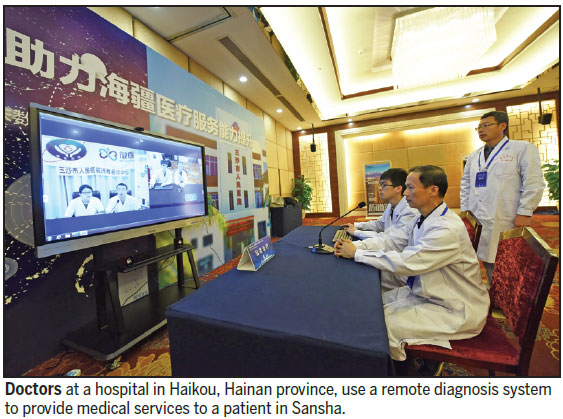
Shen Hongquan, CEO of Longmen Capital Management, a venture capital firm that specializes in healthcare investment, says China is leading the world in telemedicine and applying the internet-of-things to hospitals. His company is investing in those fields as well as in smart health focused on chronic disease management.
He says China's healthcare system is plagued by low efficiency in hospitals and low service quality. But "smart health can help make the process of visiting a doctor become simple and can enhance the efficiency of the clinical process and satisfy the citizens and also help the hospital improve its information and management level".
Zhang Jianmin, health business director of Sunshine Insurance Group, says that "more and more health insurance companies are focusing on chronic diseases like diabetes, cardiovascular disease, kidney disease and so on."
Sunshine offers insurance that reimburses diabetes patients who develop critical conditions such as loss of a foot or eyesight or the development of kidney disease. "Telemedicine is used in the product design," says Zhang. "The patient can talk to a doctor or get advice from an AI implementation over their mobile phone."
He adds: "We hope this product will delay the critical illness and lower the costs. However, this is a new product and we don't yet have a timeline to prove it is effective."
Zhang emphasizes that he is stating his personal opinion, which is not necessarily the position of Sunshine Insurance.
A potential problem for insurance companies is that genetic tests may create a situation where only patients facing higher risks of serious diseases would sign up for coverage. According to Zhang, this "adverse selection" problem could undermine the finances of all insurance providers.
In October last year, President Xi Jinping announced the Healthy China 2030 blueprint to reform the country's healthcare system.
The plan emphasizes that the current system, which is based on large hospitals in big cities, cannot deal effectively with the needs of the population. Increasing the capability of local clinics and family doctors is key, especially for patients with chronic diseases or conditions such as diabetes, high blood pressure or cardiovascular disease. It also calls for more emphasis on helping people stay healthy, not just treating disease after the fact.
The blueprint emphasizes four core principles: health as a development priority, innovation, scientific development, and fairness and justice. So technology is an enabler, but organizational change is needed to take full advantage of the opportunities, experts say.
Zhang of Sunshine Insurance says: "For the next 10 years, reform of the Chinese medical platform will have the biggest impact. What could be revolutionary is not smart health, but reform of the healthcare system."
davidblair@chinadaily.com.cn
| A robot with artificial intelligence programs can provide services to the elderly. Photos Provided to China Daily |
(China Daily Africa Weekly 11/10/2017 page1)






Today's Top News
- Disrupting market under fabricated veneer of 'national security' hurts US' own interest: China Daily editorial
- Yasukuni visit would add insult to injury: China Daily editorial
- Judicial reform critical for modernizing governance
- Effective use of investment emphasized
- China's shuttle diplomacy strives to reach ceasefire
- Nanjing Museum's handling of donated art, relics being probed