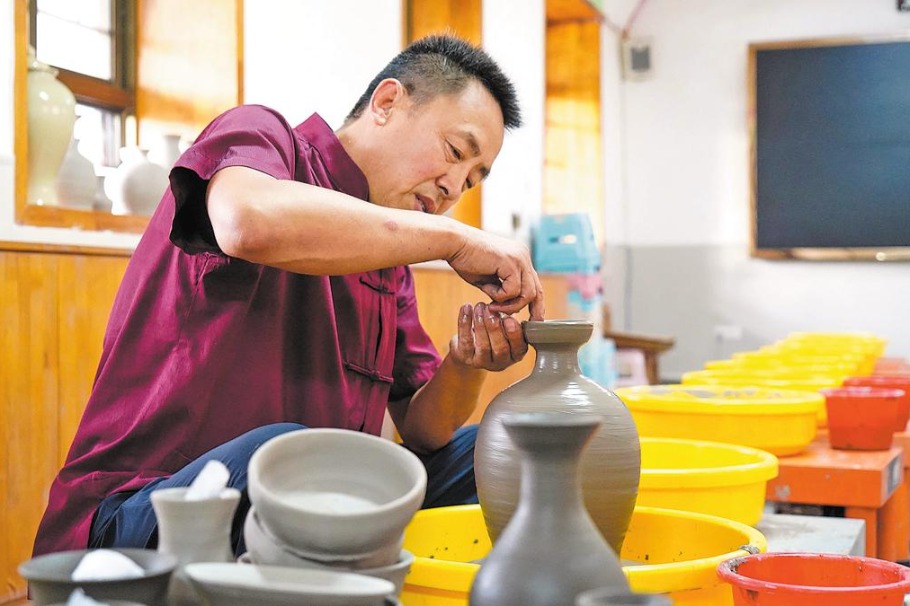
Tibet aims to make all villages road-accessible by 2020









The government of the Tibet autonomous region has been enhancing road construction and maintenance in the region’s rural areas, with 695 of its 697 townships accessible by road, according to the region’s department of transportation.
All but 30 of out of the region’s 5,467 villages can be reached by road - an access rate of 99 percent - and more than 79 billion yuan ($11billion) has been spent on road construction in rural areas during the 13th Five-Year Plan period, or 2016-20.
Due to a harsh environment with varied and complicated topography, Tibetan peasants and nomads in the remote villages once used horses and yaks as their main modes of transport, a time-consuming and laborious process for both people and animals.
More villages accessible with better roads mean fewer villagers need to use horses and yaks as transportation tools, providing great convenience for travel and business.
Better transportation lays a basic foundation for better economic development. The regional government has been continuously upgrading the region’s rural road construction and management.
Since 2013, the region adopted advanced large-scale designs and construction companies to accelerate the region’s road construction.
It is expected by 2020 all eligible townships and administrative villages will be able to be accessed with proper roads, all eligible townships will be accessible by shuttle buses, and 80 percent of administrative villages will be accessible by shuttle buses.
?



- Ultra-cheap dress blind boxes spark health, quality concerns
- Chinese researchers find new treatment path for high-risk breast cancer
- China cracks down on organized crime involving minors
- Two Taiwan suspects wanted in mainland smuggling case
- Lhasa promotes initiative to foster a skilled workforce
- Beijing makes it easier for families to buy property