The China Story
at your Fingertips
OPEN

The Shanghai-Chengdu Expressway is a key transport corridor stretching 1,966 kilometers from Shanghai and China's coast in the east to Chengdu in the country's west.
It passes through the provinces of Jiangsu, Anhui, Hubei and Sichuan, and the giant municipalities of Shanghai and Chongqing. The expressway has provided a vital route via which the complete value chain of China's automobile industry has thrived. From power batteries, steel manufacturing, imports and exports to autonomous driving and fully automated production lines, the Shanghai-Chengdu Expressway has got it all. Let's take a look.
Guzhao Highway is constructed above the Xiangxi River, a tributary of the Yangtze River, in the middle of Central China's Hubei province. It has a reputation as the most beautiful water highway and attracts travelers from all over the country every year.
Intern Li Zihao also contributed.
The Yingwuzhou Yangtze River Bridge in Wuhan, Central China's Hubei province, was built in 2014. It is one of the longest suspension bridges in the world, with two consecutive 850-meter spans. The bridge lights are on at 7:30 pm, and the night view reminds many of the Golden Gate Bridge in San Francisco.
Intern Li Zihao also contributed.
Zhang Kuihong, 79, remembers the day China's first expressway opened to traffic more than three decades ago.
"The weather was very good. Sitting in a helicopter, I saw the road reflecting the sunlight, like a golden dragon crouching on the land," said Zhang, who was deputy chief engineer of the Shanghai-Jiading Expressway.
"Back then, cars could only run as fast as 80 kilometers per hour, and China's automotive industry was underdeveloped," he said. "Some experts felt building an expressway with a 120 km/h speed limit was pointless. So the Shanghai-Jiading Expressway was launched as a pilot program."
In 1988, the 15.9-km road linking Shanghai with the satellite city of Jiading was completed, marking a milestone in China's expressway development.
Three decades later, the country's expressway network stretches for 160,000 km, ranking first in the world.
As the expressways have grown, the development of the auto industry in China has also been switched to an express track.
Back in the 1980s, China was still widely regarded as a "kingdom of bicycles". But now it's becoming a "kingdom on four wheels". It has been the world's largest auto producer since 2009, and by last year it had 281 million automobiles in use and 418 million licensed drivers, according to the Ministry of Public Security.
The pilot expressway that started from Shanghai in 1988 now extends 1,960 km westward to Chengdu, Sichuan province.
Known as the G42 Shanghai-Chengdu Expressway, it runs parallel to the Yangtze River and serves as a transportation artery for industrial chains along the Yangtze River Economic Belt.
Cheng Changchun, dean of the Jiangsu Yangtze River Economic Research Institute, said the G42 Expressway links three economic engines-the Chengdu-Chongqing city cluster on the upper reaches of the Yangtze River, the cluster of cities around Wuhan, Hubei province, on its middle reaches, and the Yangtze River Delta.
"The fast expressway coupled with cheap river shipping has boosted the integration of industrial chains," he said. "Convenient transportation between cities along the Yangtze plays a vital role in their economic development."
Every day, thousands of metric tons of steel sheet for cars are produced in the plants of Wuhan Iron and Steel Corp in Wuhan and then transported by trucks, trains and ships to different car manufacturers around the country.
Yang Rui, chief engineer of the company's cold-rolled steel plant, said the boom in the domestic auto industry in the early 2000s spurred the company to produce high-quality steel sheet, and the plant was built in 2005.
"In the past 15 years, we have made continuous progress and now our steel is used to make more than 3 million cars every year," Yang said. "The location of Wuhan, the transportation nexus of waterway, highway and railway, has greatly facilitated the selling of our steel across the country."
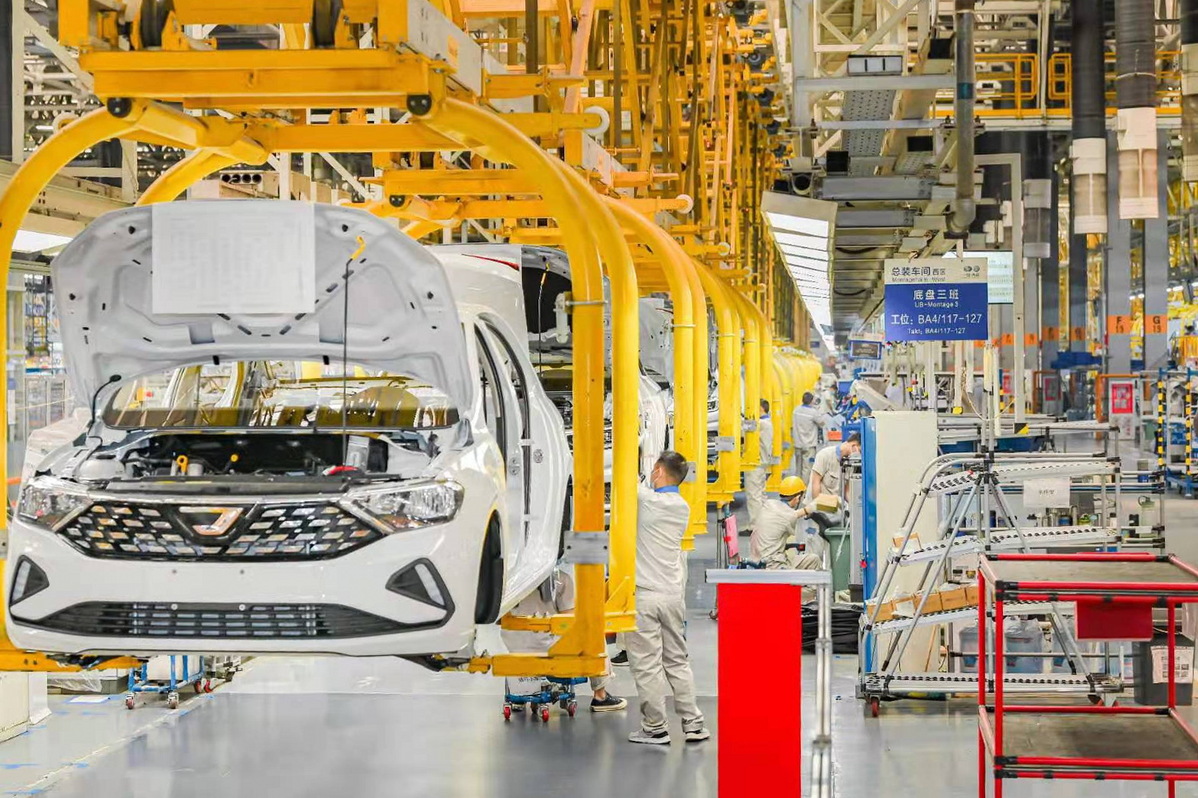
Some of the steel is transported to the assembly line at the FAW-Volkswagen Automotive factory in Chengdu, where a newly assembled Jetta car comes down the line every 58 seconds.
Gabriel Gonzalez, senior production manager at FAW-Volkswagen Automotive, has spent more than 24 years in the auto industry in Mexico, Europe and the United States and now oversees production at the Jetta factory in Chengdu.
"I have had to learn a lot of things from Chinese people," said Gonzalez, who arrived in China two and a half years ago. "Everything is in the mobile phone. Everything is digital here in China… Right now, China is in a very good position in the auto industry."
Riding the wave of autonomous driving and the electrification of cars, China has become not only a manufacturer and consumer of cars, but also a designer and an exporter.
Li Jirong, deputy director of the statistics office at Shanghai Customs, said car exports from Shanghai ports increased from 54,000 units in 2016 to 205,000 units last year, and many were electric cars from domestic brands.
"Last year, cars manufactured in China were exported to 128 countries and regions," Li said. "They were not only sold to developing countries, with many exported to developed economies such as the European Union, Australia and the US."
"The numbers speak volumes. I feel proud to have witnessed the growth of China's auto industry, and I hope that in the near future there will be more made-in-China cars running on roads around the world."
Cang Wei contributed to this story.
In the dinosaur-themed Fangmaoshan Service Area in Changzhou along the G42 Shanghai-Chengdu Expressway, travelers are always surprised at seeing many sculptures of dinosaurs, eggs and giant white skeletons, which seem like scenes from Jurassic Park.
Intern Li Zihao also contributed to this story.
To date, China has a total of 160,000 kilometers of expressways, all built from scratch since the first one was put into use in Shanghai in 1988.
Although only 15.9 kilometers long, the Shanghai-Jiading Expressway opened a new chapter in China's transportation.
In the past three decades, the Shanghai-Jiading Expressway was extended and became a section of the 1,960-km Shanghai-Chengdu Expressway, linking Shanghai with cities along the Yangtze River all the way to Sichuan province in Southwest China.
The starting point of Jiading is now an automotive city, home to more than 300 companies and 100 research and development institutes in the automotive industrial chain, as well as a museum dedicated to cars — the Shanghai Auto Museum.
Designed by the Architectural Design & Research Institute of Tongji University and IFB from Germany, it is the country's first automotive museum, opened to the public in 2007.
It exhibits over 100 cars that have a special place in automotive history, including an authorized replica of the 1885 Benz Patent-Motorwagen, regarded the world's first automobile, and a real 1908 Ford Model T, the first mass-produced car.
Displayed along with all these foreign antique cars is the Hongqi CA72, the first representative sedan that was constructed and built in China in 1959. Hongqi means red flag in Chinese, a revolutionary symbol of China. Around 200 of the models were produced and used in the parade for the 10th anniversary of the founding of the People's Republic of China.
Liu Tao, director of the museum, told China Daily that the number of sedans produced on Chinese mainland was very small until the 1980s when a lot of joint ventures between Chinese and foreign automakers emerged as the country started to open up.
"In 2009, both of the production and sales of cars exceeded 10 million, a milestone in China's auto industry," said Liu. "Now China is the world's largest auto producer and has the largest auto market."
"Domestic carmakers are becoming stronger in the world's automobile industry, and some are leading the trend of electrification and autonomous driving," he added.
The Shenyang-Haikou Expressway that runs along China's coastline has promoted the development of port businesses, marine industries and tourism, and also boosted the country's foreign trade as the ports along it serve as gateways to countries on the 21st Century Maritime Silk Road.
The expressway, which will run for 3,623.55 kilometers, starts from Shenyang, Liaoning province, and runs through the provinces of Shandong and Jiangsu, Shanghai, and the provinces of Zhejiang, Fujian and Guangdong, eventually ending in Haikou, Hainan province.
Connecting special economic zones, coastal cities, national-level new areas and free trade areas, the road, commonly known as the Shenhai expressway, offers a window to China's achievements in reform and opening-up, experts said.
About 10 km from the expressway's Dalian Port exit, visitors see a bustling container terminal with colorful containers stacked neatly and tall cranes loading and unloading them at the Jinpu New Area in Dalian, Liaoning.
"This is one of the busiest container terminals in China," said Zhang Hao, deputy general manager of Dalian Container Terminal, adding the company handled 5.5 million twenty-foot equivalent units (TEU) of cargo last year.
That included nearly 80,000 TEU of refrigerated fruit imports, ranking first among domestic container terminals.
China's extensive expressway network, including the Shenhai expressway, can transport the fruits to customers around the country after they arrive at the port, Zhang said.
Dalian Container Terminal is one of the biggest container terminals in North China and its foreign trade routes reach ports in more than 160 countries and regions around the world.
Taking a roll-on, roll-off passenger vessel from a Dalian port, one can arrive at Yantai, Shandong province, which faces Dalian across Bohai Bay and then reach Changdao, a group of islands, administered by Yantai, to enjoy spectacular ocean scenery.
Lin Shaopeng, who runs a homestay on one of the islands, is busy nowadays as the summer tourism season approaches.
"My homestay costs around 2,000 yuan ($313) a day," he said. "Although the price is a little bit higher, a lot of tourists come to rent it."
Lin said his guests come from around the country.
"The expressways make transportation easy and convenient," he said. "There are many tourists coming from the southern part of China."
Changdao consists of 151 islands but only 10 are inhabited by a few locals. As a result, the area is home to an abundance of wildlife.
The Changdao Marine Ecological Civilization Comprehensive Pilot Zone was established in 2008 with the support of the local government to promote the island's ecological development.
The well-protected environment has helped the island's residents reap riches through the development of an eco-friendly fishing industry and tourism, the zone office said.
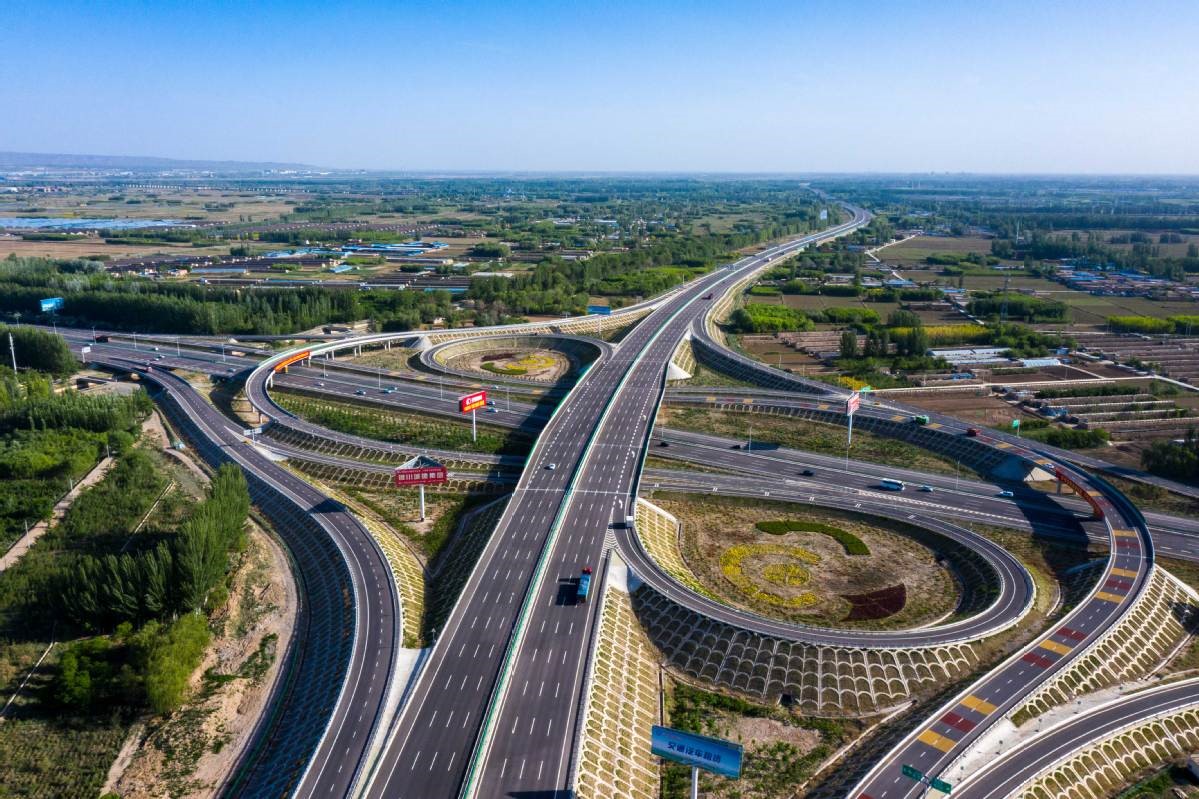
After over 60 years of development, China has grown into a strong power in the transportation sector, with mileage of high-speed trains, expressways and railways ranking first across the world, Economic Information Daily reported.
The country's total train mileage in operation hit 146,000 kilometers by the end of 2020, and highways registered 5.20 million km, expanding 7 and 64 times respectively compared to the early period of New China.
Road networks have been further improved, with wider coverage around the country. China's expressway mileage took the first spot globally, with 161,000 km in operation by the end of last year.
Civil aviation mileage totaled 8.38 million kilometers, an increase of 735 times over 1949. Total schedule routes reached 4,945, a 28-fold increase compared to 30 years prior.
Forty-three cities in China have put rail transit systems in operation, with 226 rail transit lines and 7,355 kilometers of mileage, ranking first in the world.
China also saw the biggest numbers globally in bridges over highways and tunnels.
Every minute, China's domestically developed Fuxing-meaning "rejuvenation"-bullet trains can travel up to 5.8 km, and 1.5 flights on average arrive and leave Beijing Capital International Airport.
Total passenger traffic reached 9.67 billion trips in 2020, with turnover at 1.93 trillion passenger-kilometers, about 71 and 124 times that of 1949.
As waterway transportation grows more mature, there were 22,142 production berths at ports in China by the end of 2020, among which 2,592 were over the 10,000-ton class, accounting for 11.7 percent of the total and ranking first in the world.
This year marks the beginning of China's 14th Five-Year Plan, and is also regarded as a starting point to build up the country into a strong power in transportation.
In the future, China is devoted to optimizing its comprehensive transport network and setting up a modern logistics service system. It will also push forward the integration between transportation, agriculture and tourism and actively expand diversified international logistics channels.
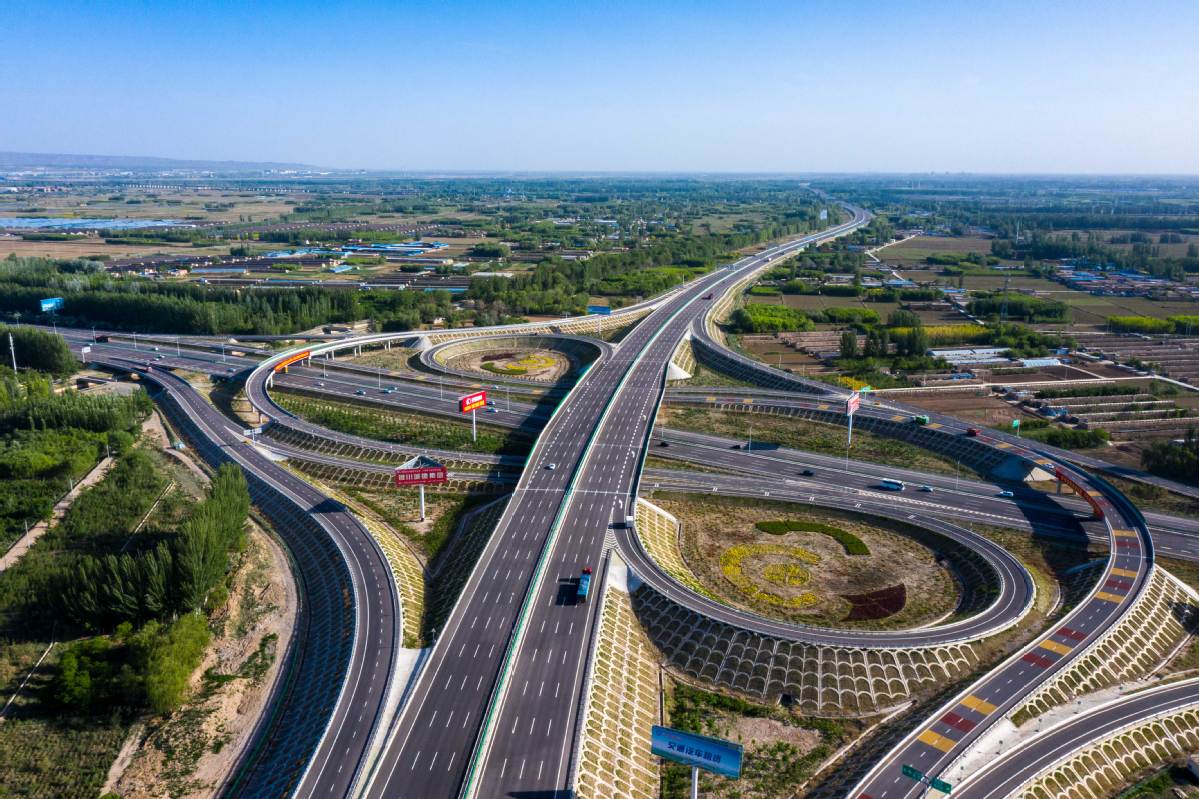
The 15-year-old Qingdao-Yinchuan Expressway has become an important channel for transporting agricultural products, including mutton from a distinctive breed of sheep, across northern China.
A vital part of the national expressway network, it starts in Qingdao, Shandong province, on the country's east coast, and ends in Yinchuan, capital of northwestern China's Ningxia Hui autonomous region. It passes through cities in the provinces of Hebei, Shanxi and Shaanxi along the way.
The 141 kilometers of the expressway in Ningxia has opened a window to eastern China for the region, and allows high-quality agricultural products such as a distinctive regional breed of sheep known for its high-quality meat to be delivered to markets across the country.
Several sculptures of the unique sheep stand near a toll station of Yanchi county, Ningxia. Raising such sheep accounted for more than half of county residents' per capita disposable income of 14,000 yuan ($2,180) last year.
The county raised 3.2 million of the sheep and produced 28,000 metric tons of mutton, 26.6 percent of which was sold outside Ningxia, according to Yanchi's agricultural and rural affairs bureau.
After purchasing sheep from farmers, an industrial group in the county processed them and sold the mutton to more than 50 cities in 28 provinces and regions, the bureau said.
"We can slaughter 1,000 sheep a day. The mutton products we produce are transported to Yinchuan via the expressway and then sent to other big cities," Huang Minghong, head of the group's processing factory, told China News Service.
"After the expressway opened, the time taken to travel from Yanchi to Yinchuan was cut from more than three hours to one and a half hours, so the mutton from Yanchi can arrive on consumers' tables more quickly."
Feng Yansen, a driver for the Yanchi branch of China Post Group, said that before the Qingdao-Yinchuan Expressway opened, freight drivers had to take the narrow and congested 307 National Highway, and needed to carry spades to shovel sand from the road. "The Qingdao-Yinchuan Expressway has speeded up logistics significantly," Feng said.
As China's biggest vegetable distribution center, the logistics hub in Shouguang, Shandong, can generate an average trade value of 30 million yuan a day, according to Shouguang Dili Agri-products Group. Nearly half the 10,000 tons of agricultural products transported from the hub each day pass along the Qingdao-Yinchuan Expressway.
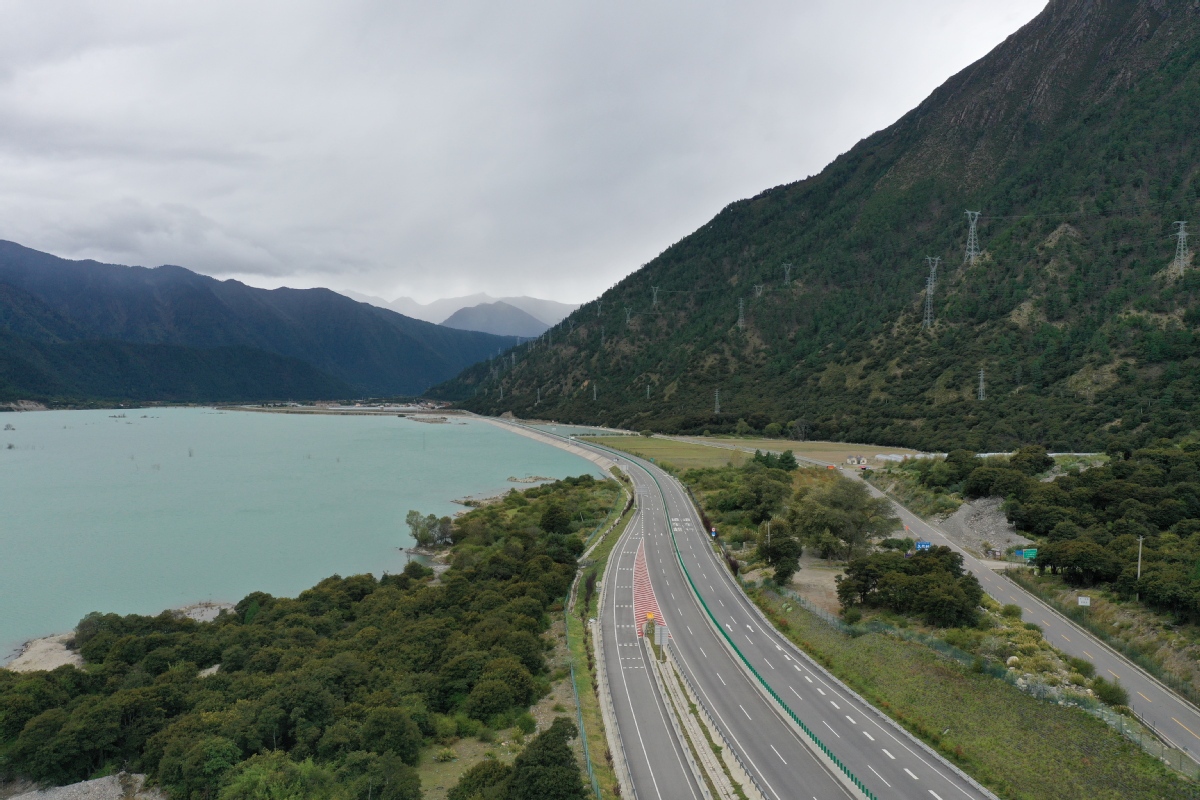
Region's Party secretary: Govt investment over seven decades has created 'miracles'
The building of roads and other infrastructure funded by government investment has helped transform the Tibet autonomous region into a prosperous new world, according to the region's leaders.
Over the past 70 years, the central government has invested 1.63 trillion yuan ($253.3 billion) to boost development of the region. More than one-third of the investment-over 590 billion yuan-was allocated to major infrastructure projects, including the Sichuan-Tibet Highway, Qinghai-Tibet Railway and Lhasa Gonggar Airport, which have effectively promoted the economic and social development of the region, according to Wu Yingjie, the region's Party secretary.
Wu made the remarks at a news conference held by the State Council's Information Office on Saturday, a day ahead of the 70th anniversary of the peaceful liberation of Tibet.
"In a short span of dozens of years, China has created miracles that will yield lasting benefits and has transformed Tibet into a brand-new world," he said.
The improvement of infrastructure has played an important role in improving people's livelihoods, said Qizhala, chairman of the regional government.
This month, a second road linking Metog county to the country's highway network was opened. Metog was the last county in China to join the network in 2013.
Before the first road was built, it was hard to enter the area in winter due to weather conditions. Even after it opened, it was still too narrow to allow two vehicles to pass each other. Vehicles traveling in different directions had to take turns using the road-inbound cars on one day, and outbound cars the next.
The opening of the second highway has ended the "scheduled travel time", allowing cars from two directions to pass on any day, said Qizhala, who like many Tibetans goes by one name.
"In four hours, passengers can travel from a place with an altitude of more than 3,000 meters to a 1,200-meter-high area in Nyingchi," he said.
Many local herders and farmers have seen a dramatic improvement in facilities and their living conditions over the past seven decades. Tap water has replaced the need to carry water in buckets, oil lamps have been upgraded to electric lights, and dirt roads have been paved, Qizhala said.
He said the improvements were due to the 393.7 billion yuan the central government invested in the region from 2016 to last year, with the majority of the funds spent on infrastructure.
"All counties and villages have access to paved roads with the length of the road network being 118,800 kilometers. Some 140 domestic and international air routes now reach 66 destinations," he said, adding that all counties and major towns are connected to the power grid.
New infrastructure projects will be carried out over the next five years, such as further work on the Sichuan-Tibet railway. The section linking Nyingchi and Lhasa is expected to open before July.
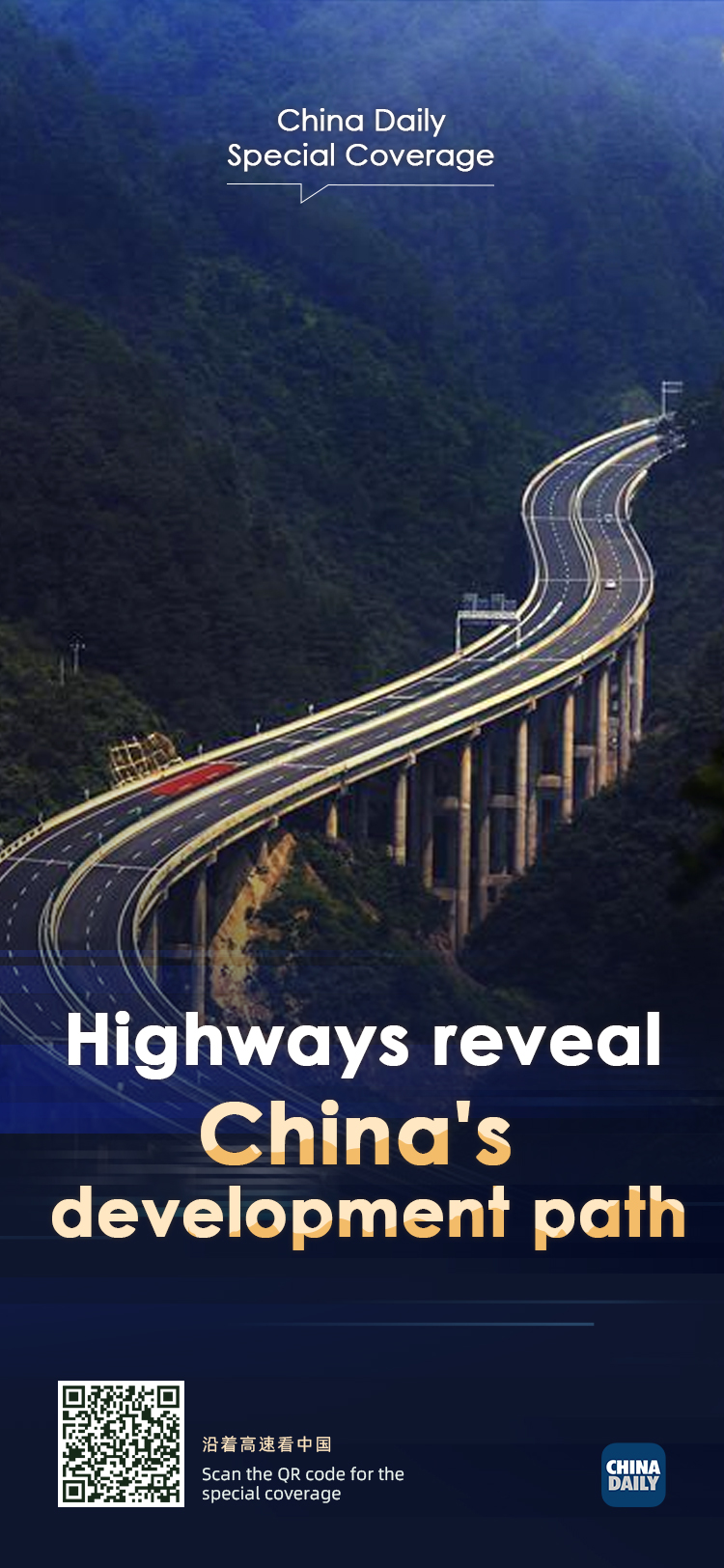
Over the past decades, China has built more than 160,000 kilometers of expressways, connecting hundreds of millions of people.
China plans to build or rebuild 25,000 kilometers of expressways during the 14th Five-Year Plan period.
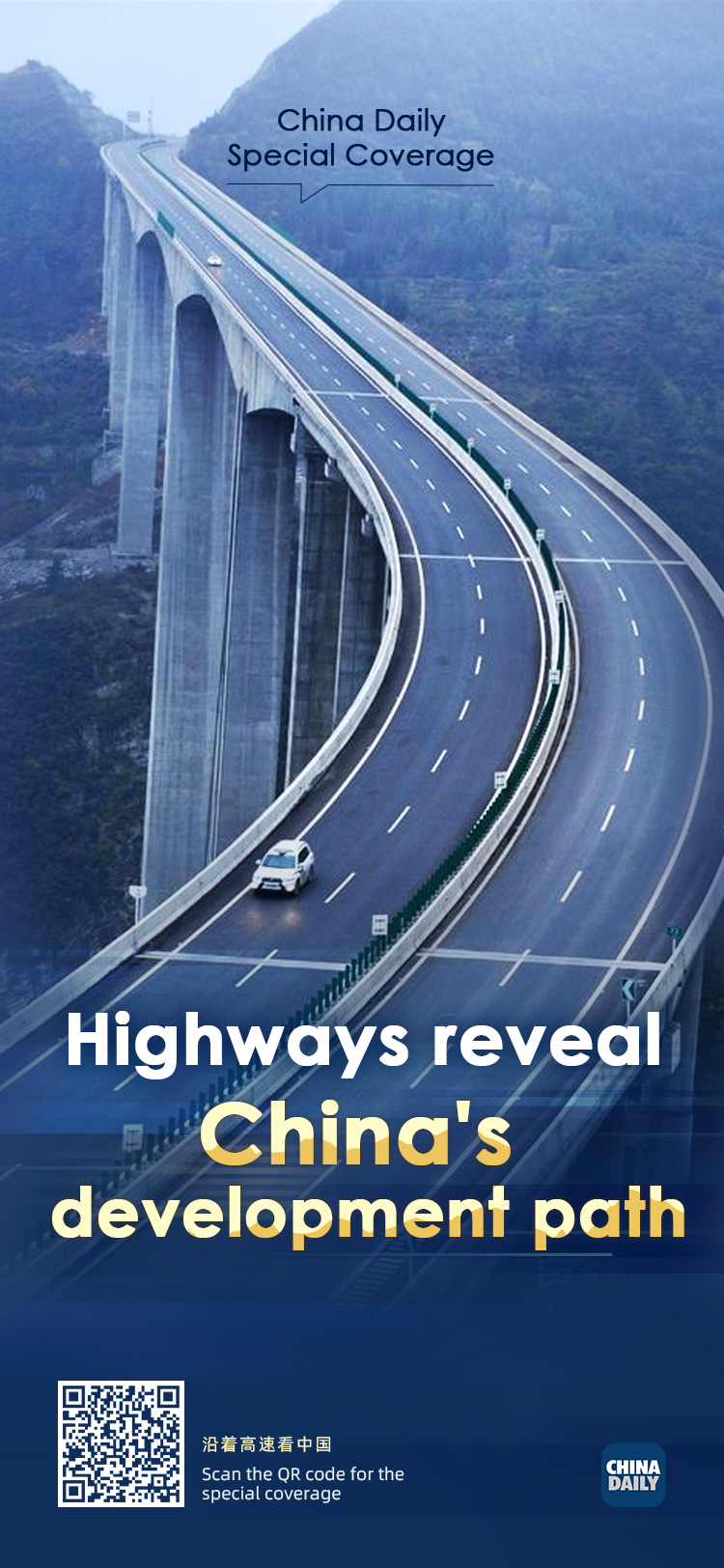
Over the past decades, China has built more than 160,000 kilometers of expressways, connecting hundreds of millions of people.
The total mileage of China's road network stood at about 5.2 million kilometers as of the end of 2020, according to the Ministry of Transport.
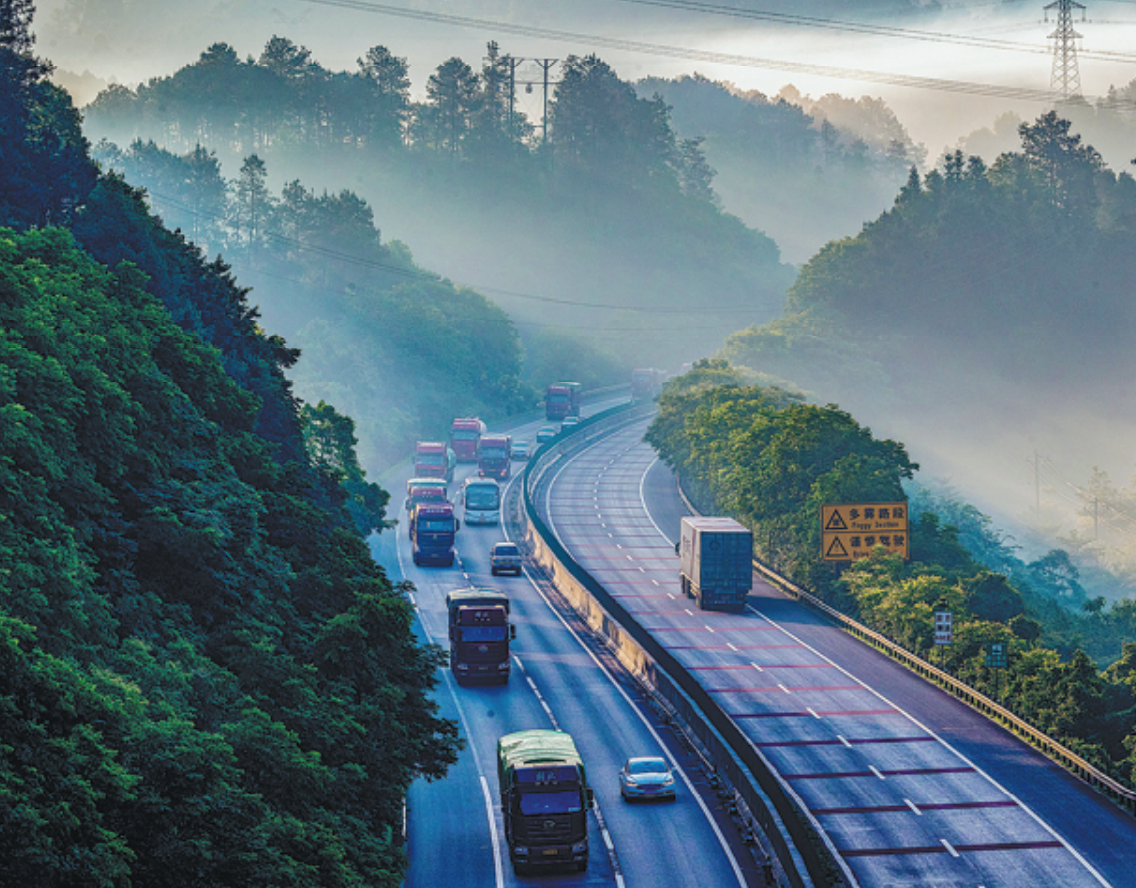
Driving along the Chongqing section of the Baotou-Maoming Expressway, travelers will encounter the majestic White Horse Mountains, site of a major battle in 1949 during the War of Liberation (1946-49).
Now this beautiful land, where hundreds of martyrs were buried, is undergoing large-scale development to become a travel destination. People here have been lifted out of poverty in recent years, striving for a better life. But one cannot forget the sacrifice of the soldiers who fought for a bright future for coming generations.
In White Horse Town, there is a cemetery for about 400 soldiers of the People's Liberation Army who lost their lives. In the center stands a black marble stele engraved with the words "Revolutionary Martyrs Immortal", and on the base below, the story of the Battle of White Horse Mountains is retold.
Although the Communist Party of China declared the founding of the People's Republic of China on Oct 1 in 1949, some areas in the southwest remained under the control of Kuomintang, including Chongqing, for a time.
In early November 1949, led by Liu Bocheng and Deng Xiaoping, the Second Field Army and Fourth Field Army of the PLA launched an attack on Chongqing.
At the end of the month, the PLA entered the urban area of Chongqing and declared the liberation of the city, which had served as a wartime capital of the KMT government during the War of Resistance Against Japanese Aggression (1931-45).
The victory laid a solid foundation for PLA to free the entire southwestern region of China.
In a series of battles during the war, one of the most decisive was the Battle of White Horse Mountains in the Wulong district of Chongqing.
In the three-day battle, PLA and Kuomintang soldiers fought fiercely over an area of about 400 square kilometers in the White Horse Mountains.
Facing the reality that they had already lost the war, most KMT soldiers and officers in the White Horse Mountains battle fought unwillingly and passively, and the PLA soon rolled to victory, destroying the last line of defense for the KMT army and paving the way toward the liberation of Chongqing.
The White Horse Mountains, covering one-sixth of Wulong district, have rich natural resources, a long history and a revolutionary past. But in the past, the remote location and poor transportation infrastructure hindered its development and held the local people in poverty.
With the construction of Baotou-Maoming Expressway and other cross-regional highways, it's now only an hour's drive from downtown Chongqing to White Horse Mountains Scenic Area, opening the way for tourists and bringing higher incomes for local residents.
Chen Daping, 50, who once lived below the poverty line, now works as a security guard in the scenic area, making more than 2,000 yuan ($308) a month. His wife is a cook at a homestay.
"We make much more money than just growing crops, and we are going to build our own homestay," Chen said. "Life is getting much better."
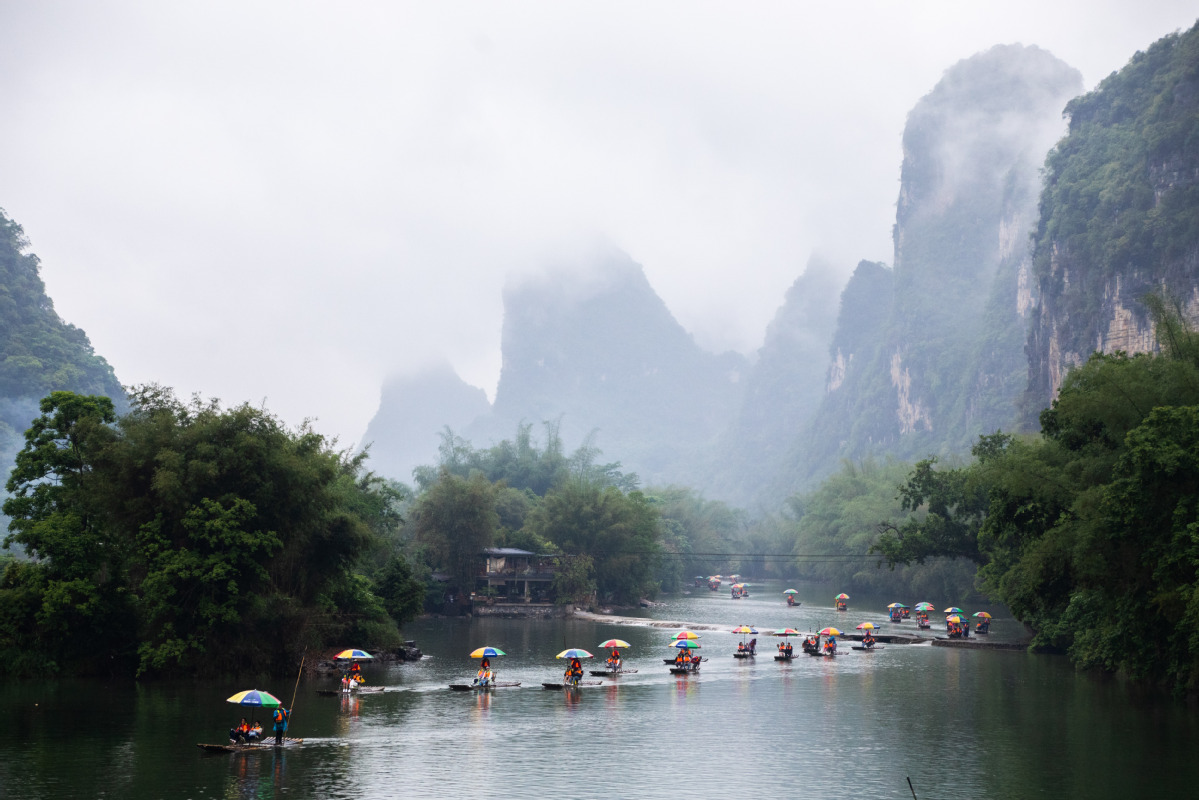
Mo Shuifeng moves swiftly and expertly between the vegetables she grows for guests in her garden in Hetang village, Zhongshan county, Hezhou of Guangxi Zhuang autonomous region.
She feels she is dreaming. Just five years ago she was living in poverty because of the financial burden of her children's school tuition.
With limited transport and a lack of arable land for farming, Hetang had been one of the poorest areas of the county. In 2015, severe poverty affected more than 33 percent of the population.
But the village had a secret asset that had never been tapped: It boasts 16 kilometers of picturesque karst landscape that few people have ever heard about.
In 2017, an expressway linked Baotou in the Inner Mongolia autonomous region with Maoming, Guangdong province. The expressway passes Guilin, Wuzhou and Hezhou in Guangxi.
Located just 11 km from the expressway entrance, the scenic landscape of Hetang village could not stay hidden and was soon discovered by the world.
In 2018, the local government decided to expand the 16 km landscape into a scenic spot characterized by idyllic scenery. The project called for an investment of 800 million yuan ($123 million).
"The updated scenic spot attracted visitors from different cities in the region and even from Guangdong province because of its proximity," said Yang Tingming, director of Zhongshan county's tourism administration.
So Mo remodeled her house, making it into a hotel to accommodate tourists.
"We can earn 800 yuan a day during peak season," said Mo, who shook off poverty through the new business after just one year. Other residents benefited from tourism in similar ways.
According to Zhong Yinsheng, the village head, the parking area alone brought in 80,000 yuan for the village in 2019. "With more visitors, residents can increase their incomes in a number of ways-for example, running a guesthouse or selling agricultural products or beverages," Zhong said.
The expressway also promoted the integration of tourism resources in Hezhou and Guilin. The latter is world-famous for karst landscape, and is just two hours away by car.
Last year, Guilin and Hezhou in Guangxi, and Zhaoqing in Guangdong, signed an agreement to accelerate the tourism integration of the three cities. The aim was to create a health resort drawing from development of the Guangdong-Hong Kong-Macao Greater Bay Area, since the three cities had been connected on land by the expressway and high-speed rail.
It is expected that the number of tourist visits to the three cities will surpass 358 million by 2025 and that tourism revenue will exceed 490 billion yuan.
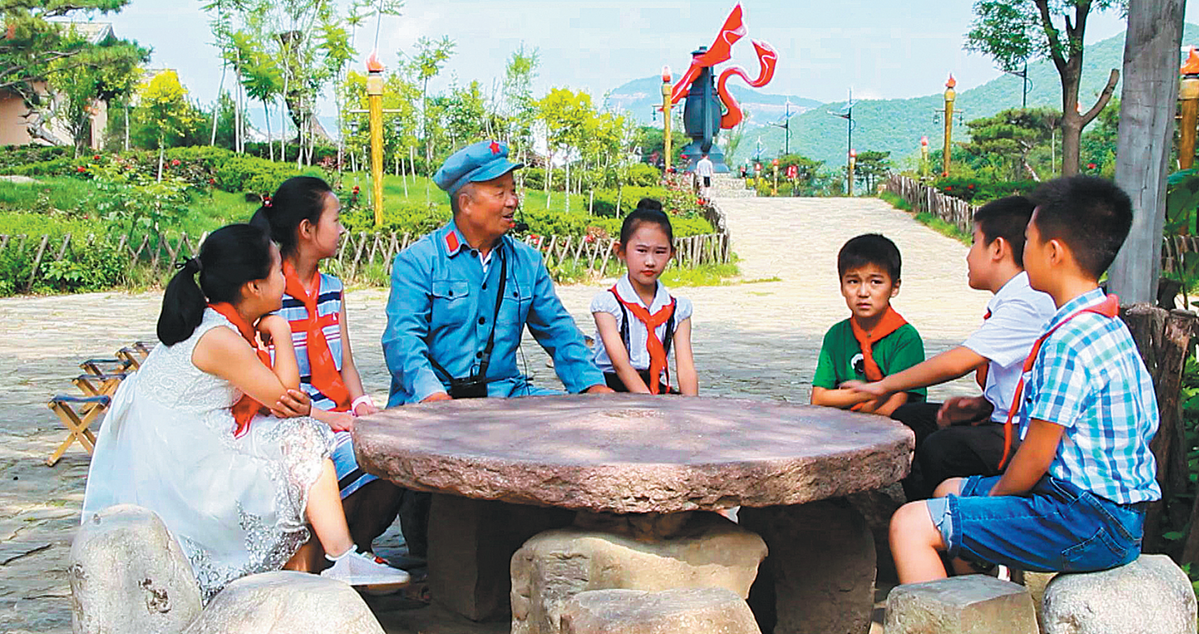
Rich experiences await those who want to get a feel for the heroism and patriotism of past generations
At 7 am, students stood ramrod straight as they sang the national anthem during the flag-raising ceremony at Zhaojin Beiliang Red Army Primary School in Zhaojin town, Tongchuan, Shaanxi province. The song was followed by another about how young people bugle and vow to support the rejuvenation of the country.
The school was built around the site of the Chenjiapo conference, which played an important role in the victory of the Red Army during wartime from the 1920s to 1940s. It was held in August 1933, when the Communist Party of China consolidated and strengthened forces of the army in Northwest China's Shaanxi and Gansu provinces.
In 2018, the school was designated a demonstration school for Red education, which refers to Chinese revolutionary history, the spirit of role models and stories of the CPC. All 160 pupils are immersed in Red songs, Red tales and Red films. They also visit historical museums and sites where major events happened, sometimes outside the province, according to Feng Gangzhan, the school's principal.
"Red culture can help to build their view of the world, life and values, and to develop good morals and civilized behavior," Feng said, adding that behaviors encouraged include picking up trash, saving food, protecting the environment and helping people in need.
Wang Tianjiao, a sixth-grade student, told Shaanxi Daily: "The spirit of heroes inspires me to stick to my dreams." Hou Shiyu, another student, said she learned to cherish life, as it was purchased at a high price through the sacrifices of earlier generations.
Zhaojin, a central base area of the Red Army, witnessed one of the key stages upon which modern Chinese history played out. Red education spreads from children to adults and then around the country. The town has a training center for CPC officials, and its influence has been enlarged as China celebrates the 100th anniversary of the Party this year.
At the Xuejiazhai revolutionary site in a secluded mountain area of Zhaojin, the old military hospital, clothing factory, machinery factory, warehouse and armory have been preserved. Tourists, some wearing Red Army uniforms, learned how the army had built a community and overcome daunting challenges to carry on the fight.
Visits to the Shaanxi-Gansu revolutionary memorial hall in Zhaojin exceed 800,000 annually and is expected to surpass 1 million this year, Song Jianbin, deputy head of the hall, told media in April.
On the Red commercial block, locals have revived old food recipes to offer visitors a taste of the primitive dishes the army once ate-wild plants and steamed cornbread, for example-to give them an appreciation of those hard times and help them learn to cherish the good days today.
Since 2015, about 3,400 people got jobs thanks to the Red tourism boom, and incomes have steadily increased, especially among the poor, Bai Wei, mayor of Zhaojin, told chinanews.com.cn.
Besides farming, locals can earn money by renting land, working at local companies, receiving dividends or beginning their own business. Many young people have returned to their hometown to join the tourism industry.
The salary of Zhu Jin, a college student who returned, grew from 1,800 yuan monthly as a docent to 4,000 yuan as an investment manager at a local tourism company. She told China Central Television that besides Red sites, tourists can also experience the beautiful natural landscape of mountains, waterfalls and pastures, as well as skiing in the town, which made a stir on video platforms.
Zhaojin is one example of regions that have benefited from Red history. Driving along the Baotou-Maoming Expressway-which starts from Baotou, Inner Mongolia autonomous region, and runs south to Maoming, Guangdong province-tourists can visit several major sites in the formative life of the CPC.
Yulin, Shaanxi, witnessed the founding of the first CPC organization in northern Shaanxi in 1924 and the beginning of armed resistance against the Kuomintang regime in northwestern China in 1927. Yan'an was base of the Central Committee of CPC from 1935 to 1948 during the War of Resistance Against Japanese Aggression (1931-45) and the War of Liberation (1946-49). In Shaanxi province's capital, Xi'an, the office of the Eighth Route Army, the force aimed at fighting the Japanese, functioned to promote an anti-aggression movement among the public, buy medical and communication supplies for the army and organize more than 20,000 young adults to aid Yan'an, which contributed significantly to victory.
Jiao Yibo, a pupil in Xi'an who visited the site, said he learned the meaning of "difficult condition" after seeing the cramped basement that was used for surgeries.
"The footprints of revolution show hardships as China moved forward, and I realized the responsibility of our generation in national rejuvenation," he wrote in his diary.
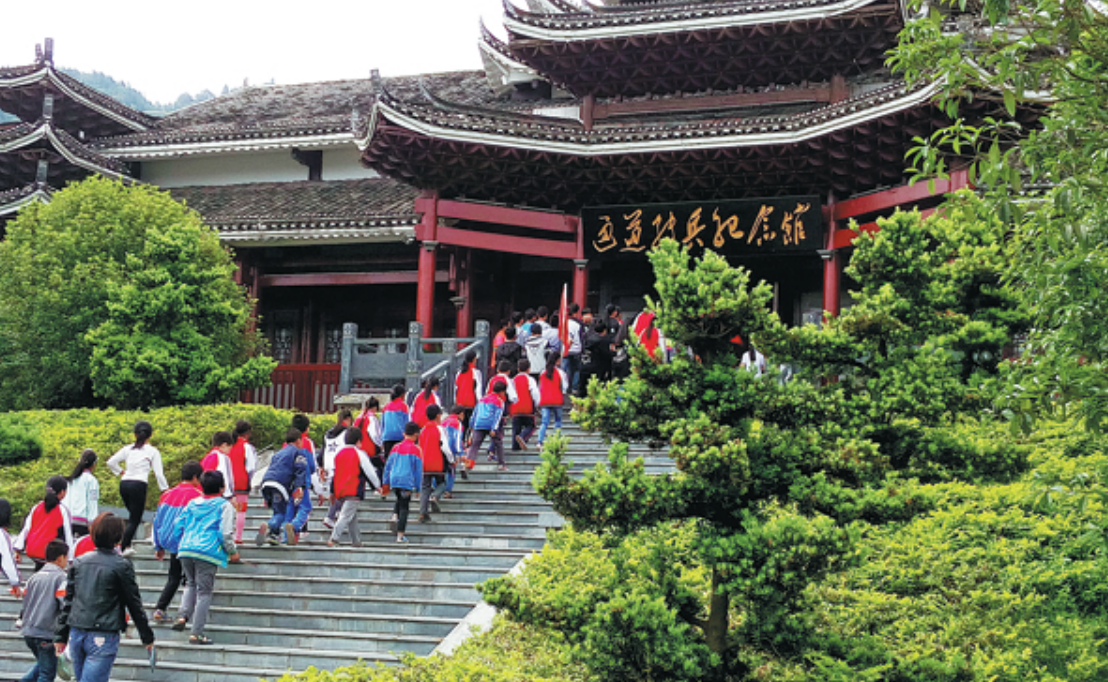
Tongdao Dong autonomous county of Huaihua, Hunan province, along the expressway, was the site of a major conference in 1934, when the Red Army decided to turn toward Guizhou province, where the enemy forces were weak. The fateful decision turned out to be a matter of life and death, but the Red Army prevailed.
Today, the memorial hall for the event, with more than 1,000 exhibits, welcomes about 1.2 million visits annually. Tourists range from children to the elderly-people from across the country, said Zheng Xiang, president of the hall.
He said that besides sightseeing, it's important to talk, sing and participate in other experiences. The hall has organized a flower basket ceremony to honor martyrs, and activities such as symposiums, songs and even the making of straw sandals to "help tourists fully feel and learn from history".
In a major program that attracts 5,000 people a year in Tongdao, tourists can walk 7 kilometers on a mountain road to get a taste of the difficulties the Red Army once underwent and learn its stories.
More than 35,000 rural people in Tongdao are associated with tourism services, which have helped 25,700 poor people shake off poverty. Locals' incomes grew by an average of 800 yuan ($123) per person annually, according to the local government.
The expressway, which links seven regions-the provinces of Shaanxi, Sichuan, Hunan and Guangdong, along with the Inner Mongolia and Guangxi Zhuang autonomous regions and the city of Chongqing-offers rich resources for Red tourism and continues to play an important role in the development of western China.
Zhu Youfang in Changsha contributed to this story.
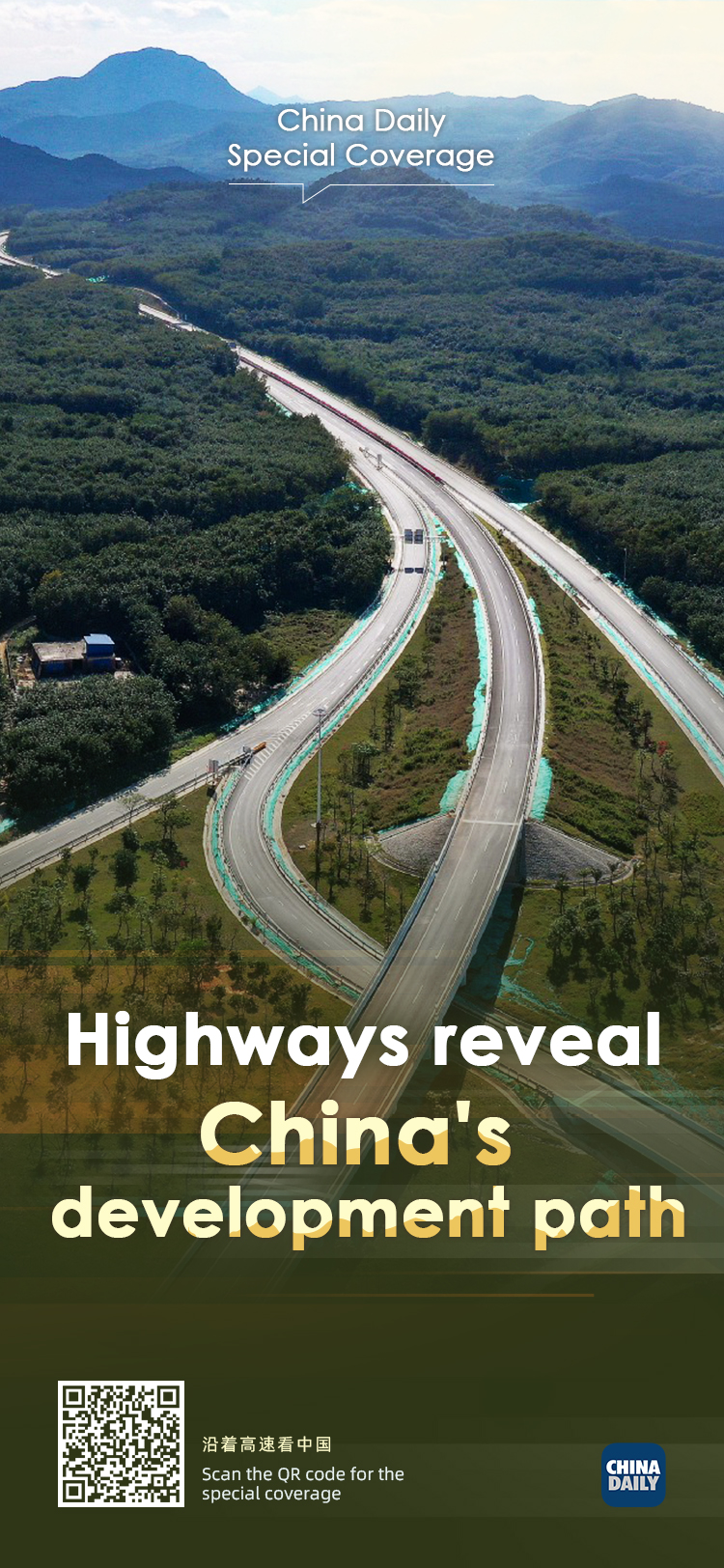
China has built the world's largest expressway network, with a total length of 160,000 kilometers by the end of 2020. Currently, the network has embraced 98.6 percent of cities and regions whose urban population exceeds 200,000. By 2035, the network will cover all cities and counties with a population exceeding 100,000.
China has created the world's largest expressway network, connecting hundreds of millions of people.
As China's expressway network expands and improves, the country's progress will also keep rolling along with it.
Watch this video for an overview.
Voiceover: Ian Goodrum
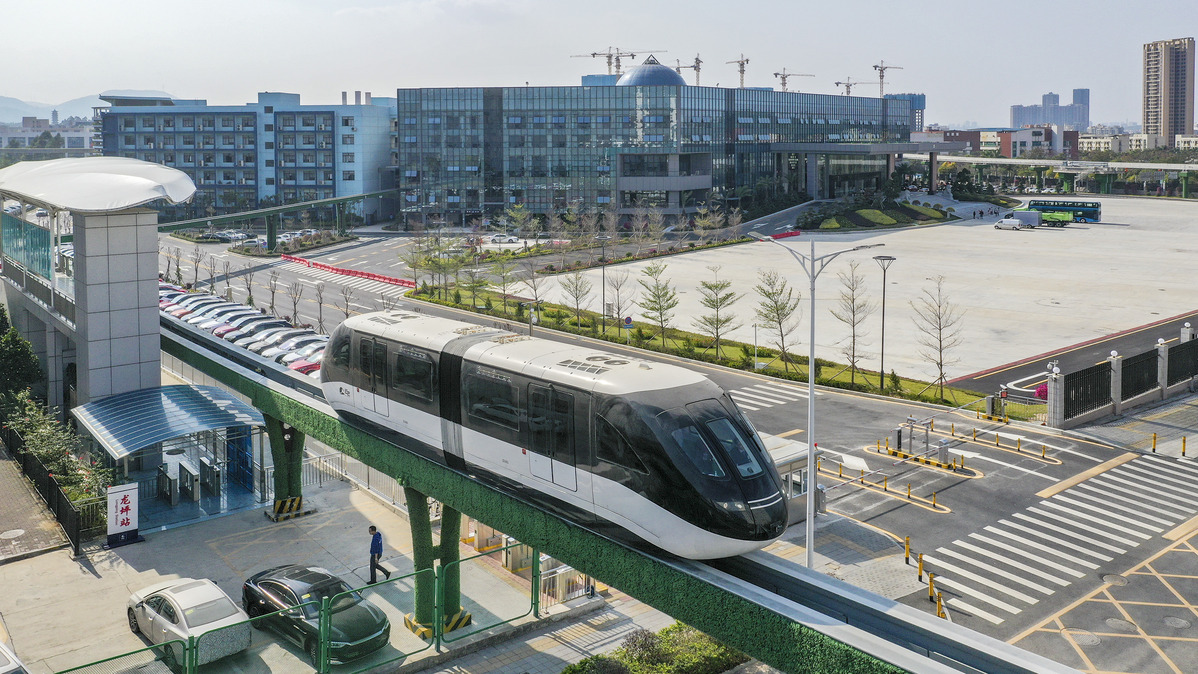
Greater Bay Area makes major gains over long term from infrastructure thrust
Su Xiuyi bought a sewing machine from Taiping Handbags Factory when the first export-oriented processing factory in China closed its doors in 1996.
"The machine was then donated to an exhibition hall, which was built in 2019 to mark the marvelous development of the factory since the reform and opening-up policy,"Su said.
Su, 72, worked on an assembly line at the factory, which was established by a Hong Kong company in 1978 in Humen township, Dongguan, Guangdong province.
"Back in the 1980s, many female workers like me were eager to work in the factory, which provided very competitive pay," she said.
Taiping Handbags Factory, the first company to start manufacturing processed goods on the Chinese mainland and export them to Hong Kong, followed China's reform and opening-up policy and its strategy of developing foreign trade.
"Following the success of the Taiping plant, many entrepreneurs from Hong Kong and Taiwan established factories in Dongguan and other cities in the Pearl River Delta region to make shoes, bags, garments and suitcases for export," Su said.
As of 2020, Humen, in the heart of the delta, has more than 782 overseas-funded companies registered, with import and export volume reaching 55.31 billion yuan ($8.51 billion) last year, according to local government data.
Humen's GDP increased from 74.66 million yuan in 1978 to 64.5 billion yuan in 2020, according to the local government.
"Rapid development of expressways in the Pearl River Delta region has helped attract foreign investment," said Huang Liangren, director of the Taiping Handbags Factory Exhibition Hall.
Citing the Guangzhou-Shenzhen Expressway, which connects Guangzhou, Dongguan, Shenzhen and Hong Kong in the delta, Huang said the highly efficient transportation network will further push local industrial upgrades.
Along the Guangzhou-Shenzhen route, a number of emerging industries have been rapidly developed in Guangzhou, Dongguan and Shenzhen over the past decades, according to Huang.
BYD Co Ltd, which was founded in 1995 in Shenzhen, has established over 30 industrial parks worldwide, building its business related to electronics, automobiles, new energy and rail transit.
"Our business covers more than 300 cities in over 50 countries and regions, providing green energy and low-carbon vehicle services," said Luo Hao, public relations director at BYD.
Zhang Lei, deputy general manager of Shenzhen New Industries Biomedical Engineering Co Ltd, said the company has realized an annual increase of more than 30 percent in sales over the last few years.
"Emerging businesses have played a significant role in driving the economic development of Shenzhen. We have increased our production capacity to meet global market demand for biomedical products and services," Zhang said.
Convenient and efficient transportation services have been key to helping boost the local economy, Zhang added.
"We are expecting more business growth as there will be an intercity expressway soon to be completed and running through Pingshan new area, where our company is located,"Zhang said.
In the Guangdong-Hong Kong-Macao Greater Bay Area, a number of new transportation facilities are being constructed, helping further strengthen connectivity among cities within the GBA.
The main bridge towers of Zhongshan Bridge, one of the key projects amid ongoing construction along the Shenzhen-Zhongshan Link, will be completed before the end of this year, according to the Shenzhen-Zhongshan Link Administration Center.
The Shenzhen-Zhongshan Link connects the city clusters of Shenzhen, Dongguan and Huizhou in the eastern part of the PRD region with the prosperous cities of Guangzhou, Zhuhai, Foshan, Zhongshan, Jiangmen and Zhaoqing to the west, helping strengthen connectivity in the GBA.
"The link will play an important role in expanding cooperation and exchanges among cities in the GBA in the future and further help boost industrial upgrading," said Chen Yue, deputy chief engineer and director of the Chief Engineer's Office at the Shenzhen-Zhongshan Link Administration Center.
It will take only about 30 minutes to travel between Zhongshan and Shenzhen when the eight-lane structure, which also connects Guangdong's three pilot free trade areas of Qianhai-Shekou in Shenzhen, Nansha in Guangzhou and Hengqin in Zhuhai, is completed and opens to traffic in 2024.
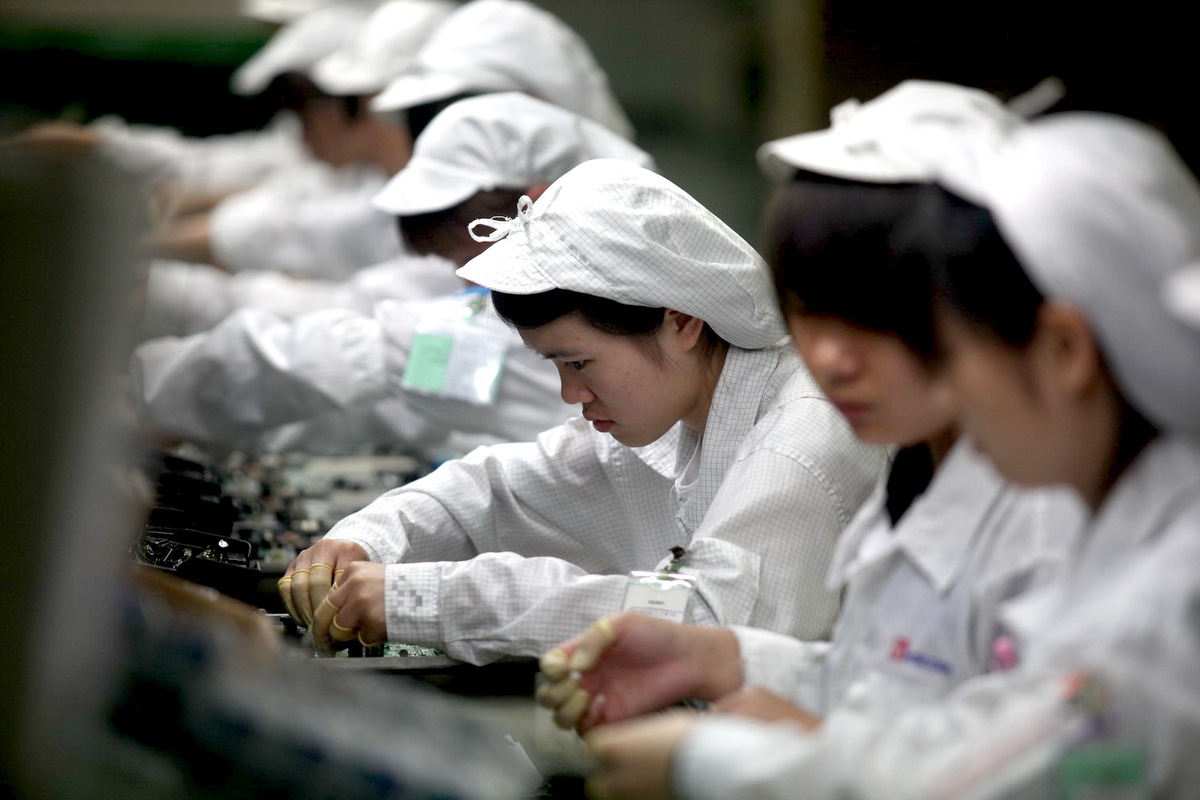
Tech giant Foxconn's investment in Guangdong province, an economic powerhouse in South China, has developed since the 1980s in a way similar to the route of the Guangzhou-Shenzhen Expressway.
"Our investment in Guangdong was particularly concentrated along the expressway between Guangzhou and Shenzhen in recent decades," Terry Gou, founder of Foxconn, said in an earlier interview.
Foxconn, the world's largest original equipment manufacturer, started its first investment project in Shenzhen in 1988, a year after the construction of the 122.8-kilometer expressway began.
Average daily traffic flow along the expressway between the two major cities in the Pearl River Delta region increased from 36,300 vehicles in 1994 when began trial operations to 650,000 vehicles in 2020, according to the Department of Transportation of Guangdong Province.
"In addition to preferential investment policies since the reform and opening-up in late 1970s, the high efficiency of transportation infrastructure following the opening of the Guangzhou-Shenzhen Expressway was very attractive for overseas investment in the delta region," Gou said.
Foxconn then started its construction of a liquid-crystal display plant in Zengcheng district, Guangzhou, capital of Guangdong province, with an investment of 61 billion yuan ($9.39 billion) in early 2017.
The project, covering an area of about 1.5 square kilometers, was designed to produce 8K displays, smart TVs and electronic white-boards, among other products, helping attract more than 70 upstream and downstream companies in the industrial chain to invest in Guangzhou.
Before the operation of the Guangzhou-Shenzhen Expressway, it took about half a day to travel between Guangzhou and Shenzhen, given there had been only a highway with more than 150 kilometers between the two cities.
The Guangzhou-Shenzhen Expressway was fully opened in 1997, becoming the first expressway invested and constructed by Guangdong and neighboring Hong Kong.
Widely claimed as the busiest expressway in China, the Guangzhou-Shenzhen route has greatly helped accelerate the economic and social development of the cities along the route, according to Wang Wei, Party secretary of the Guangzhou-Shenzhen Expressway Administration Center.
"It is of great importance to economic development of Guangzhou and Shenzhen, helping form an industrial cluster in the delta region," said Wang.
According to local government data, Shenzhen's GDP increased from 56.7 billion yuan in 1994 to 2.76 trillion yuan in 2020.
"A megacity cluster along the Guangzhou-Shenzhen Expressway is forming, with total GDP of Guangzhou and Shenzhen surpassing 4 trillion yuan," Wang said.
In the last two decades, emerging industries including modern logistics and advanced manufacturing in cities along the expressway also enjoyed rapid development, Wang added.
"The expressway has greatly accelerated the development of modern logistics and helped form a city cluster in the delta region," Wang said.
Over the past two decades, a large number of logistics companies and industrial zones sprouted up along the expressway, which runs through Dongguan, a manufacturing hub in the delta region.