Tokyo and Beijing can pave way for global trust









Japan and China are to celebrate the 50th anniversary of their normalization of diplomatic relationship in September 2022.
During the past 50 years, China has realized outstanding economic growth, and attained dominant position in the world through their political and economic activities. Japan and China must sublimate their cooperative relationships to a new dimension beyond the previous phase of focusing on China's reform and opening-up policy.
In December 1979, when then Japanese prime minister Masayoshi Ohira visited China, I had an opportunity to accompany him as his secretary.
In his speech delivered in Beijing, Ohira reflected on his thoughts at the time on the negotiation to normalize diplomatic relationships, saying: "Our hearts were full of great anticipation and equally great anxieties. Our anxieties were relieved, however, by the broadmindedness of China's leaders and its people, which was well-expressed by the words of premier Zhou Enlai on 'seeking big common ground while shelving small differences'. That culminated in the successful conclusion of the great deed to normalize diplomatic relationships between China and Japan."
He concluded his speech by stressing that one of the most important factors for international relationships is to maintain the mutual trust between people of the countries beyond the economic interest.
Ohira, who served as foreign minister in Prime Minister Kakuei Tanaka's cabinet, participated in the negotiations, and exerted extensive effort in preparatory works to help realize the diplomatic normalization. He had great interests in China's progress after normalization. During his visit in 1979 as Japanese prime minister, he found the robust responses of Chinese people to the reform and opening-up policy and proclaimed Japan's support for China's industrial development.
China steadily pursued its structural reform, learning from the economic reform experiences of other nations, including Japan.
Ohira committed during his official visit to China to offer the so-called yen credit to support the construction of industrial and social infrastructure necessary for economic development. China realized the process of high economic growth since the 1990s and joined the World Trade Organization in 2001.
Its economic scale surpassed that of Japan in 2010 to become the second largest economy in the world and grew even further to become about three times as large as Japan's today.
During this period of high economic growth, China advanced its economic reform and technological development to become the largest trade partner of Japan, and even attained sufficient capabilities to compete with the US in advanced technological fields.
From the history of the world, we learned how political and economic structures would change all the time in the world. China would likely expand its economic power further to reach the level equivalent to the US, and then it would be asked to take appropriate responsibilities and roles in international politics. China would undoubtedly provide intellectual contribution to the world in high-tech fields, such as information technologies.
In July, President Xi Jinping spoke at the informal summit meeting of Asia-Pacific Economic Cooperation about the building of "a new and open economic regime of advanced level, by creating new framework for development". Japan, meanwhile, has overcome the stagnancy of Heisei Era (1989-2019), and is now pursuing the reform of the Reiwa Era.
Reiwa period began on May 1, 2019, following the abdication of Emperor Akihito and the elevation of his son Naruhito to the Chrysanthemum Throne.
Japan and China need to undertake efforts to achieve "economy of high-quality" that pivots around revolutionary information and communication technologies, led by artificial intelligence.
While the world economy suffers from the finiteness of resource availability and exacerbation of the global environment, the only path we can choose is to realize, with higher creativity and added values, "economy of high-quality", which has less resource dependency and lower burden on the global environment, so that humans can optimize their functions. Fortunately, humans have acquired necessary tools to realize new, high-quality economy through the advancement in IT revolution using AI.
Japanese industries were proud to be among the world's top-class industrial and technological powers in the 1980s and early 1990s, but its industrial power was flattened to stagnancy by the collapse of economic bubbles. Japan has recently been striving to make a full recovery.
China, on the other hand, achieved outstanding success and reached a level high enough to compete with the US through advancement in industrial technologies.
From the beginning of 2020, the COVID-19 pandemic has rapidly expanded worldwide, threatening the health and lives of humans, while driving global economy and society to a standstill. On the other hand, the pandemic has provided good opportunities for accelerating the development of digital transformation and the creation of a "new economy" system.
We are now moving to the new stage of economic and social advancement through technological innovation. We have to challenge the following matters.
First, we need to deploy innovation vigorously. The 21st century is the age of new development in innovations, with AI and others at the center.
In the beginning of the 20th century, the world saw the arrival of petroleum age. And in 1910, Austrian political economist Joseph Schumpeter defined the innovation as "the critical dimension of economic change", which might create the novel combinations of production resources, such as materials, labor force, etc.
I would like to propose a new definition of "innovation", in this age of the latest IT revolution, as the creation of new intellectual values within the economic sphere through the combination, integration and utilization of information elements collected through revolutionary IT technologies.
Today, AI and other information technologies make it possible to improve the efficiency of communication beyond physical limits and the boundaries of complexity to enhance added values. Through the fusion of cyber space and material space, we can ensure accuracy, improve efficiency, and realize the fulfillment of temporal values, so to advance economic activities from the material production-ism to the value-use-ism.
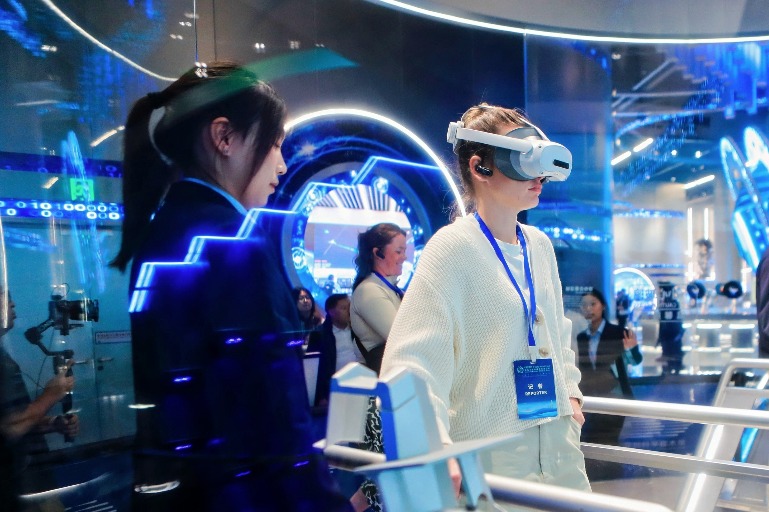
The use of AI will allow us to realize unmanned factories and retail shops with the installment of automation equipment, provide advanced remote medical services, make smart phone payments and cashless payments, and introduce cryptocurrencies. The use of AI can promote accuracy, speed, efficiency, and optimal selection of information communication, while realizing the improvement of added values.
The fields where advancement in innovation is expected will likely involve a wide range of areas centering around information technologies, such as biochemistry, new materials, space, oceans, advanced medical services, new energies, electric cars, power storage equipment, drones and hydrogen uses.
More intense international competitions in innovation will be likely worldwide.
In the case of Japan, its stagnant economy after the collapse of economic bubbles in the 1990s suppressed its innovation capability. Becoming more aware of its failures, however, Japan started to enforce policies for the development of innovation capability.
To accelerate innovations, major economies are focusing on policies to support research and development, to nurture intellectual human resources, and to develop new competitive environment. The key factors for developing favorable market conditions are innovation, fairness, efficiency and competitiveness.
Recently, it was found that the aggregations of intellectual functions in cities have contributed greatly to promoting innovation, such as in the cases of the Silicon Valley in the US and Zhongguancun Science Park in Beijing and the Nanshan District of Shenzhen in Guangdong province. Regional and social cooperation is strongly expected to be encouraged.
Second, we have to corporate for the efficient operation of global market, which needs to operate freely and rationally under fair and safe rules. Japan and China need to reach agreement for this purpose in cooperation with the US and the European Union, while taking a leading role in restoring the proper functioning of the World Trade Organization.
Until then, it is necessary to promote and utilize regional free trade agreements, such as the Regional Comprehensive Economic Partnership, the Comprehensive and Progressive Agreement for Trans-Pacific Partnership, and APEC. Japan and China must exert efforts for the early entry into force of RCEP, which accounts for about 30 percent of the world's population and global trade values. For CPTPP, the UK expressed their intention to join in February, and China submitted its application in September.
Advancement in information and communication technologies has had significant influence over the conditions of world trade competition, such as the monopoly of technologies and the risks of aggregating and concentrating corporate activity locations. Japan and China need to establish appropriate international rules to address these issues.
The two countries need to have mutual exchanges of their experiences in such rule-making and lead the world to realize "economy of high-quality".
Third, we need to have mutual cooperation in reforming corporate management methods. The efficiencies of corporate management have been improved significantly through the advancement of information and communication technologies, with work style reform evolving through digital transformation of offices.
The COVID-19 pandemic has provided good opportunity for companies to promote digital transformation of corporate management. Moreover, such transformation would also provide powers for fundamental revolution in corporate management. For example, digital transformation would make it possible for companies to transform their profit structure from those based on the profits of scales to those bringing the profits of information, consolidation and times, thereby enabling the achievement of overall optimum. Corporate value, which may include profit value, customers' value, workers' value and social value, is increasingly expected to grow further through AI and other advanced management tools.
In the future, corporate management will likely face new and additional constraint factors, such as human security, while necessitating the improved management of markets, such as protecting intellectual properties and removing harmful effects of information monopoly. Such frameworks of markets should be rational and wholly optimized. Japan and China need to mobilize their knowledge and wisdom in developing the optimal conditions.
Japan and China need to jointly lead the world toward the development and fulfilment of human security regime. Such regime will likely have an important function in the urban development index.
The UN Development Program announced its human security policy in 1994 and recommended health, medicines, education, anti-terrorism and response toward natural disasters as its factors. The UN General Assembly further developed this policy and adopted the Sustainable Developments Goals in September 2015, which included 17 goals such as no poverty, zero hunger, decent work and economic growth, and climate actions, as well as 169 action programs. SDGs are the goals every corporation in the world needs to implement seriously and effectively. Corporations in Japan and China are no exceptions. They must cooperate in deploying such SDGs.
How to respond to COVID-19 pandemic is a key factor in establishing human security. Japan and China should lead the world in creating an effective system to fight against COVID-19 by intensifying coordination with other major countries. Major countries are struggling to find the best options to fight against the pandemic, balancing lockdowns and economic recovery measures.
This year, many countries such as the UK, Israel, the US and China have had extensive dissemination of vaccines as measures to fight the COVID-19 pandemic. How to confirm the effects of vaccines and how to distribute them in the world must not be the subject of political diplomacy, but the issue of enforcement through international cooperation from the humanitarian perspectives.
Japan and China are expected to disseminate such awareness and consciousness and contribute to preparatory measures for future epidemics by eliminating various epidemic-causing factors, such as preventing destruction of the nature and developing healthier human-animal relations.
Today, global warming is the biggest threat to humans. This year alone, harsh heat waves and severe rainstorms hit areas such as the US, China and Europe, causing many casualties. The urgent and crucial challenges of humans are to reduce carbon dioxide emission, which is the major cause of global warming, and to shift toward more circular economy.
In Japan, the administration of Yoshihide Suga announced the commitment to realize carbon neutrality by 2050, and China has set the target of achieving carbon neutrality by 2060. Global warming issues are incorporated into the Chinese urban development index. When developed fully in details, this will be sure to become a useful tool to resolve such issues.
The Joe Biden administration of the US has declared their return to the Paris Agreement, and the world is now developing a regime for "great reset". For this, the key is to shift toward circular economy led by technological development, as well as addressing urgent challenges, which include the development of new energies such as solar and wind and their supply networks, the development and dissemination of electric cars, revolutionary development of power storage facilities, the fixation and sequestration of carbon dioxides, and the realization of smart cities.
Fourth, Japan and China have to expand their mutual cooperation in various fields, including more efficient energy consumption and transfer of pollution prevention technologies, with the Japan-China Economic Association holding energy and environment forum in cooperation with Japan's Ministry of Economy, Trade and Industry and China's Ministry of Commerce. In the future, Japan and China need to deploy wide-ranging collaboration, including in technological development, and, more importantly, continue working for the deployment and dissemination of their technological achievements to developing countries.
Fifth, we have to address demographic changes in society, with fewer children and an aging population. Japan is now facing grave issues arising from its aging society, such as how to secure financial resources to fulfill social security needs in providing health, nursing and medical services to the elderly. Similar issues will likely hit China in the near future. Both countries need to mutually exchange their experiences and cooperate with each other in developing social welfare policies and measures.
Finally, Japan and China can strengthen their bonds with the international community through cultural exchanges.
Reflecting on the history of human development, the advancement of human civilization has been dramatic and drastic, with their culture advancing steadily.
The cultural development of Greek and Roman empires was amazing, leading to further blooming of culture in medieval Europe. China, India, and Islam pursued their own cultural developments. Japan introduced the Chinese culture through its envoys to Sui Dynasty and Tang Dynasty (in the 7th to 8th century) and integrated such culture into Japan's own. Japan has continued to introduce culture and technologies from other countries, including Europe and the US, to build its foundation of social development.
Japan has traditionally shown great tolerance to other culture, and actively integrated different culture throughout its history. China has been providing superb culture in great scale, including literatures, calligraphy, China wares and porcelains and Buddha statues. Chinese cuisines are widespread throughout the world.
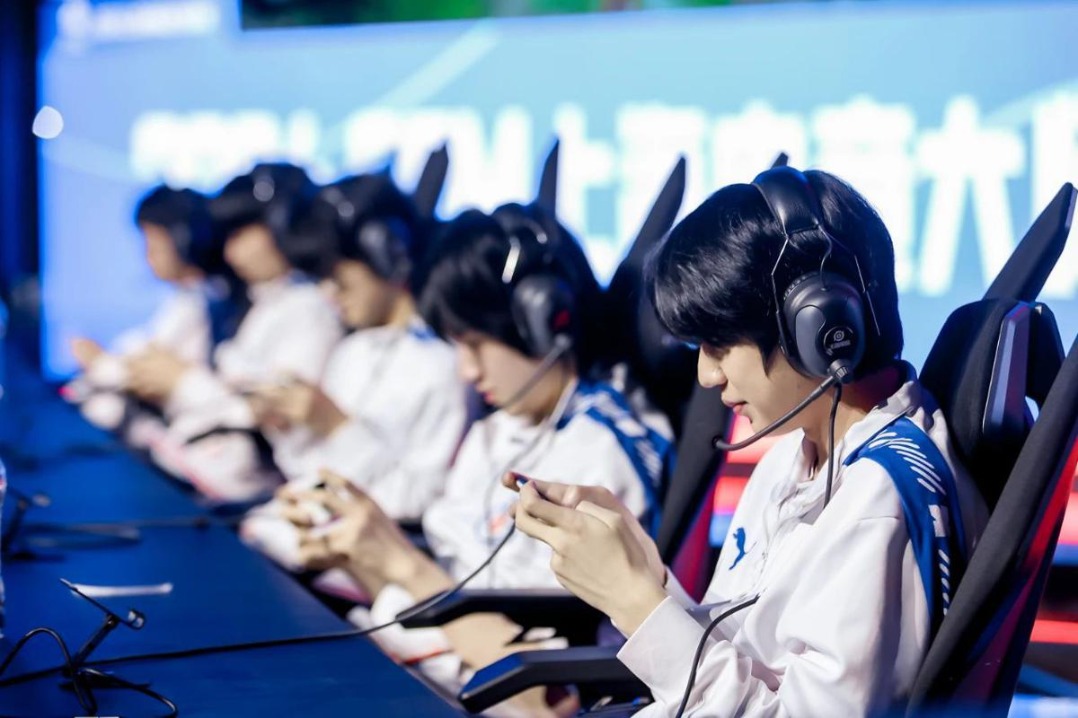
In addition to traditional culture of both countries, new culture have emerged recently, centering around amass of information and communication technologies. American journalist Douglas McGray recently pointed out that "Japan's gross national product is stagnant, but its gross national cool has mastery engine". New culture can be found in anime, manga, cuisines, fashions and devices relevant to cultural information.
Information-related technologies have opened a new horizon for the development and fusion of industries and culture, as well as technologies and arts. Recently, China is focusing more on the promotion of cultural activities, development of cultural markets, and nurturing of artists, while integrating information technologies not only into its traditional culture but also into newly developed culture.
"Culture" is the summation of artistic and technological values, and the symbol of international reconciliation.
Especially, rapid advancement in information-related technologies including AI will likely improve the cultural quality of commercial products and services, develop the methods and tools of artistic expressions, enhance more sophisticated methods to communicate cultural information, and make it possible to realize both cultural values and efficiencies at the same time.
Expanding cultural markets through intensified cultural exchanges, the two countries can develop methods to evaluate cultural values in markets, collect relevant data, and study the conformity of technologies and cultures.
It is my belief that if Japan and China can cooperate in integrating industries and culture, and technologies and arts, this will enhance mutual understanding of their culture by improving the human sense of values, thereby significantly contributing to global stability and the harmonization of human society.
On Oct 4, Fumio Kishida became the 100th prime minister of Japan. He is the chairman of Kouchikai, a policymaking group which Masayoshi Ohira once led. Kishida's political style is to listen to the opinions of as many people as possible before making any political choices and decisions.
During the Shinzo Abe administration, Kishida was foreign minister for 1,682 days, further enriching his experience in diplomacy and international relations.
In terms of economic policy, he said that he would make overcoming COVID-19 epidemics as top priority, then establish "new capitalism" supported by virtuous cycle of growth and fair distribution to revive Japanese economy, which has been stagnant for some time. Moreover, he would aim for building and consolidating robust platform for economic growth, by focusing on policies to reinforce innovation capabilities, prevent global warming, and establish economic security.
At the same time, he would undoubtedly stress the importance of establishing economic cooperative relationships with major countries, such as China.
Japan-China cooperation will significantly contribute to global stability and the development and evolution of humans.
For the past 2,000 years or longer, excepting the brief period of animosity, people of Japan and China have continued their close mutual relationship in the fields of economy, technologies, culture and education. They would continue and tighten their solid bond of trust for the next 100, 200 and 1,000 years, and further deepen mutual exchange activities.
Moreover, through such a close relationship, they could deepen the knowledge and wisdom of humans and heighten their virtues. Through these mutual exchanges, Japan and China could provide greater contribution to realizing the "economy of high quality" and "global society filled with mutual trust".
The author is former Japanese administrative vice minister of International Trade and Industry and now is chancellor of Incorporated Educational Institution of Toyo University in Tokyo, Japan. The views do not necessarily reflect those of China Daily.
If you have a specific expertise, or would like to share your thought about our stories, then send us your writings at opinion@chinadaily.com.cn, and comment@chinadaily.com.cn.