China's top political advisory body to elect new leadership









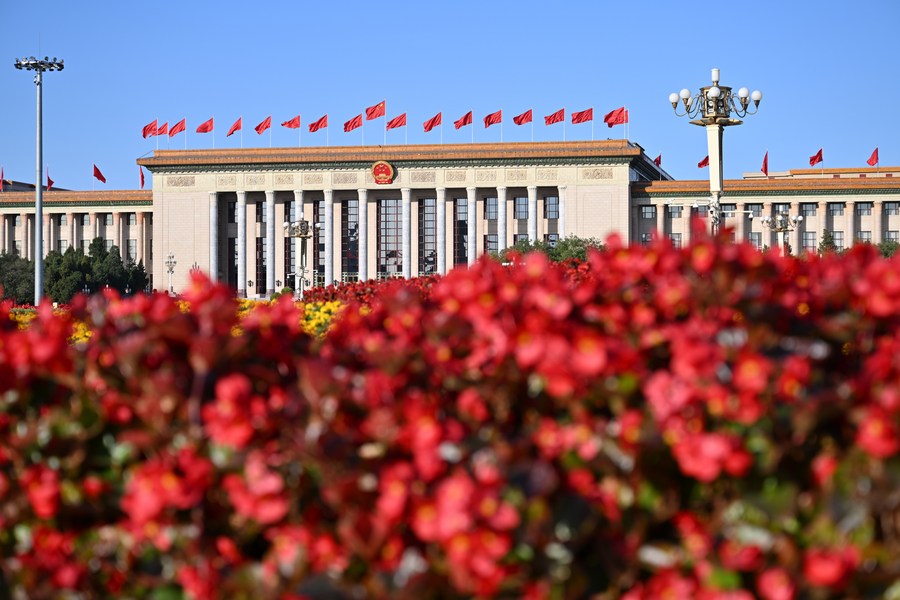
BEIJING - A candidate list for the new leadership of the 14th National Committee of the Chinese People's Political Consultative Conference (CPPCC), China's top political advisory body, was approved on Thursday.
Adopted by the presidium of the ongoing first session of the 14th CPPCC National Committee at a meeting Thursday afternoon, the name list will be submitted to a plenary meeting for a final vote on Friday afternoon.
Wang Huning, a member of the Standing Committee of the Political Bureau of the Communist Party of China (CPC) Central Committee, presided over the presidium meeting.
The name list included candidates for chairperson, vice chairpersons, secretary-general and standing committee members of the 14th CPPCC National Committee.
A method of election for the first session of the 14th CPPCC National Committee was adopted at the presidium meeting.
The presidium also adopted a draft resolution on the work report of the Standing Committee of the 13th CPPCC National Committee, a draft resolution on the report on the work of proposals from political advisors, a draft resolution on an amendment to the CPPCC charter, a draft report on proposal examination, and a draft political resolution of the first session of the 14th CPPCC National Committee.
It was decided that all the drafts will be submitted to the closing meeting of the first session of the 14th CPPCC National Committee for approval.
The second meeting of the executive chairpersons of the presidium, as well as a video conference of the CPPCC session, were also held on Thursday.
The CPPCC serves as a key mechanism for multiparty cooperation and political consultation under the leadership of the CPC.






- Shanxi ends province-wide blanket fireworks ban
- Audit: China fixes bulk of fiscal problems tied to 2024 budget
- China reports major gains in circular economy
- Chinese lawmakers review draft revision to banking supervision and regulation law
- Top legislature to study draft laws on environment, ethnic unity, national development planning
- Administrative organs must secure people's interests: senior judge