The China Story
at your Fingertips
OPEN

"A Date with China" International Media Tour 2024 invites media correspondents and internet influencers to explore the provinces of Fujian and Shandong and Xinjiang Uygur autonomous region.
Oct 18-26 – Xinjiang Uygur autonomous region
May 15-21 – Quanzhou and Zhangzhou in Fujian
June 1-7 – Qingdao, Jining, and Weihai in Shandong

Yasinjan Alekse, a taxi driver from Aksu in Northwest China's Xinjiang Uygur autonomous region, has been offering free taxi rides since 2009. Motivated by a desire to promote ethnic unity, Yasinjan has dedicated his time and resources to helping the local residents in Xinjiang and even people in other places across the country.
Over the past 15 years, he has provided more than 200,000 rides, covering over 850,000 kilometers, and spent 750,000 yuan to support this generous service. In recognition of his efforts, Yasinjan was honored in September as a role model for ethnic unity and progress.
As part of the "A Date with China" international media tour, China Daily reporter Felix Antoine Bachand joined Yasinjan in his cab, documenting his work and interviewing him about what drives his commitment to serving others.
Watch the video for more on Yasinjan's inspiring story.



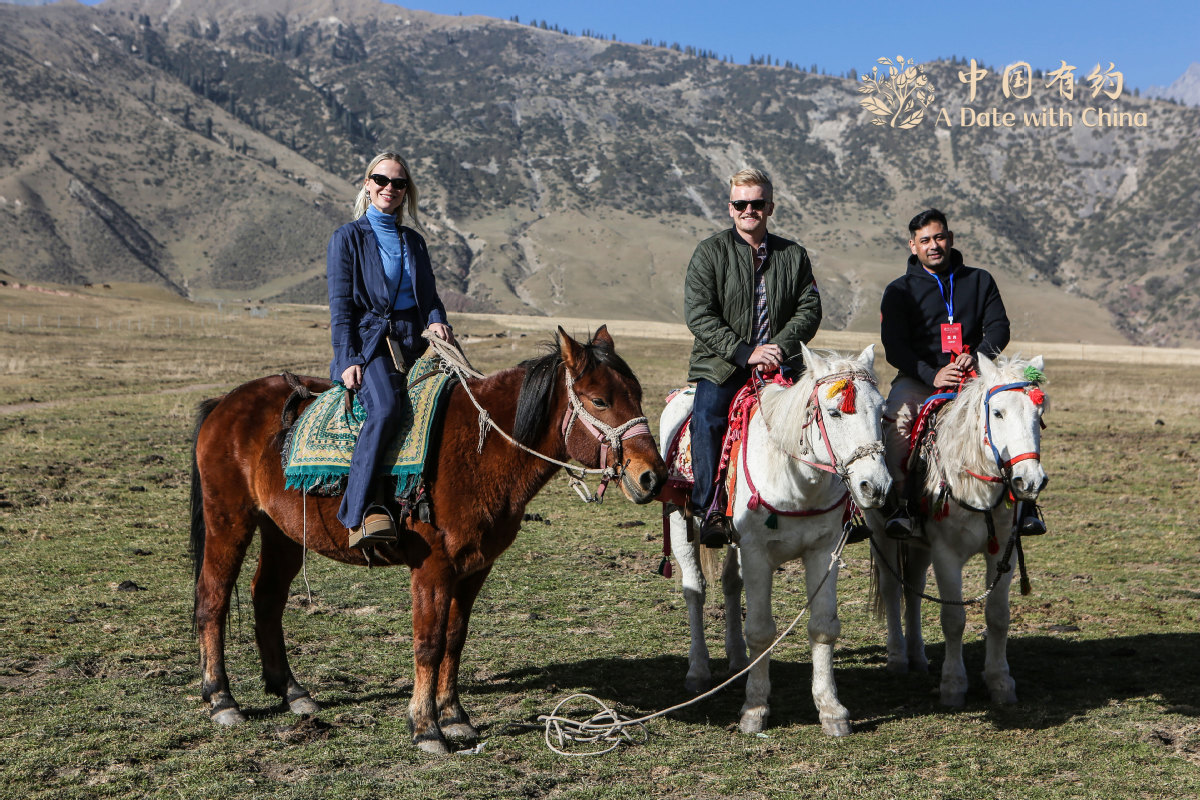
Xinjiang Uygur autonomous region, located in Northwest China, has long been a magnet for travelers. What gives this region its unique allure? After visiting Xinjiang, China Daily reporter Yan An discovered that its charm lies in the profound vitality of both its landscapes and its people. In Aksu, for example, villagers from Ta Village ride horses across expansive grasslands, exuding a deep sense of freedom. In Korla, a 75-year-old chorus leader dances with boundless energy, embodying the spirit of the region.
Join our reporter as she explores the villages and communities of Xinjiang to capture the essence of its vibrant culture.

On October 19, American content creator Douglas Dueno joined the A Date with China International media tour, venturing into the city of Turpan of Xinjiang. He set out to capture the stories of this incredible city. From breathtaking desert landscapes to exploring ancient ruins, uncover the rich history and beauty of Turpan. So, hit play and join him on this adventure!

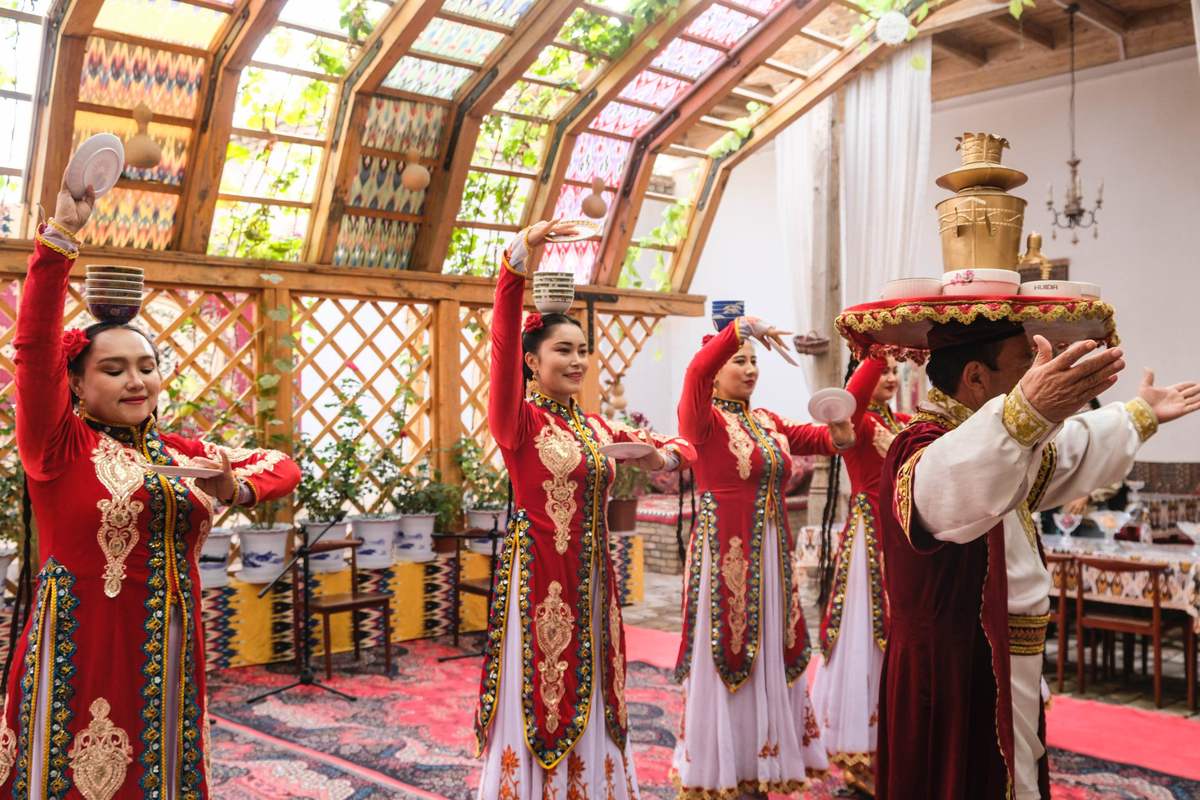
The Xinjiang Uygur autonomous region boasts a rich and diverse culture. Artistic performances play a crucial role in preserving the unique contributions of the Uygur ethnic group.
During the "A Date with China Meet Xinjiang" media tour, participants were captivated by the unique charm of traditional Uygur dances, a cultural treasure of the region.
The Samawar and bowl dance testify to the region's long-standing tradition of hospitality.
Men typically perform the Samawar, with participants demonstrating their skill in balancing an 8 kg teapot on their heads. The bowl dance, commonly executed by women, involves small tea bowls delicately balanced on the dancers' heads. Accompanied by music, the dancers gracefully move their necks and bodies in rhythmic motions, incorporating movements such as spinning, kneeling, and sudden stops while moving in different directions. The art form creates a visually captivating performance, as the teapot and bowls seem to be extensions of their bodies.

Bana, the owner of the Bana Dance Training Center in Korla, Bayingol Mongol autonomous prefecture of Xinjiang, provides insights into the dance's origins.
"The Samawar dance originated in Kuqa, Xinjiang, during the heyday of Kuqa music and dance from the 4th to the 7th centuries AD. It is one of China's intangible cultural heritages," she said.
The Uygur dances are cultural artifacts that embody the welcoming spirit of the region. Traditionally, performers present the Samawar and bowl dances to entertain guests and newcomers. The Kizil Caves, a UNESCO World Heritage Site in Kuqa, depict the dances in the mural paintings of musicians within Cave 38. The site represents a transcendent cultural exchange along the Northern Silk Road in ancient times.
Bana highlights the significance of traditional dances, such as the Sainaim, Daolang, Sama, and Nazilkum, in preserving and celebrating Uygur culture.
"The bowl and Samawar dance are often choreographed into finales when presented in national and international dance competitions, winning awards. This recognition reflects the love and appreciation for Uygur dance from experts and audiences," she said.
Bana explained that Grandpa's Samawar, a modern interpretation inspired by the traditional Samawar dance, received notable recognition following its presentation at the 14th China Dance Lotus Award in 2023, where it secured the top 'Lotus' prize in the Ethnic and Folk Dance category.
The 2024 China Media Group Lantern Festival Gala featured Grandpa's Samawar at the Kashgar sub-venue, signaling its increasing presence in popular cultural events throughout Xinjiang. These dances now captivate audiences in diverse cities and regions, proudly showcasing the region's local flavor, folk customs, and rich cultural heritage.
Bana has always been passionate about music and dance. She realized there was a need for more institutions to share traditional Uygur dance. After graduating with a degree in choreography from the Xinjiang Art Institute, she opened the Bana Dance Training Center in 2012, a place dedicated to preserving and promoting Uygur culture through dance.
"At that time, there was no dance training institution in Korla, so I had the idea of starting a dance training institution to train children from an early age," she said.
"The school now has 13 staff members, with our youngest student being 4 years old and the oldest being 65 years old," she added.
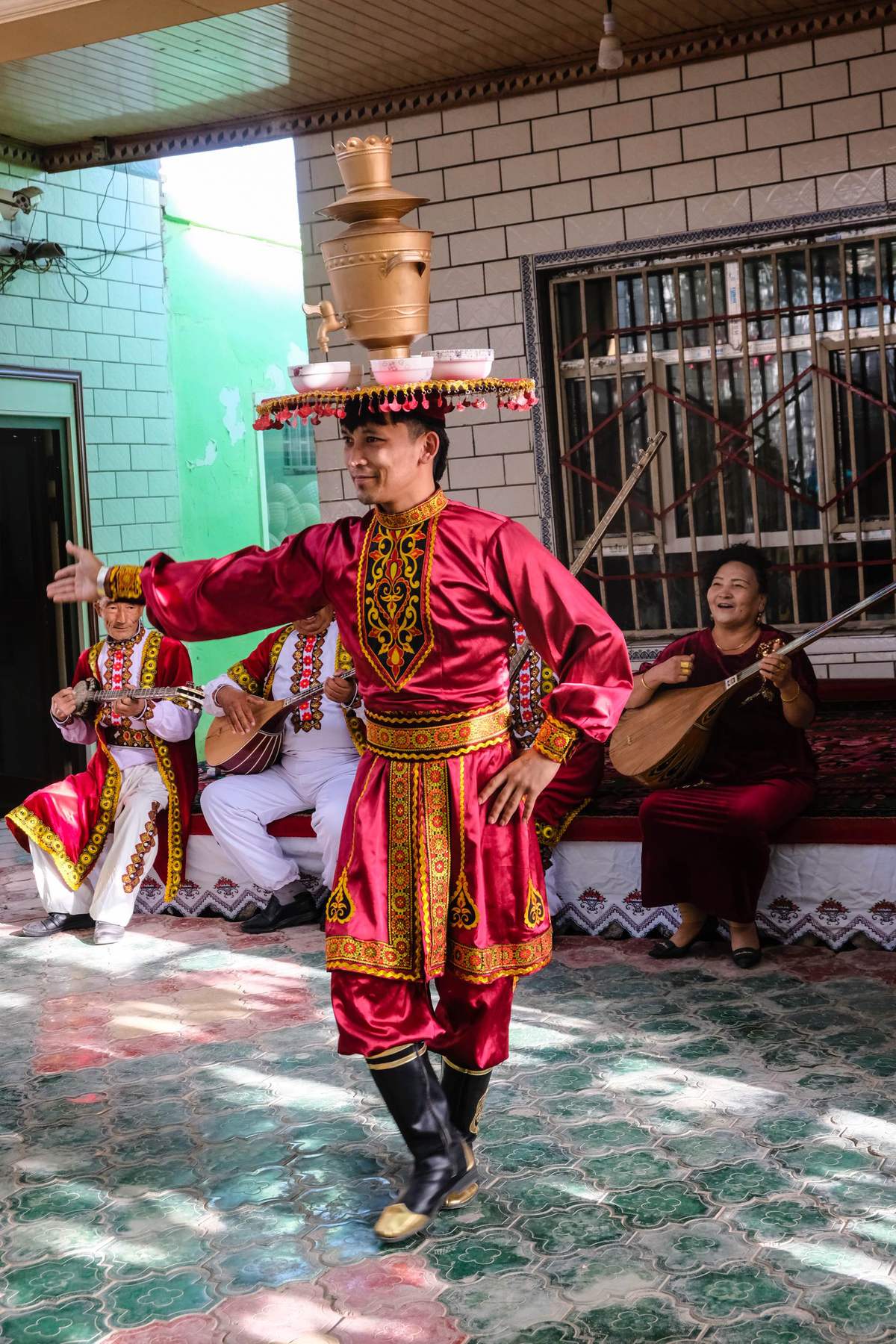
Artists need strength and exceptional dance skills to master traditional Uygur dance. Visitors to Kuqa city's residential historic area can witness the mesmerizing Samawar dance. Other popular tourist locations in Xinjiang, such as Aksu, Kashgar, and Urumqi, also showcase these traditional dances.

Check out the Turpan Museum with American content creator Douglas Dueno.
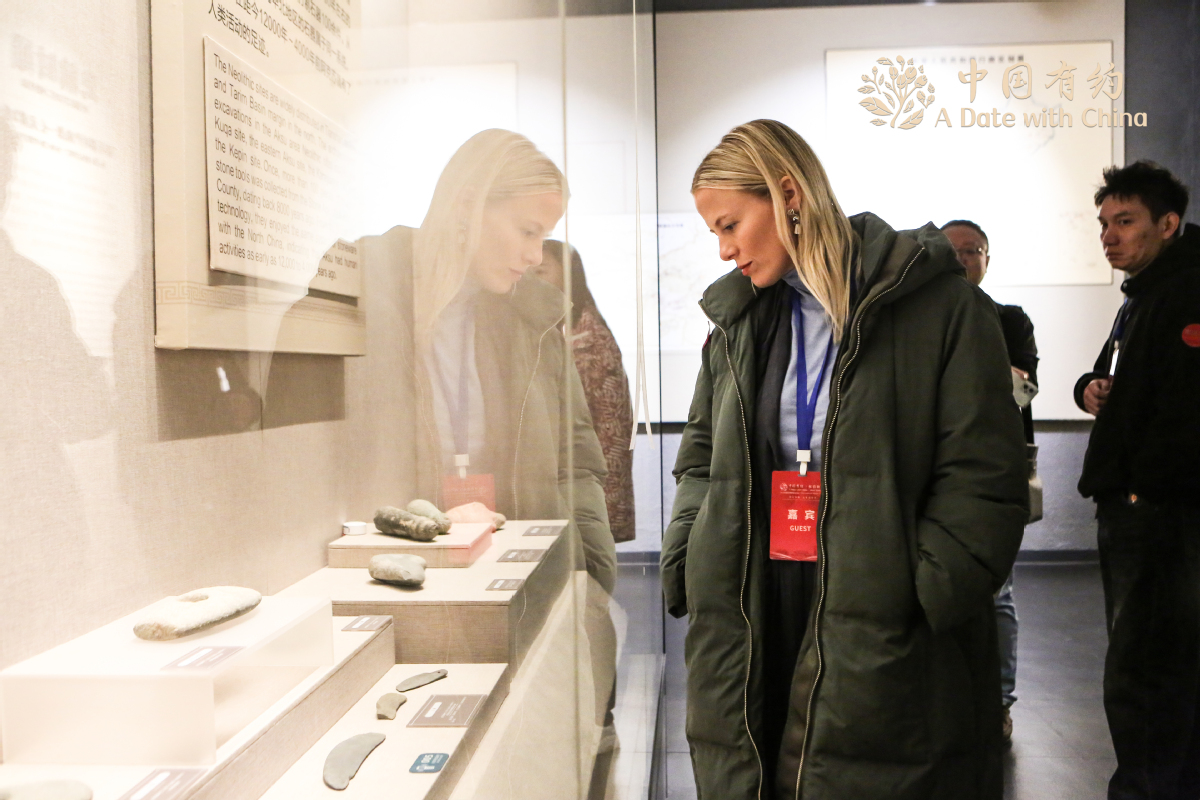
On October 20, the delegation of "A Date with China" international media tour attended by journalists and content creators traveled with Douglas in Xinjiang, surrounded by artifacts that are literally "dry goods" or ganhuo, priceless and well-preserved. From ancient dumplings to pastries, pears, and even mummies with visible muscle tissue. Join him as he explores these relics from ancient times, and Silk Road history.

An ancient Chinese quote from the Tang Dynasty (618-907) beautifully states, "Strings are not as good as bamboo flutes, and bamboo flutes are not as good as the human voice (絲不如竹,竹不如肉)." This heartfelt saying reflects the power of different musical expressions. While strings and flutes create enchanting melodies, it is the human voice—deeply rooted in nature and imbued with emotion—that possesses the ultimate ability to convey the very essence of life.
This idea is also present in Tacheng, a city along Xinjiang's northwestern border with Kazakhstan. In Tacheng, you can see the beautiful landscapes and rich cultural heritage, illustrating the unity of nature and the people who live there.
Once a vital trading port along the ancient Silk Road, Tacheng holds within its streets the echoes of centuries-old exchanges, where the rhythms of different ethnic groups merged to create a unique melody of customs and traditions. Currently, Tacheng city has been a multiethnic region since ancient times.
On October 22, the delegation of A Date with China International media tour attended by journalists and content creators from countries including the US, Australia, Nepal, Mexico, Italy, Canada, and Britain, visited this historic city to explore its rich cultural heritage and learn about the stories reflect Xinjiang's diversity and ethnic unity at the Tacheng Accordion Museum's Accordion Culture Exhibition Hall.
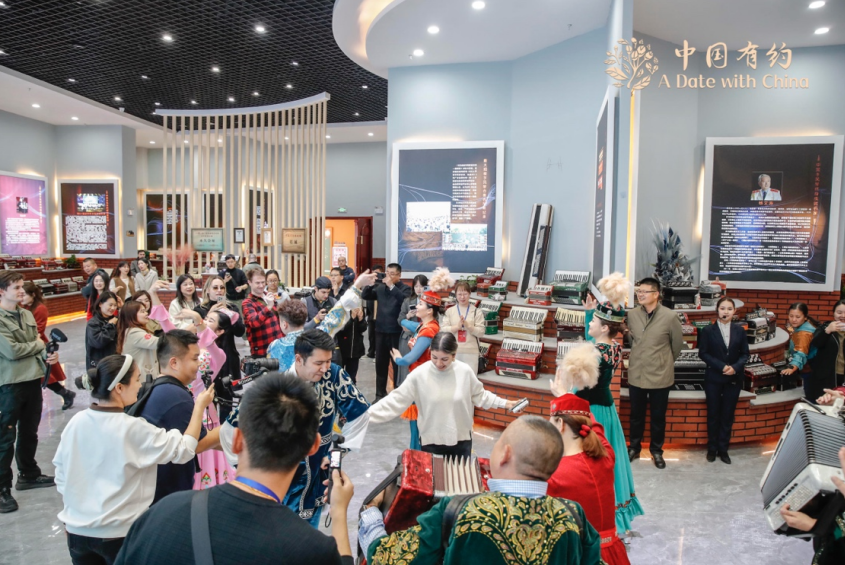
During their visit to the exhibition hall, the group was welcomed by the lively sounds of accordions played by local artists. The accordion, introduced to Tacheng in the 1930s, quickly became a cherished part of the city's cultural identity as it not only provides entertainment but also fosters a sense of community and connection among the residents.
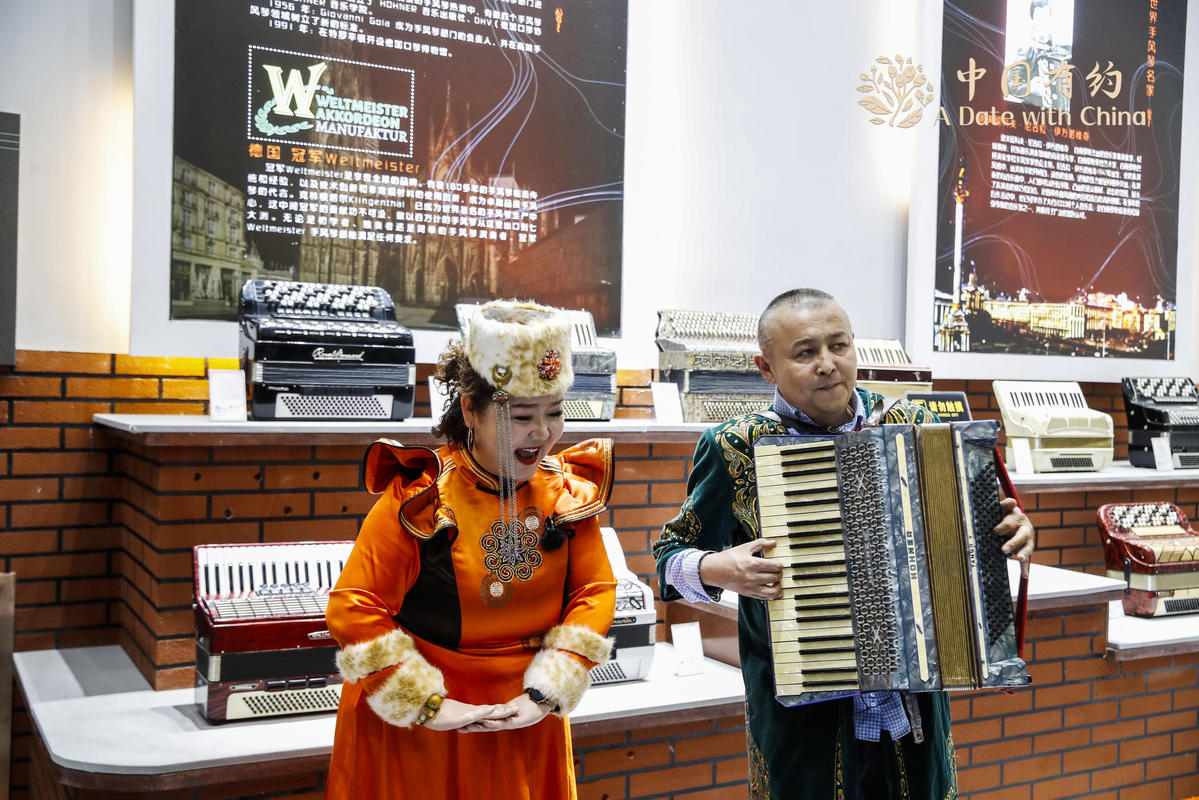
Tacheng is celebrated as China's "accordion city," a title that is honored at the Tacheng Accordion Museum. As the first of its kind in the Xinjiang Uygur autonomous region, the museum houses over 1,000 accordions from 10 countries, including China, Russia, Germany, Italy, and Ukraine. Among its collection are accordions that are made from seashells and diamonds, as well as one that is over a hundred years old, highlighting the deep history of this beloved instrument.
The group had the opportunity to immerse themselves not only in the beauty of the accordions but also in the stories and traditions behind each piece, highlighting the instrument's role in diverse cultures around the world.
From a handmade accordion to modern instruments, the collection captures the fusion of Eastern and Western musical traditions. "It's incredible to see how each accordion is donated by individuals, some even gifted personally from overseas", said Australian content creator Jack William Torr. "Seeing it become part of the culture in China illustrates the power that despite our different backgrounds, we can find unity together."

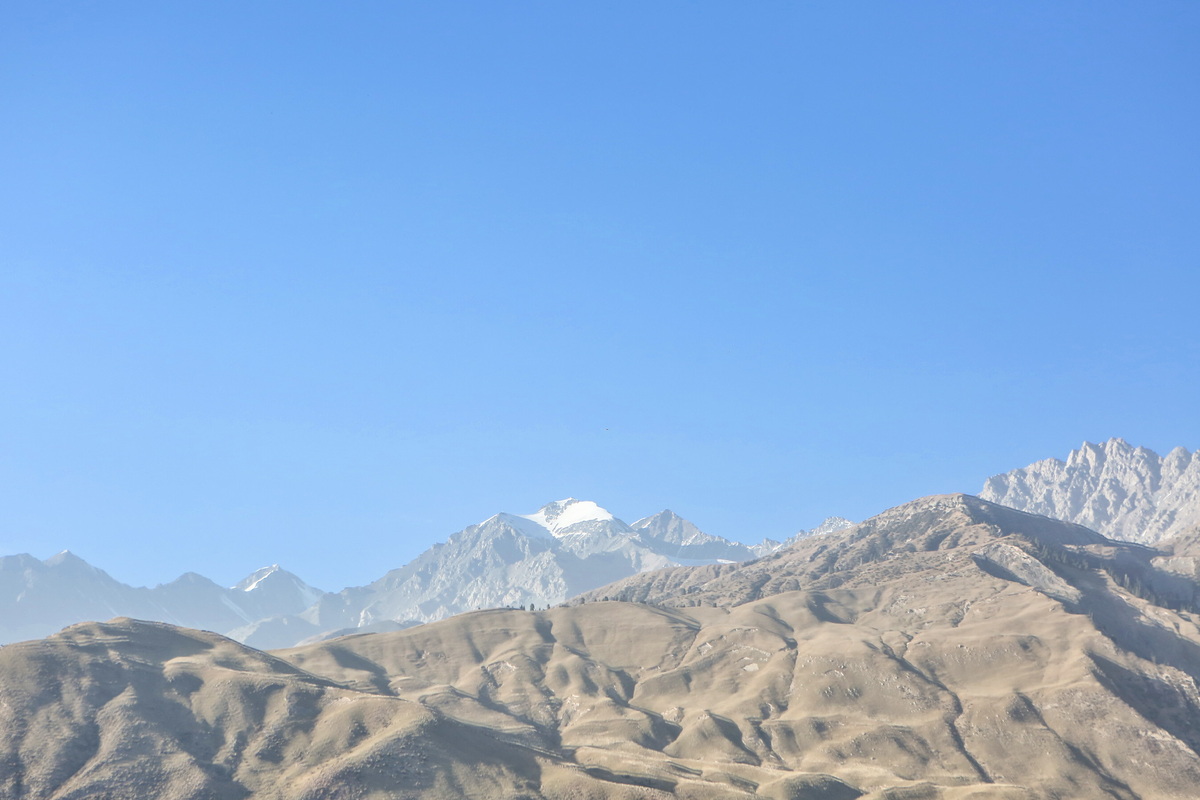
From the Tianshan Mountain landscape to the serenity of Bosten Lake, delve into ancient history at the Kizil Caves and the Qigexing Buddhist Temple Ruins, or experience local customs in villages.
The "A Date with China Meet Xinjiang" media tour takes a historical and cultural journey to remember the ancient Silk Road through the natural beauty of Aksu, Kuqa, and Korla cities in the Xinjiang Uygur autonomous region.

Aksu
Set against the breathtaking backdrop of the Tianshan Mountain range, Ta village in Wensu county, Aksu, rests peacefully at the base of Tomur Peak. Close to the border shared between China and Kyrgyzstan, the "iron" peak, known in the language of the Uygur ethnic group, reaches a towering height of 7,439 meters, making it the highest point of the Tianshan Mountain system.
Ta village has unique scenery and a vibrant ecosystem with diverse wildlife. Its landscapes include vast plains, verdant grasslands, snow-capped mountains, glaciers, lush forests, and winding canyons.
The village is a core attraction for rural tourism in the region, with accommodations ranging from luxurious resorts to cozy cabins that suit all preferences. The area offers hiking trails for all fitness levels to view the marvels of flora and fauna, making it a paradise for photographers.
Horseback riding is the best way to explore its wild, untamed nature and experience the traditional way of life. The scenic mountain trails reveal stunning views as the forest paths wind through lush greenery, allowing for immersion in the tranquil environment. Experienced guides ensure that visitors' rides are safe and enjoyable, providing all the necessary equipment for comfort. Interaction with locals provides insights into the region's cultural heritage, as horseback riding transports you into the old Silk Road adventure as a modern traveler.
At an average elevation exceeding 2,300 meters, Ta village presents a refreshing summer retreat amidst glaciers and snow-crowned summits. Its varied terrain appeals to nature enthusiasts and outdoor lovers.

Kuqa
Kuqa, located in the center of Xinjiang, was a vital branch of the Northern Silk Road and a prosperous center of trade and culture. The region's UNESCO World Heritage site, the Kizil Caves, is a testament to humanity's shared knowledge from ancient times.
Kizil Caves contain 236 numbered cave temples adorned with frescoes and sculptures. Each cave narrates stories of Buddhism's journey and its encounters throughout time, providing captivating insight into the history of Buddhism as it spread eastward.
Rock-cut caves play an essential role in Central Asian art. They are considered China's earliest-known major Buddhist cave complex, with the development of Buddhism occurring between the 3rd and the 8th centuries AD.
Located in the heart of Xinhe county, Jiayi village is a cultural treasure renowned for its expertise in crafting musical instruments. In June 2008, Uygur traditional methods earned a spot on China's national Intangible Cultural Heritage list.
More than half of the village residents engage in the art of making handcrafted musical instruments. The variety of instruments encompasses the entire repertoire of Uygur traditional music.
The dutar, a long-necked, two-stringed instrument with a pear-shaped body, is played in various forms across Central Asia. Experts acknowledge the Uygur dutar as one of the most significant instruments in this family of plucked instruments. Because of its craftsmanship and musical excellence, UNESCO has designated it an Intangible Cultural Heritage.
The making of a dutar involves multiple stages. The crafting of its body alone demands three days and the collaboration of six skilled artisans. The artisan then engages in laborious painting, embellishing, and stringing the instrument. The process can take anywhere from one week to a month. The complexity of designs and the time invested define the instrument's value.

Korla
About one hour's drive from Korla, Qigexing Buddhist Temple Ruins, or Seven-Stars Buddhist Temple, is an archaeological site in the Yanqi Hui autonomous county of Xinjiang. This temple, a major religious center along the Northern Silk Road, was a pivotal cultural exchange hub during the latter half of the first millennium AD. It was renowned for bridging Eastern and Western cultures, providing a space where travelers could impart and absorb knowledge about the world's diverse cultures.
The Qigexing features remnants of a grand temple complex comprising 93 buildings and eleven cave temples. The ruins consist of numerous shrines and monks' houses, with most of their walls preserved. The museum houses many artifacts and sculptures that pay homage to the ancient period. The Bosten Lake in the Bayingolin Mongol autonomous prefecture proposes the perfect summing-up to the Xinjiang Silk Road journey. This unique lake, only an hour's drive from Korla, covers an area of more than 1,600 square kilometers. Over 400 square kilometers of lush reeds surround it, creating a picturesque landscape that is a must-see for any traveler.
It is the largest lake in Xinjiang and one of China's largest inland freshwater lakes. Renowned for its thriving fishery, the lake offers a taste of local delicacies, including fish sourced directly from its waters, providing a culinary escapade that resonates with the region's natural abundance.
The area provides many water sports and activities, including boating, fishing, and wildlife watching. These activities draw visitors from near and far to experience its vibrant aquatic adventures.

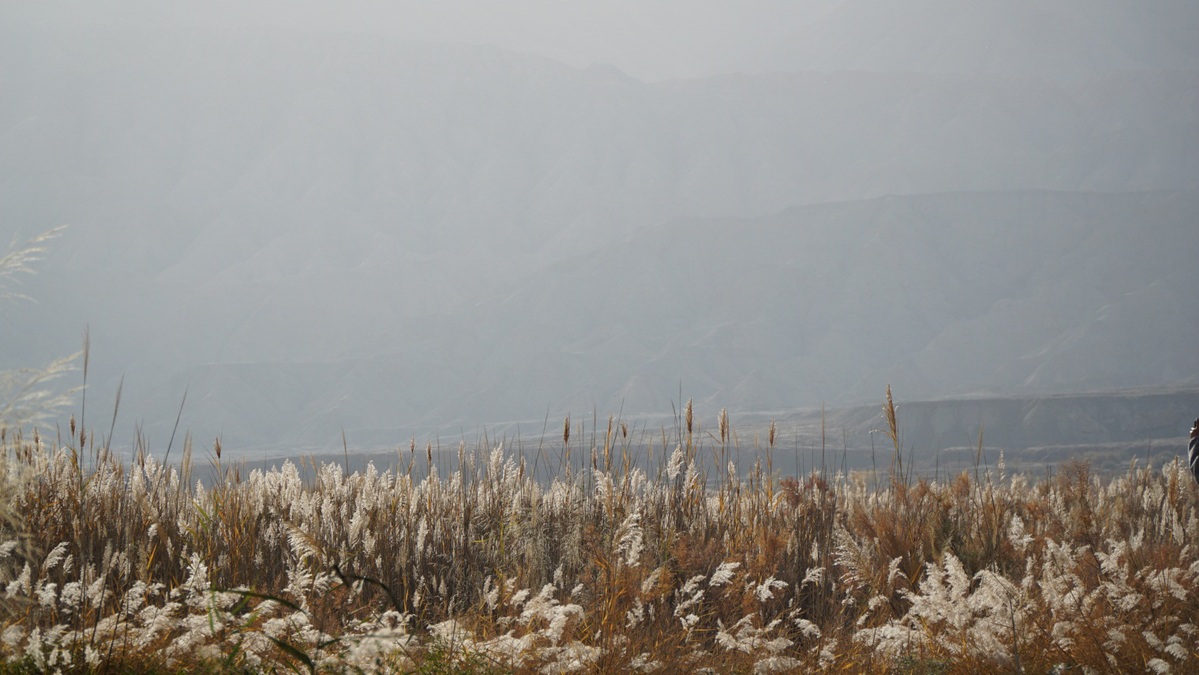
Late autumn scenery around Aksu, Xinjiang is just one more reason to visit the Kizil Caves.
Why here? The surrounding nature is indescribable, especially in the autumn when all the different colors coordinate as if planned. Sand-colored cliffs are the backdrop for white birch trees, whose stubborn yellow leaves refuse to join the feathery grass below. Though perfect for anyone wanting to feel the fullness of nature, this place more than 200 kilometers from Aksu, Xinjiang Uygur autonomous region, does not readily make sense as to why it's the site for the famed Kizil Caves.
One can only assume things must have been different back then. So much has changed since the 4th century when this area was part of a network of roads we now know as the Silk Road. Was there once a city here? Or did the monks who chiseled out these hollows intentionally choose a place so obscure?
The cave complex doesn't seem to be particularly interested in visitors – or at least not anyone who isn't devoted enough to climb up there, and this is probably why they are in such great shape considering their age. Fortunately, decades of efforts to connect the public with these treasures have brought about staircases, making it easier for tourists like the members of the A Date with China international media tour to enter them with a guide.

The caves are a passing brushstroke carrying the art and culture of peoples connected by the Silk Road. The Buddhist stories adorning their walls come from India and incorporate elements from Uygur, Iranian, and even Greco-Roman art. The materials used to tell these stories were carried all over this vast trade route. Lapis lazuli believed to be imported from Afghanistan, was ground into a very bright blue, which starkly contrasts with green atacamite, pearls, real gold, and a red lead that has since turned black. In what feels like the middle of nowhere, it seems a very unlikely place for the convening of global minds, but here we are – staring up at the ideas they wanted to share.
The paintings inside the caves have faded, the plasterwork has gaps, and statues have been removed, which leaves it to the viewer's imagination to recreate what it must have been like. Even so, there are still dozens of stories begging to be retold. Unlike similar caves in Dunhuang, Gansu province that use an entire wall for each story, stories in these caves fill small diamond-shapes that create a mosaic that is at once beautiful and mysterious. The stories themselves are dreamlike, with such tales as a thirsty monkey king (no, not that monkey king!) who finds a pool of water; seeing that all the footprints only go toward the water with none coming back, he rightly suspects a monster is present. The monster instructs him that he is free to drink from the pool, but no part of his body can touch the surface. Clever as he is, the monkey finds a hollow reed to suck the water from the bank – long before straws became commonplace.
Many more stories have yet to be reclaimed as the cave complex has only revealed a fraction of its secrets. Staff at the site tell China Daily that of the estimated 350 grottoes, only 269 have been numbered, with evidence suggesting there are still more buried underground.

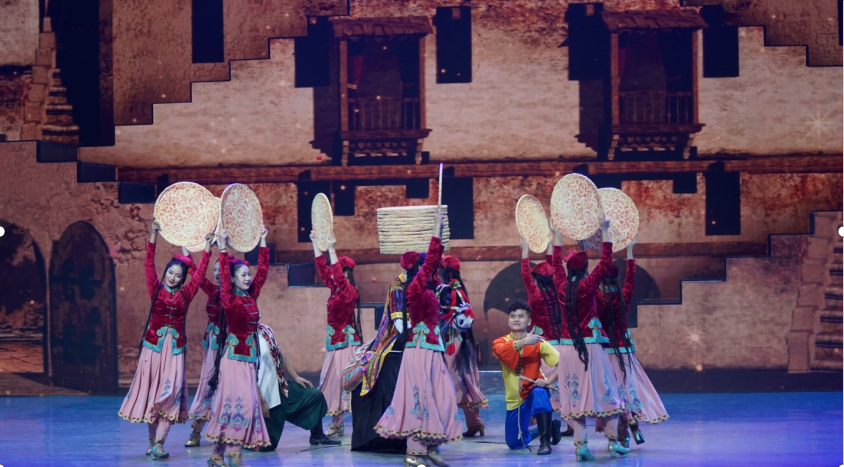
People can argue all they want about whose cuisine tastes the best, uses the most indigenous ingredients, or has the most passionate devotees; but how many cultures can say they dance with their food? (The table gets quiet.)
Foreign tourists visiting Xinjiang as part of the A Date with China international media tour were treated to many live performances including a dance involving naan bread. Dancers in traditional Uygur outfits held up props resembling the circular bread while orbiting a man dressed as both the donkey and its rider. As part of the performance, dancers left the stage to treat members of the audience to this specialty served on plates. While there is certainly a playfulness to it, the dance celebrates the historical role of naan as life for not only the locals but all those journeying across the Silk Road.
Another frequenter of Xinjiang tables is polo — the region's oily take on pilaf. The ceramic spoon at the place setting comes to use for something too evasive for chopsticks; the oil's role in the mouthfeel acts as a host for the incoming sweet raisins, tart dried apricot, and earthy mutton. The punishments of such a guilty pleasure are no secret, and an accompanying bowl of yogurt is believed to pardon one's stomach and complexion from the effects of oil. Food's internal value is universal, but in Xinjiang, the relationship with this glossy delight has a topical element as well. Rahila, a local Uygur resident, reminisces about her mother telling her NOT to use a spoon when eating polo and instead grab it with her bare hands. The age-old practice of eating rice with one's hand is still common in parts of Xinjiang, and some see the warmth and oils of polo as therapeutic for the skin. Going one step further, the remaining oil in the pan used to cook the dish – full of nutrients leeched from the fruits, vegetables, and other ingredients – gets rubbed right onto the ends of hair.
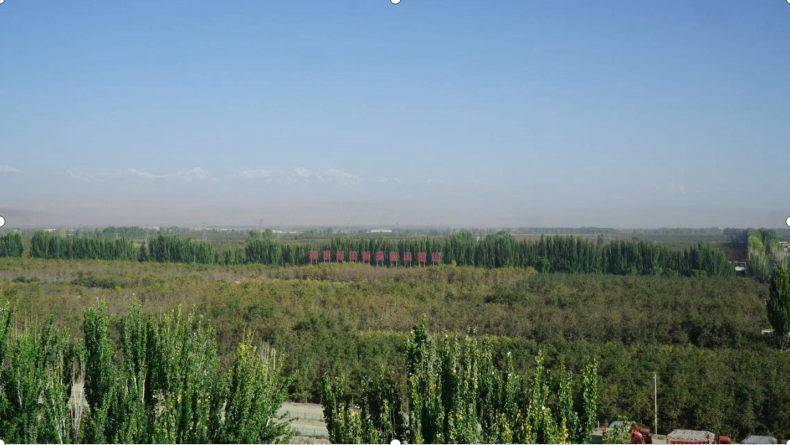
Where Xinjiang's relationship with its food is most inspiring is seen in the reforestation efforts of Aksu. Sandstorms have crippled cities for as long as people have dared to live in deserts, but in the early 1990s, efforts "took root" to bring life to an otherwise desolate area. A grid of tall trees forms a windbreak, and within lies rows and rows of apple trees. Just look out at the sand beyond the expansive green to see how massive the change has been. The area's disadvantage of needing water is quenched through aquifers, dams, and treated urban water, so it is free to enjoy the benefits of having so few pests and plant diseases. The result: some of the sweetest, juiciest, not to mention, biggest apples you have ever had the pleasure of taking a bite out of. While the members of the A Date with China tour got to pick straight from the source, the demand for Aksu apples shows that people across the country feel as if they are in the orchard themselves.

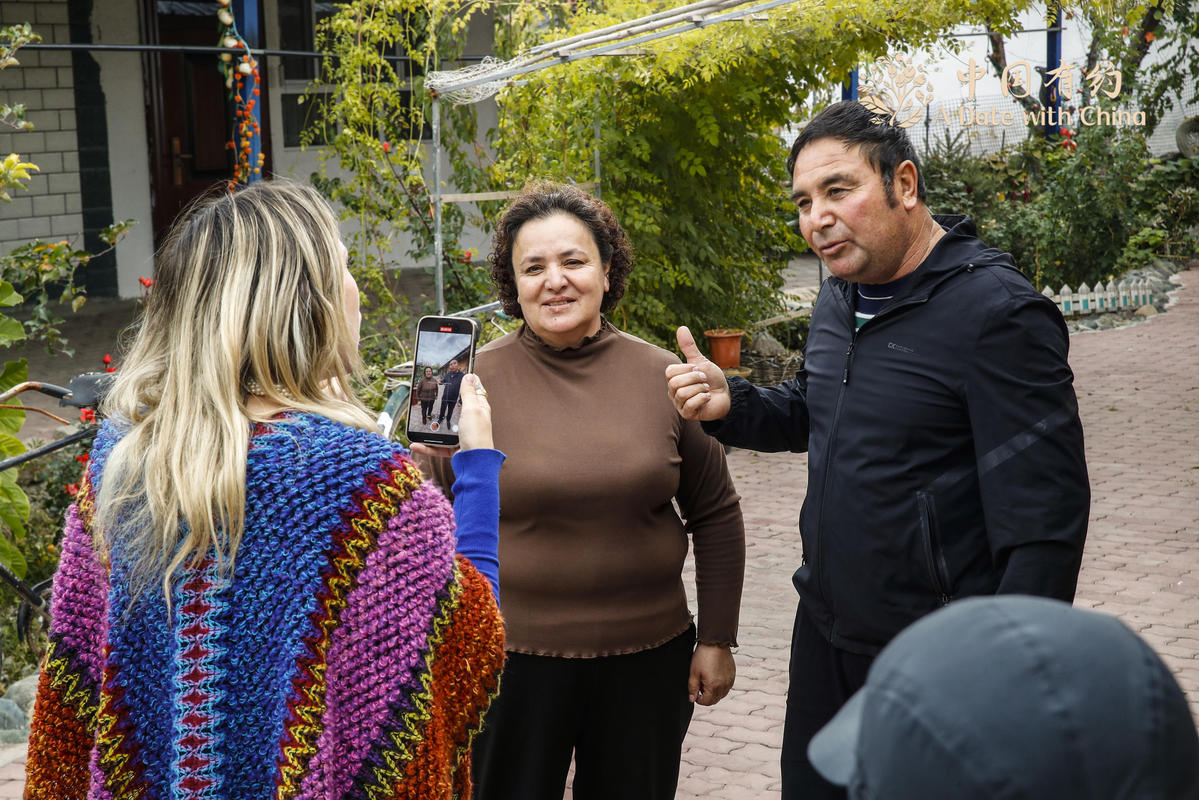
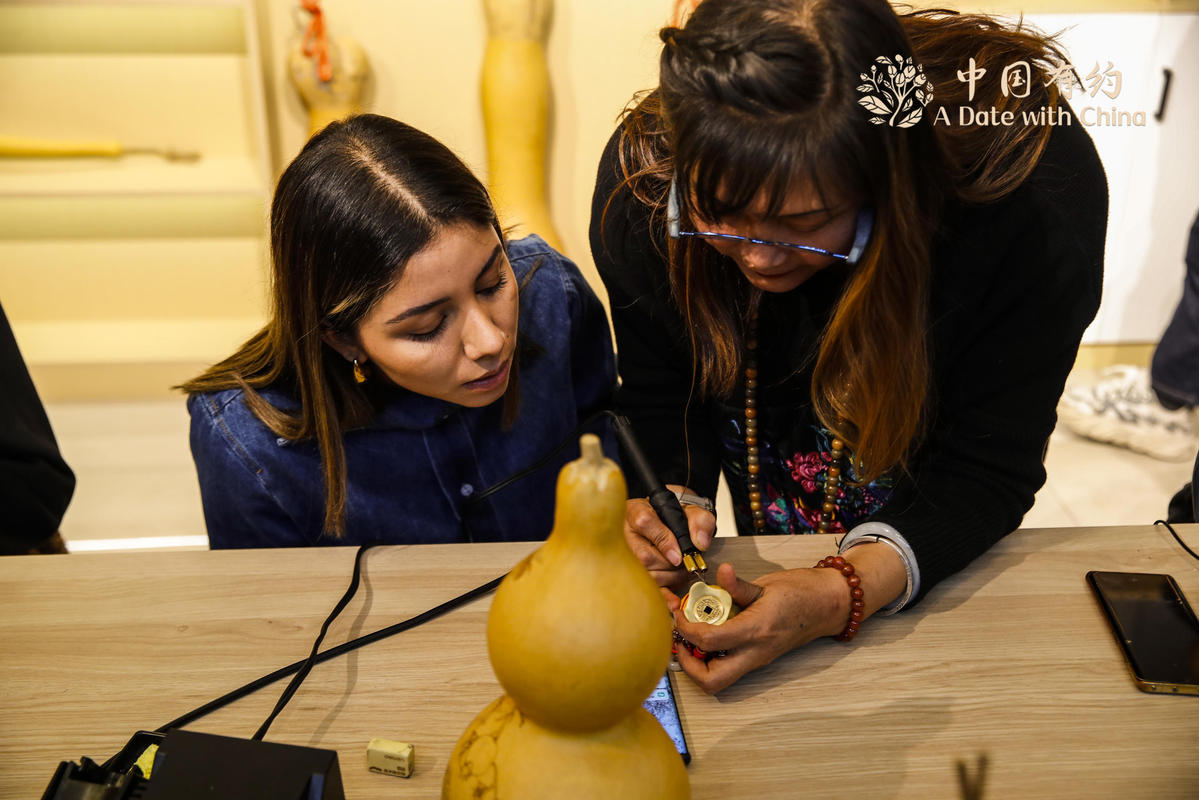
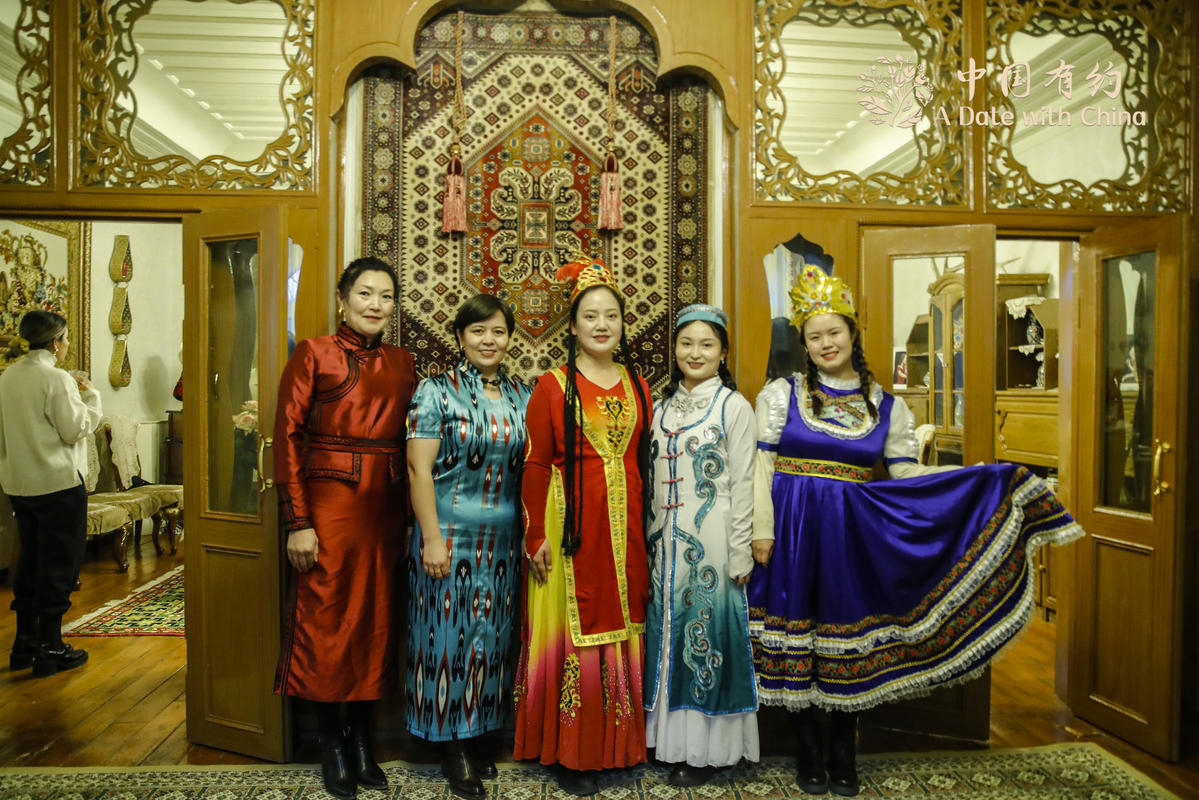
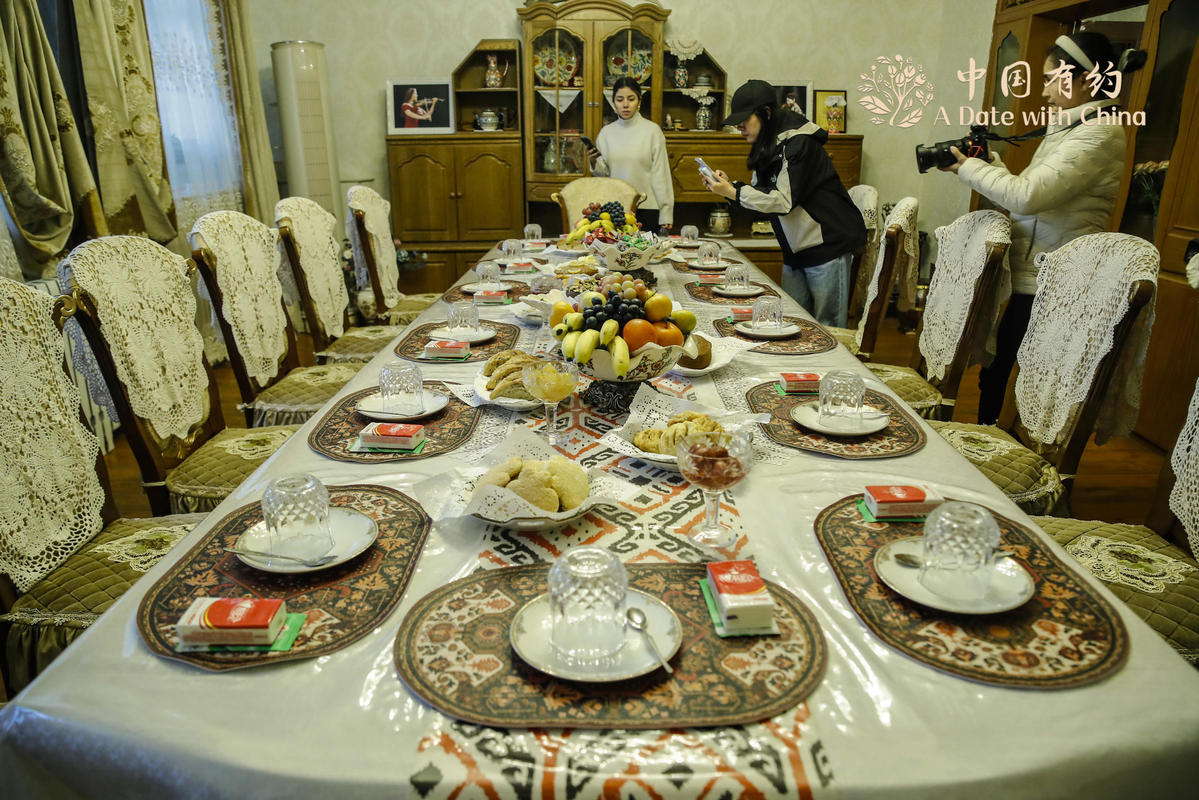


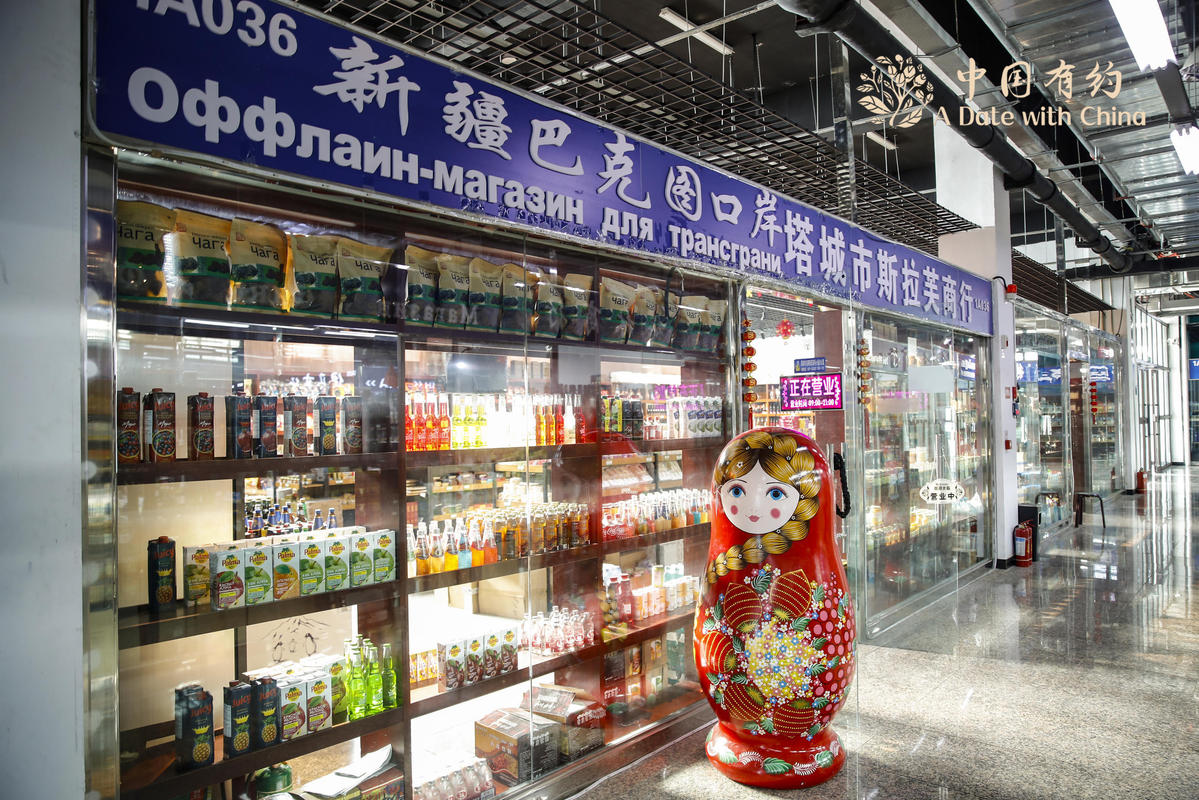
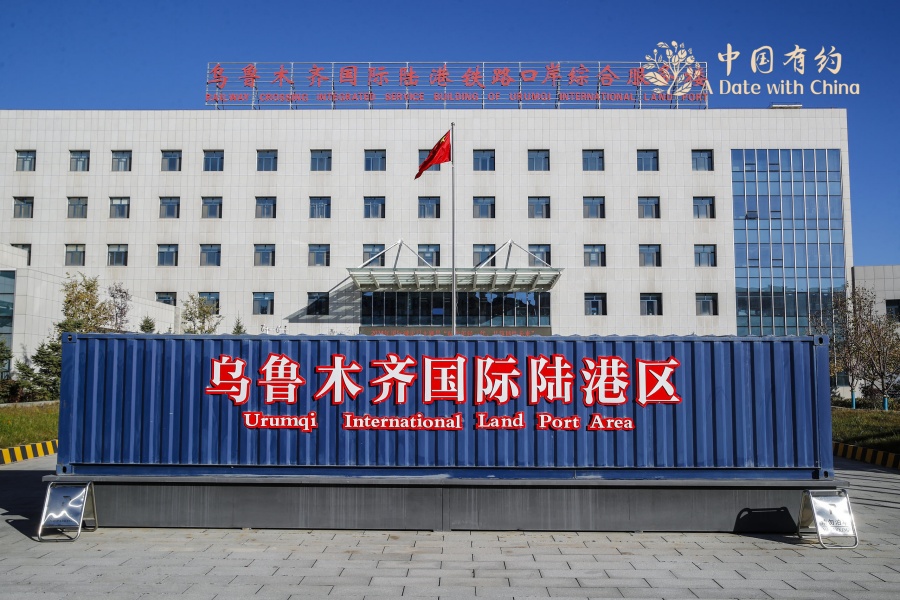
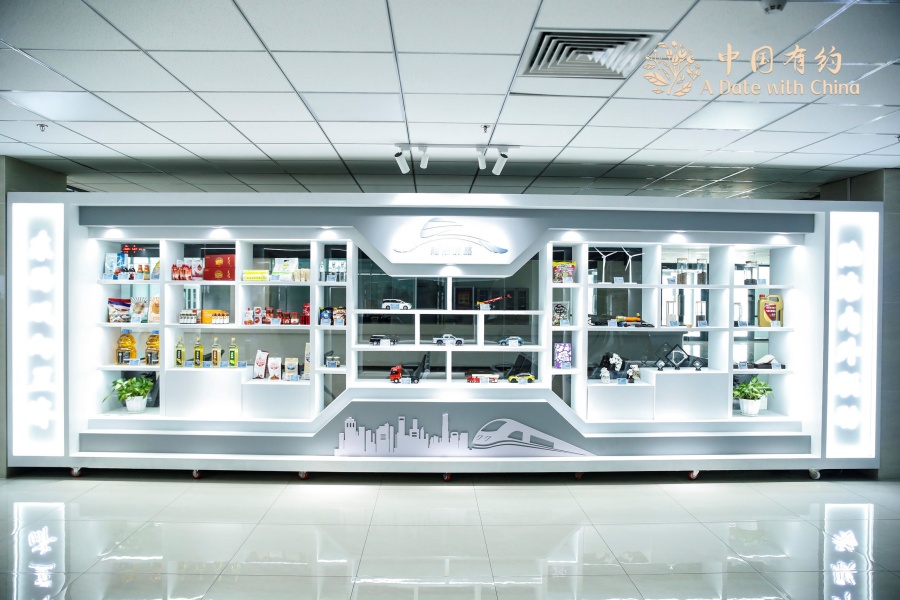
During the "A Date with China·Meet Xinjiang" media tour, participants were delighted to find out authentic products from their respective home countries at the Urumqi International Land Port in the Xinjiang Uygur autonomous region. The discovery also sparked admiration for the advantages stemming from China's Belt and Road Initiative.

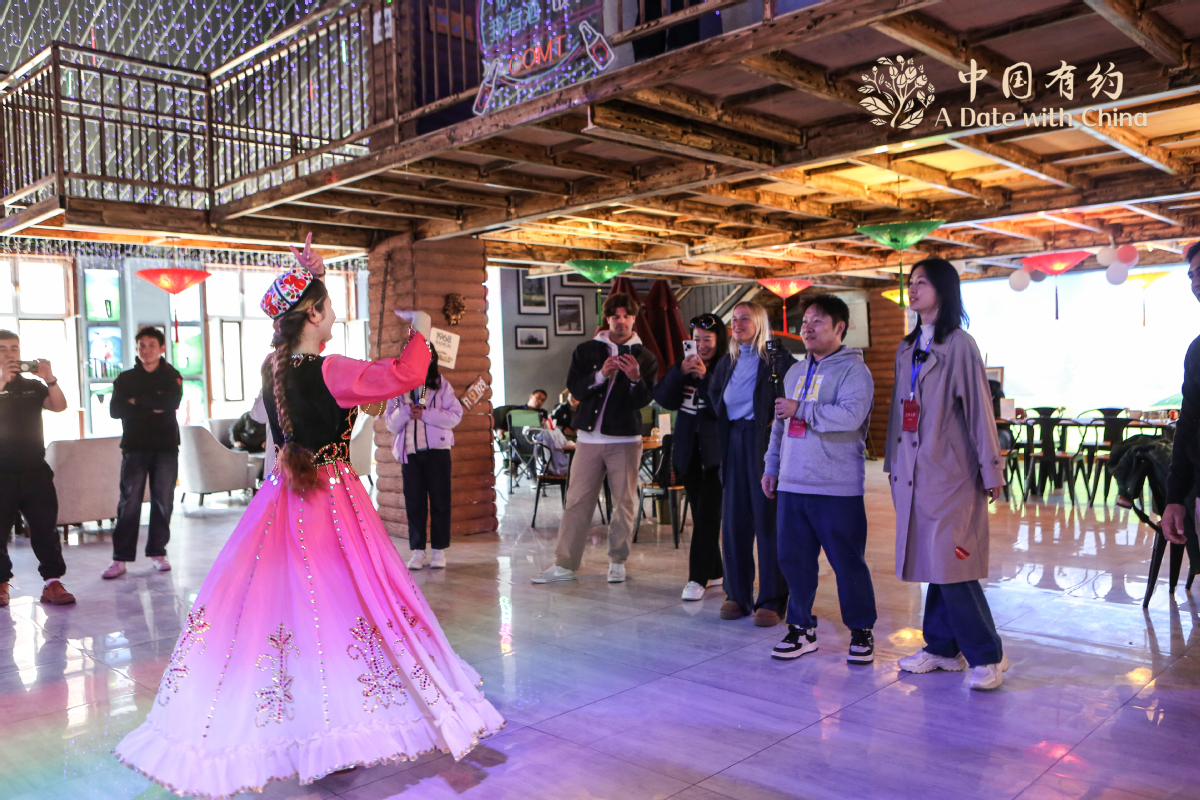
Foreign influencers participating in the "A Date with China" media tour visited Kuqa, Northwest China's Xinjiang Uygur autonomous region on Tuesday. Fascinated by the performances that blend ancient Kucha music and dance with a fusion of contemporary intangible cultural heritage, they joined the dancers in merrymaking, immersing themselves in the vibrant ethnic culture.

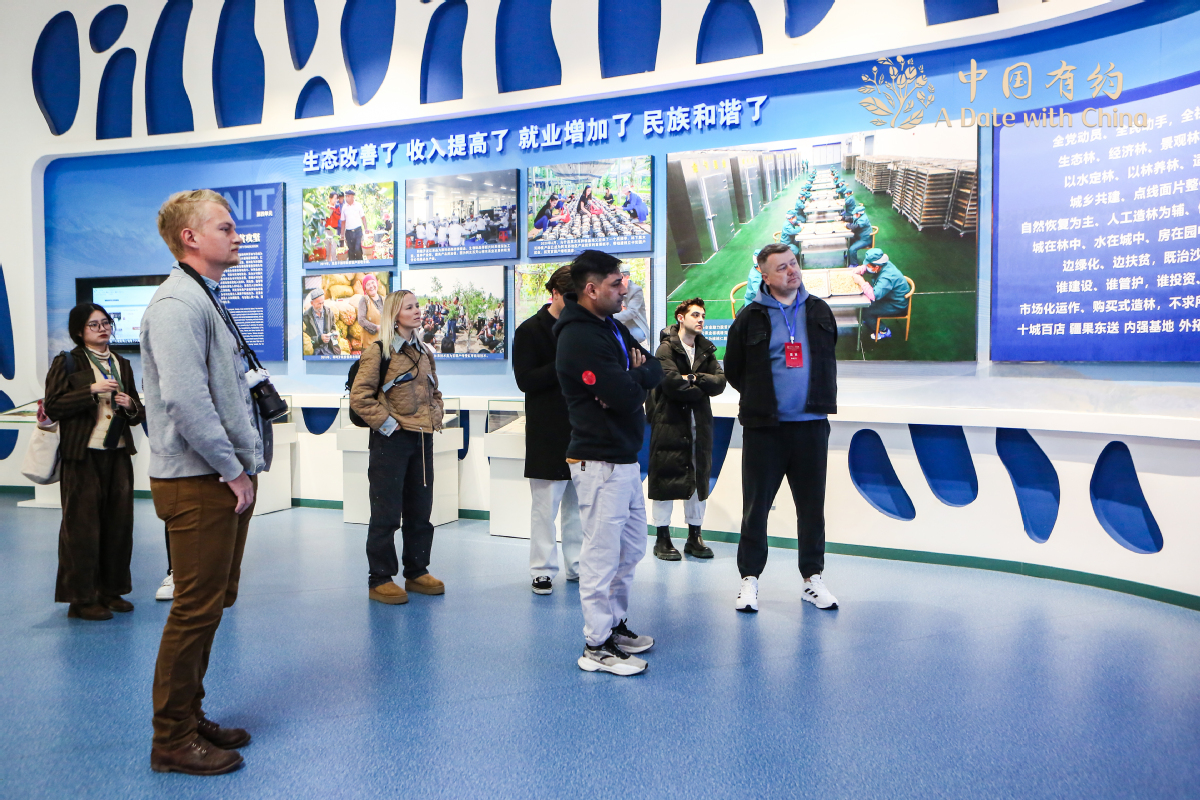
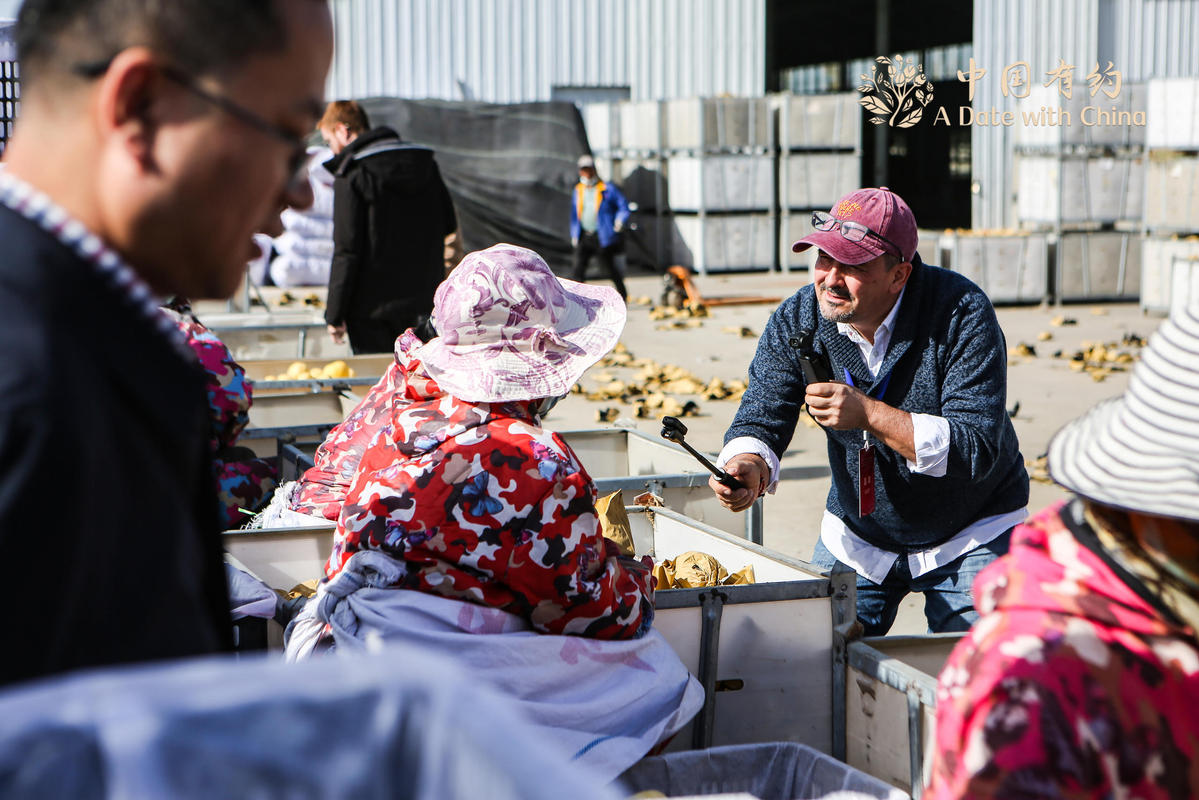
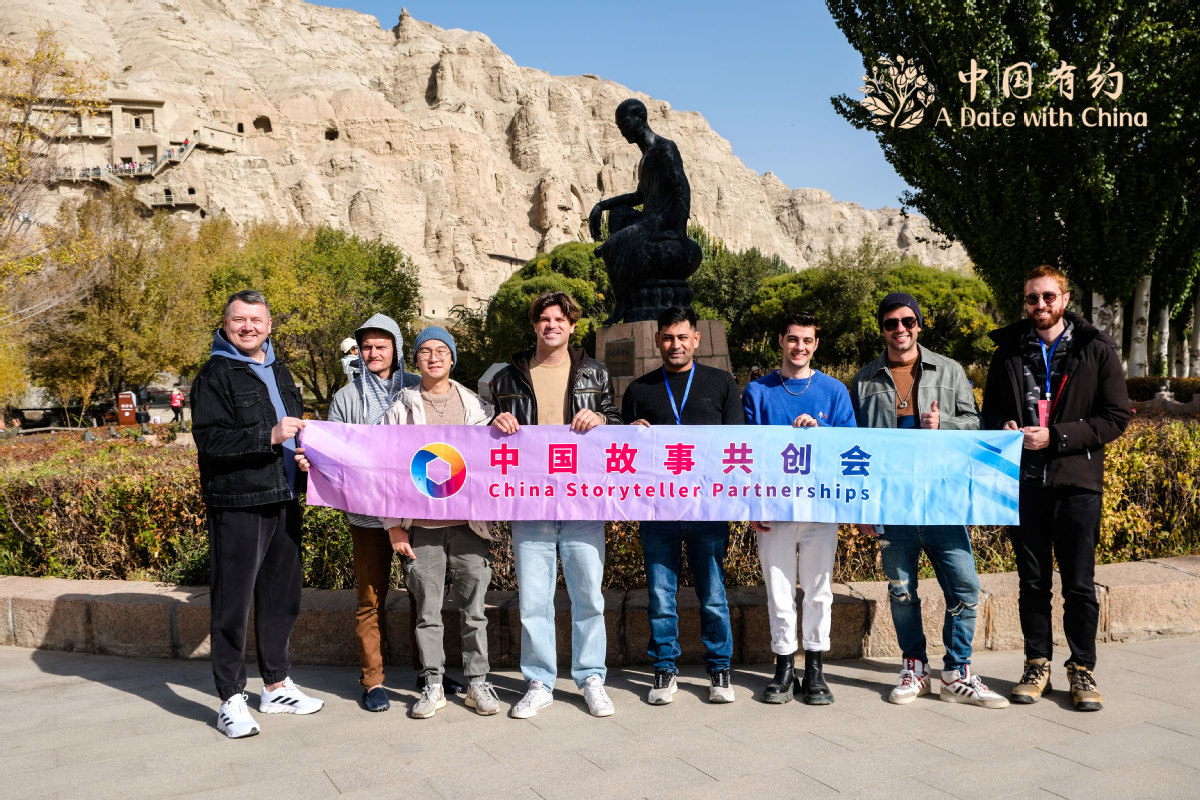

Foreign journalists taking part in the "A Date with China?Meet Xinjiang" media tour experienced the green belt project in Wensu county, Aksu prefecture, Northwest China's Xinjiang Uygur autonomous region, on Tuesday. They tasted fruits at a local agricultural company, tried nang (Xinjiang-style baked bread) and enjoyed the Qiuci culture.

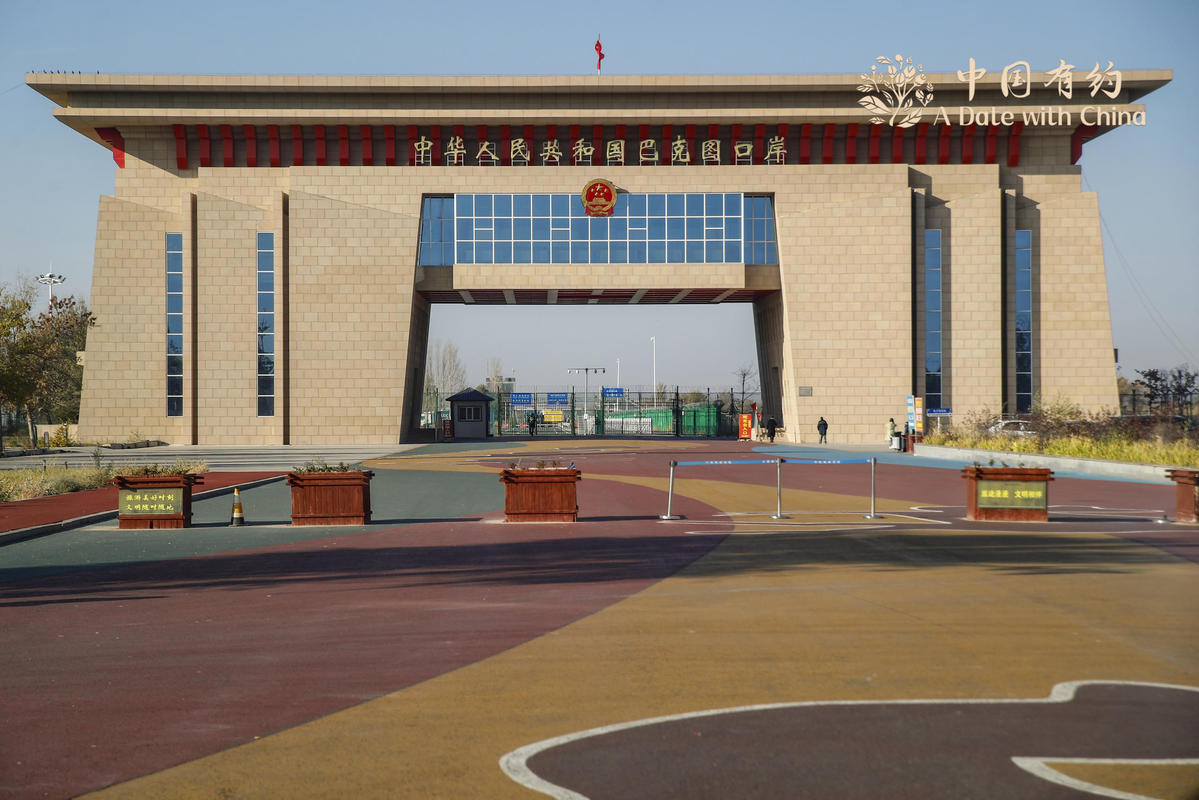
With a history of border trade spanning about 260 years, the Baktu Port was designated as the region's first border trade pilot port in 2018 and officially commenced operations the following year.
By July 2024, the total border trade volume had surged to 340 million yuan ($47.68 million), involving 45,000 individuals and residents from four neighboring countries.
Located just 12 kilometers from Tacheng's city center, the port operates daily for 12 hours, and has witnessed peak days when 607 vans have crossed the border, a direct result of swift clearance for agricultural products.
Exports through the port comprise a variety of domestic fruits and vegetables, while imports include sunflower seeds, linseed and frozen beef.


Mexican content creator Laura Ugalde was captivated by the passion of performers who expressed their love through music and dance at the Tacheng City Museum during the "A Date with China·Meet Xinjiang" media tour. She was also amazed by the accordion collections in the museum, given the city's renowned tradition of playing this instrument.


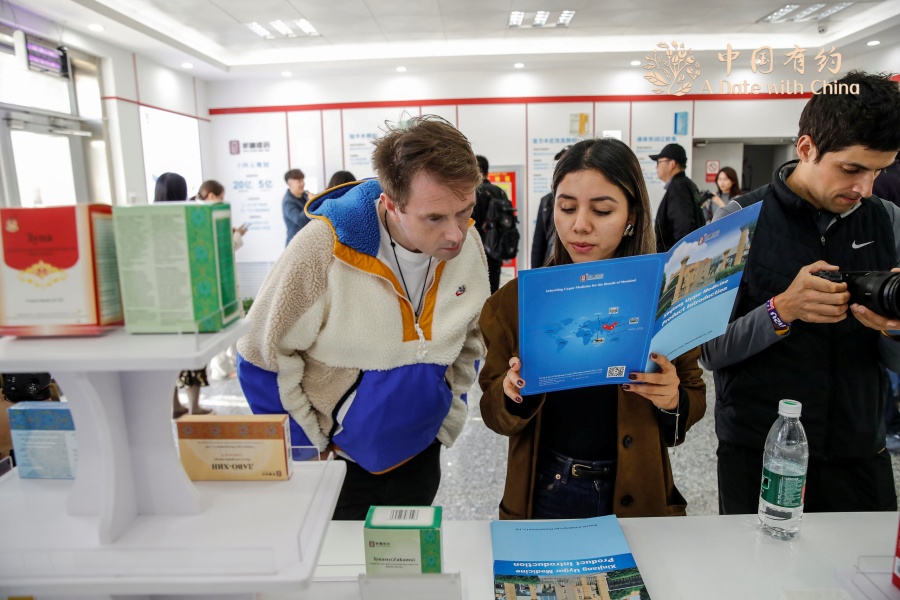

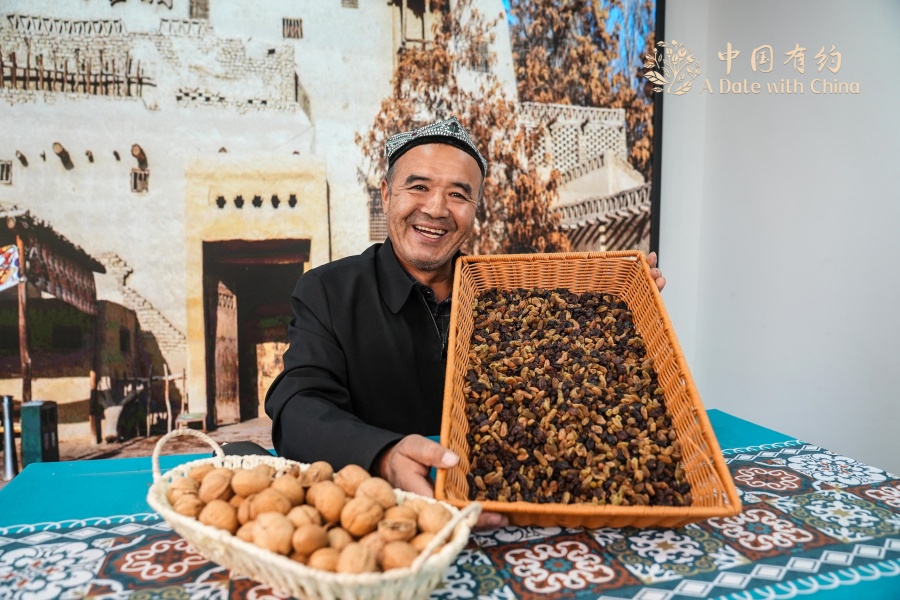


Tobias Symonds, a British content creator participating in the "A Date with China·Meet Xinjiang" international media tour, has uncovered the marvels of the Karez well system in Turpan city, located in the Xinjiang Uygur autonomous region. He explains how this over two-thousand-year-old system operates.


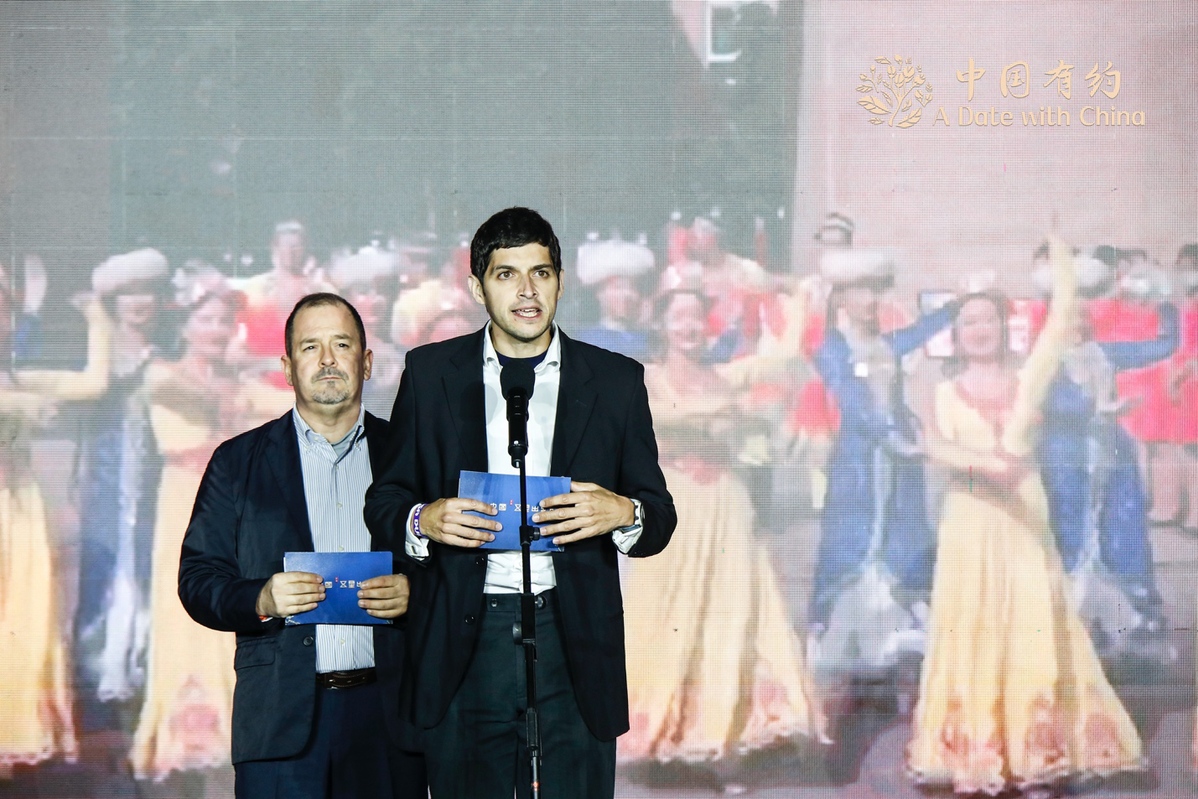
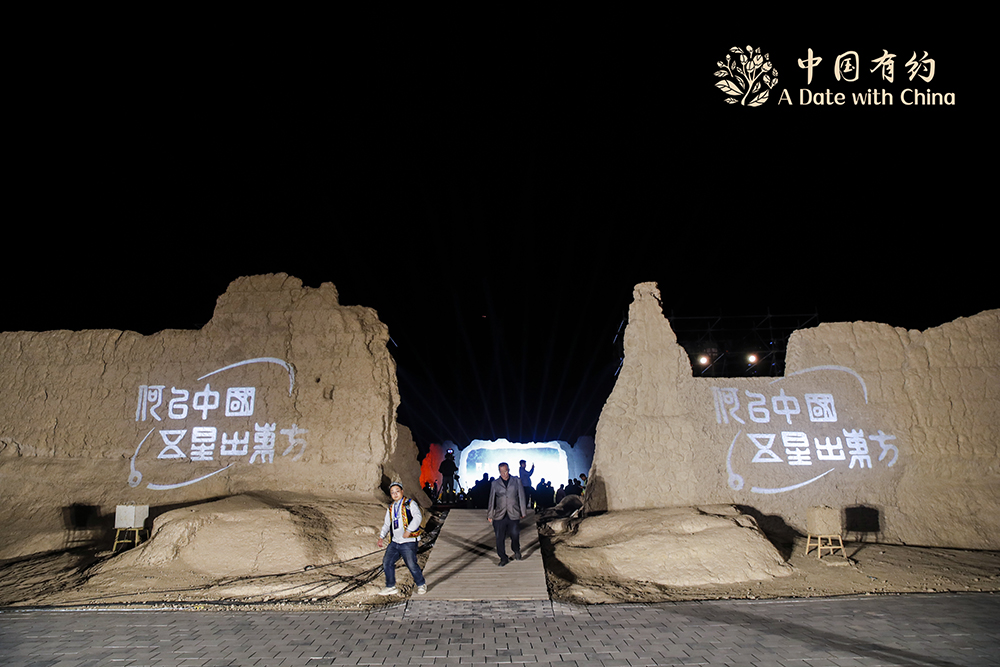



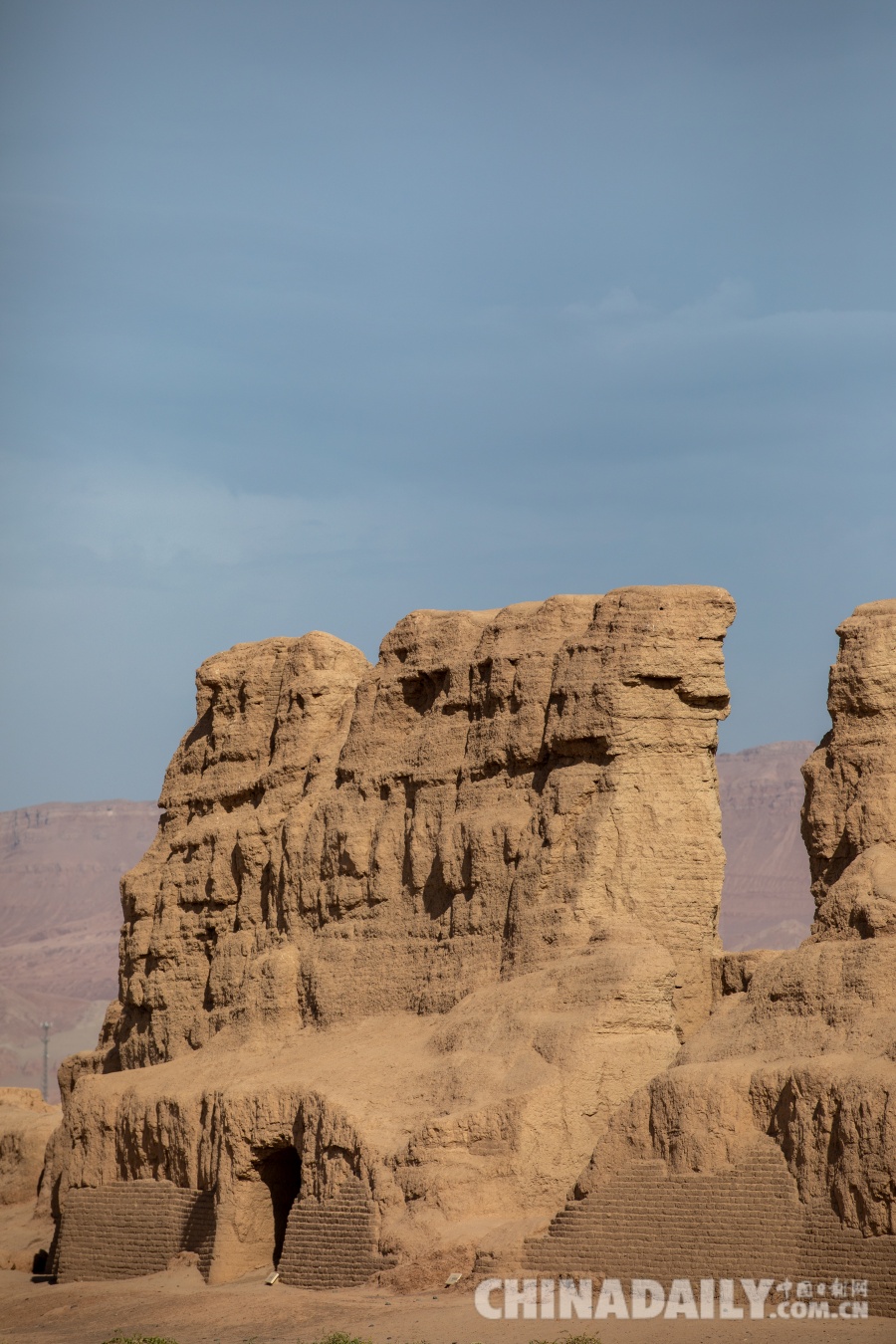
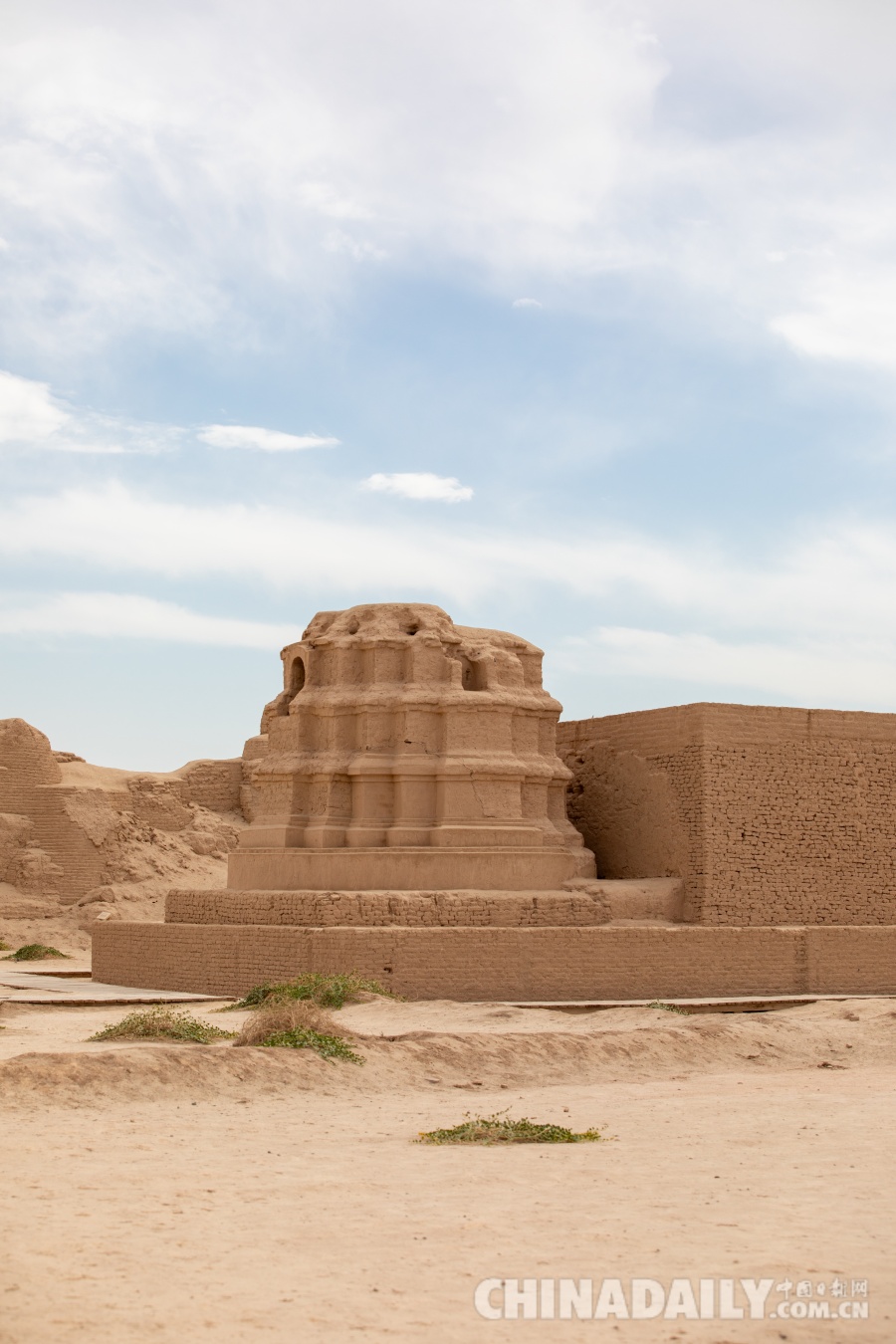
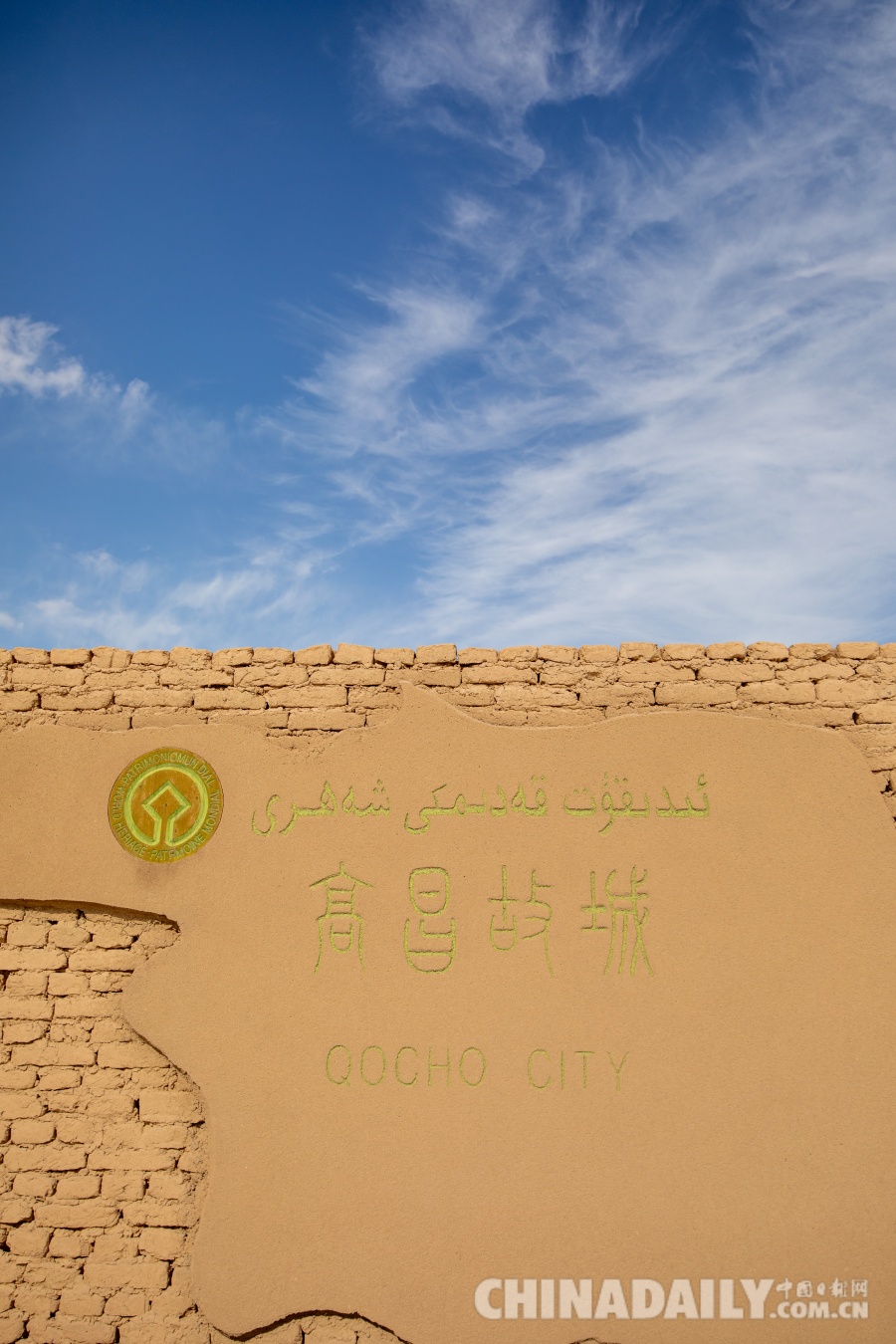
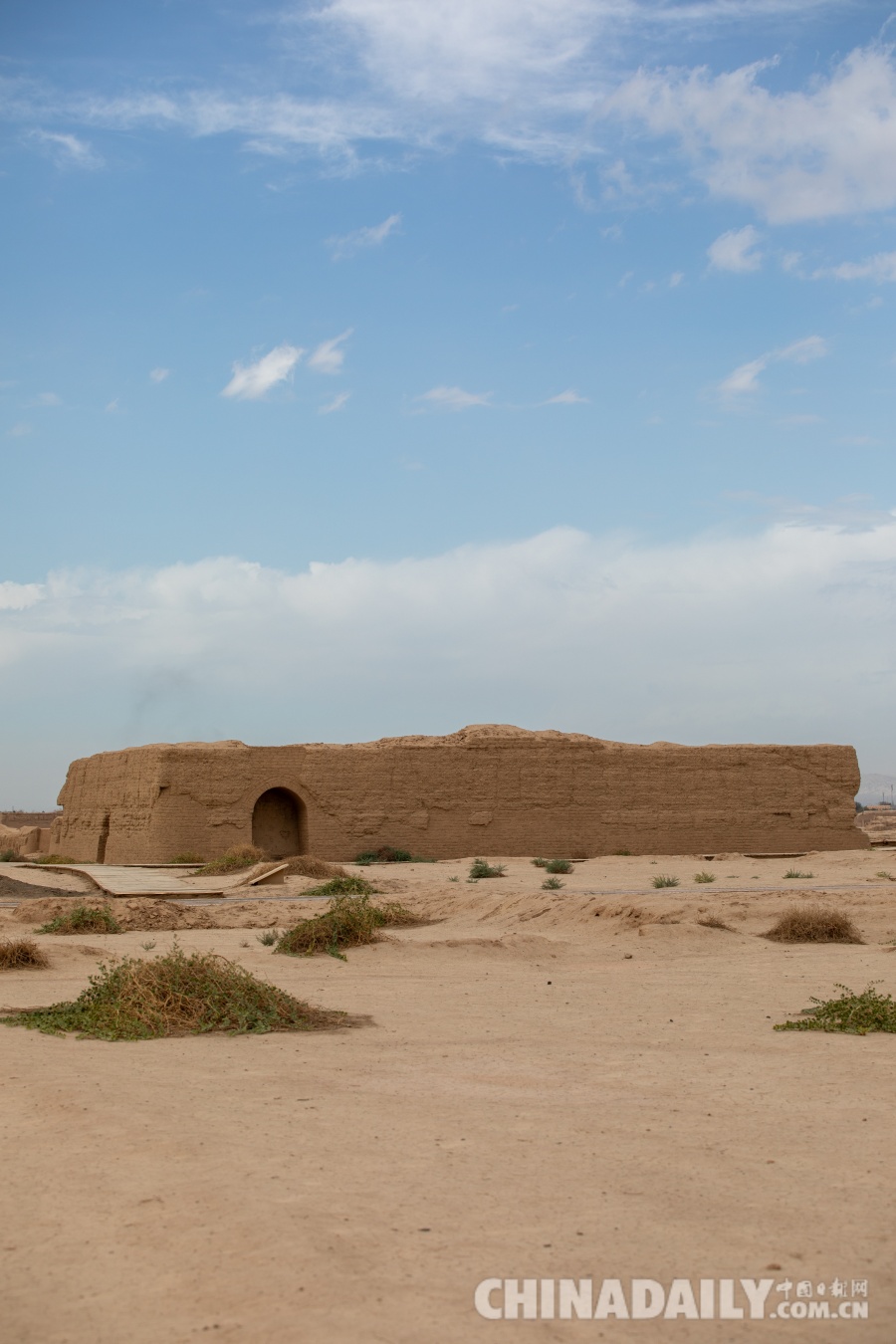
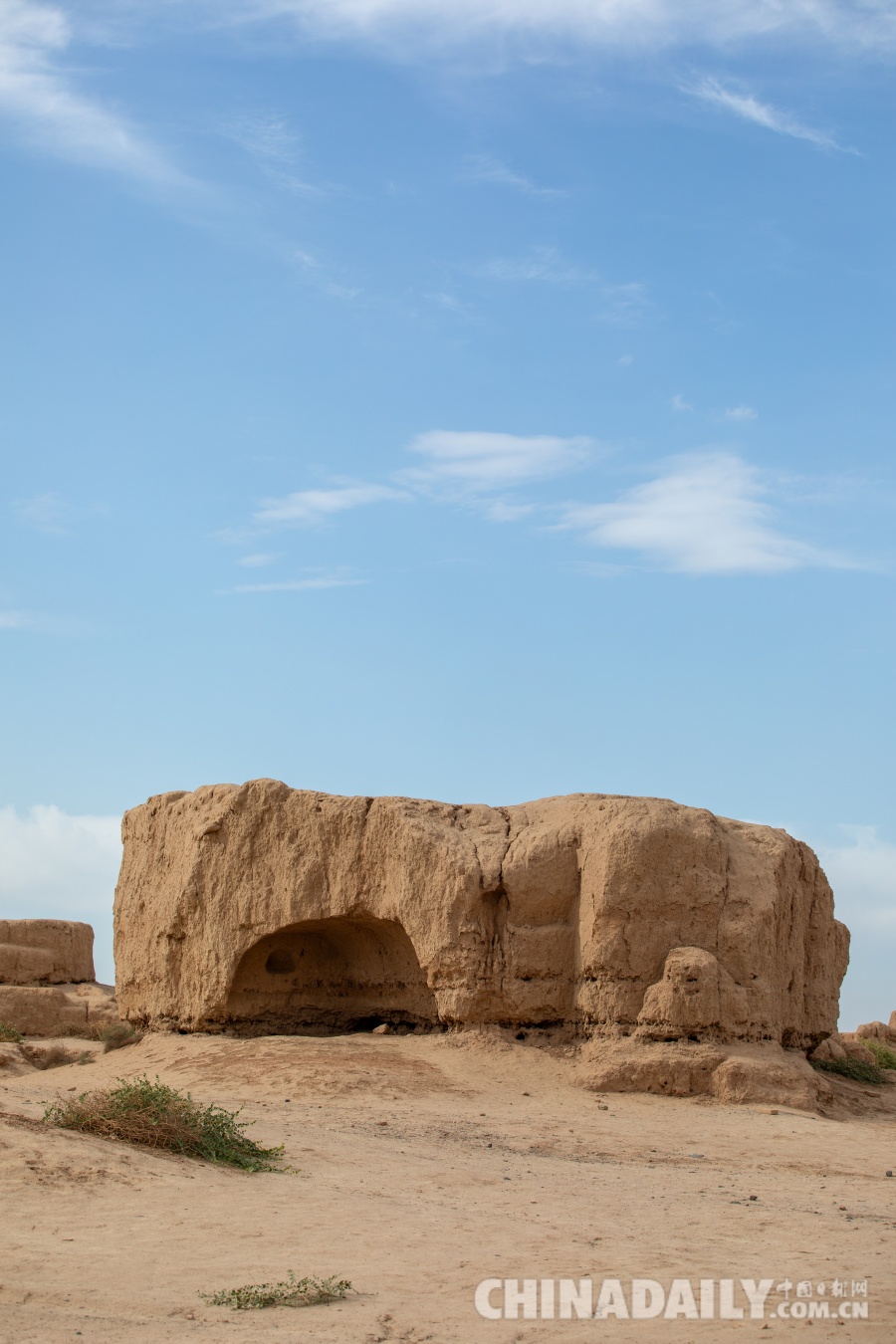
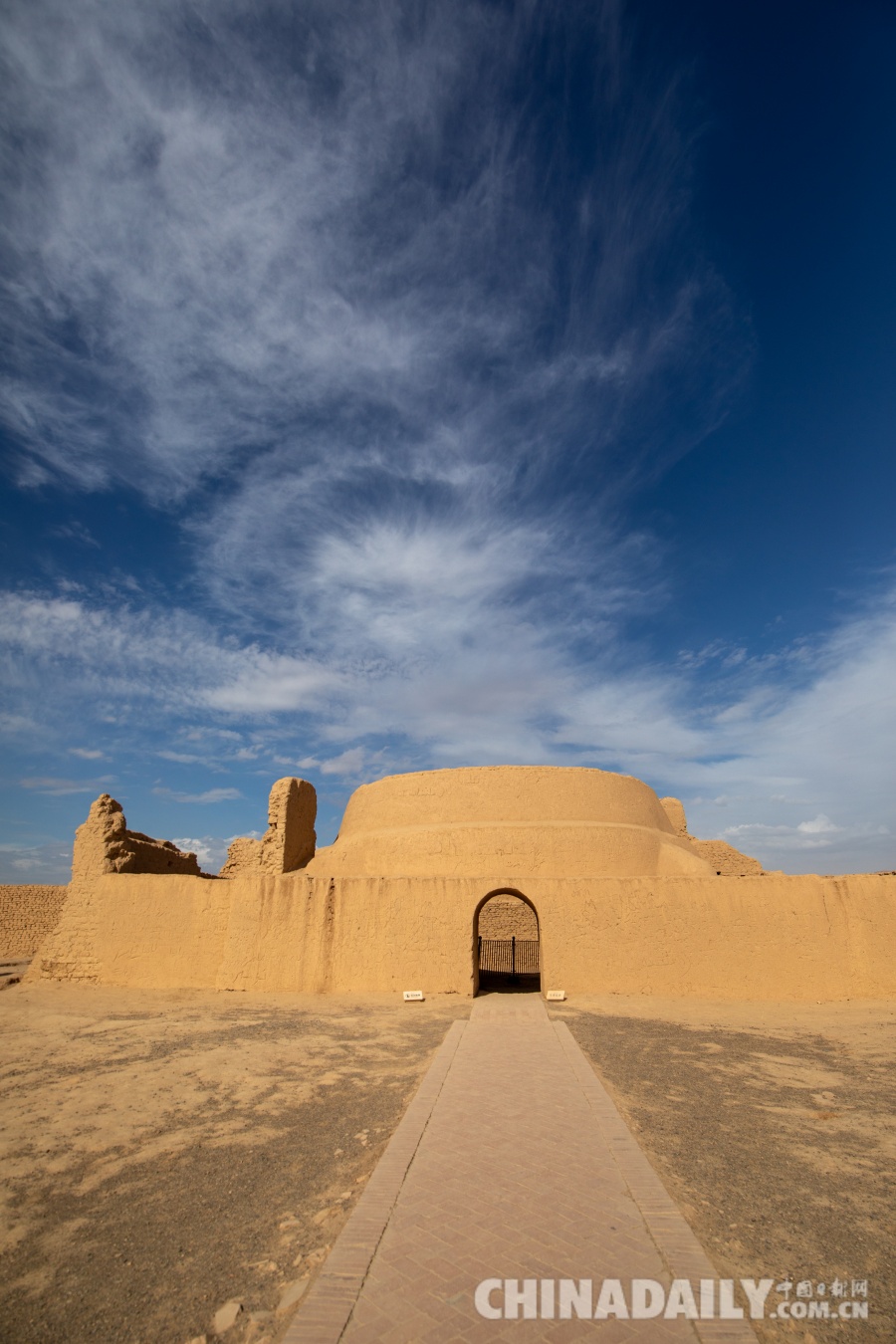
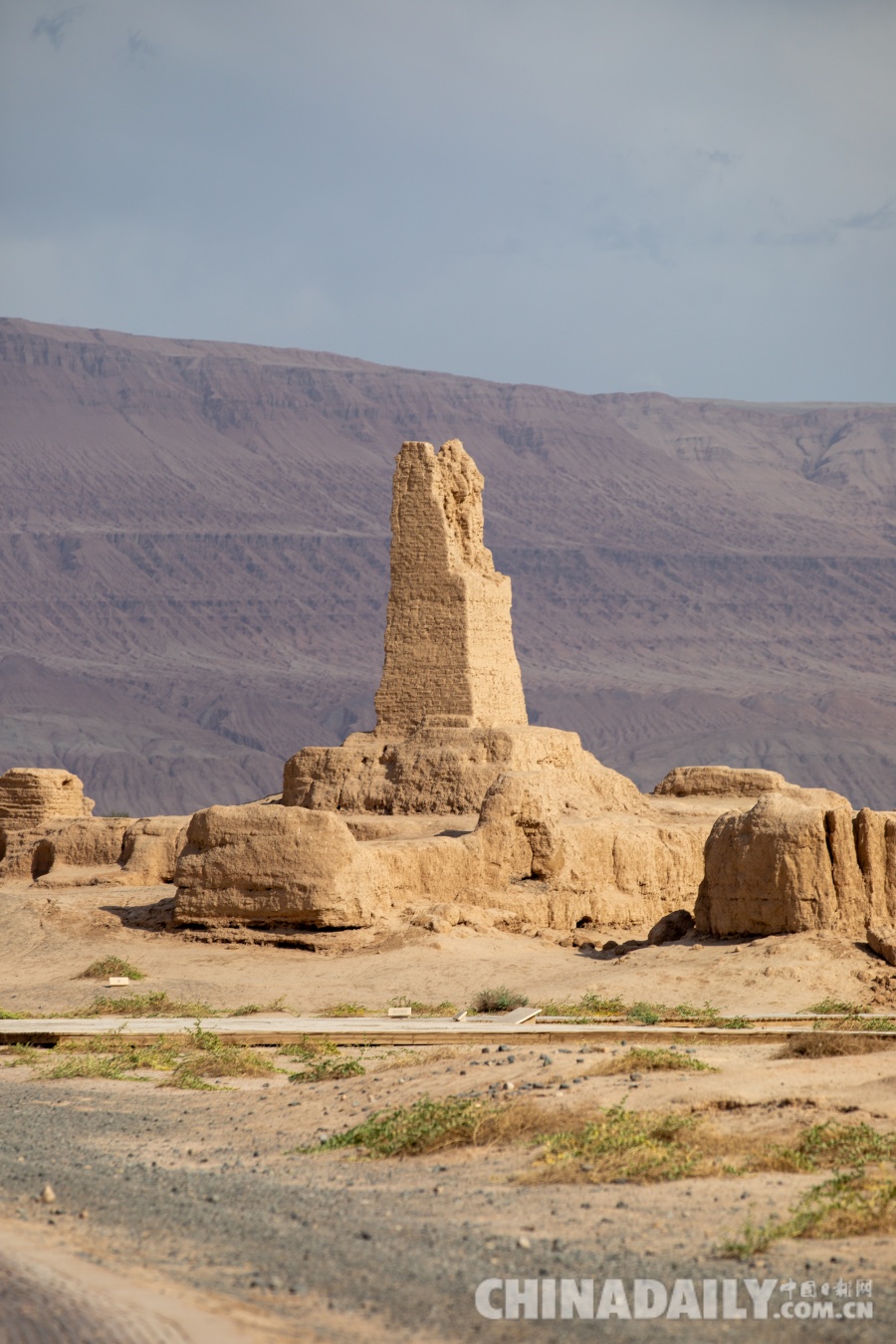
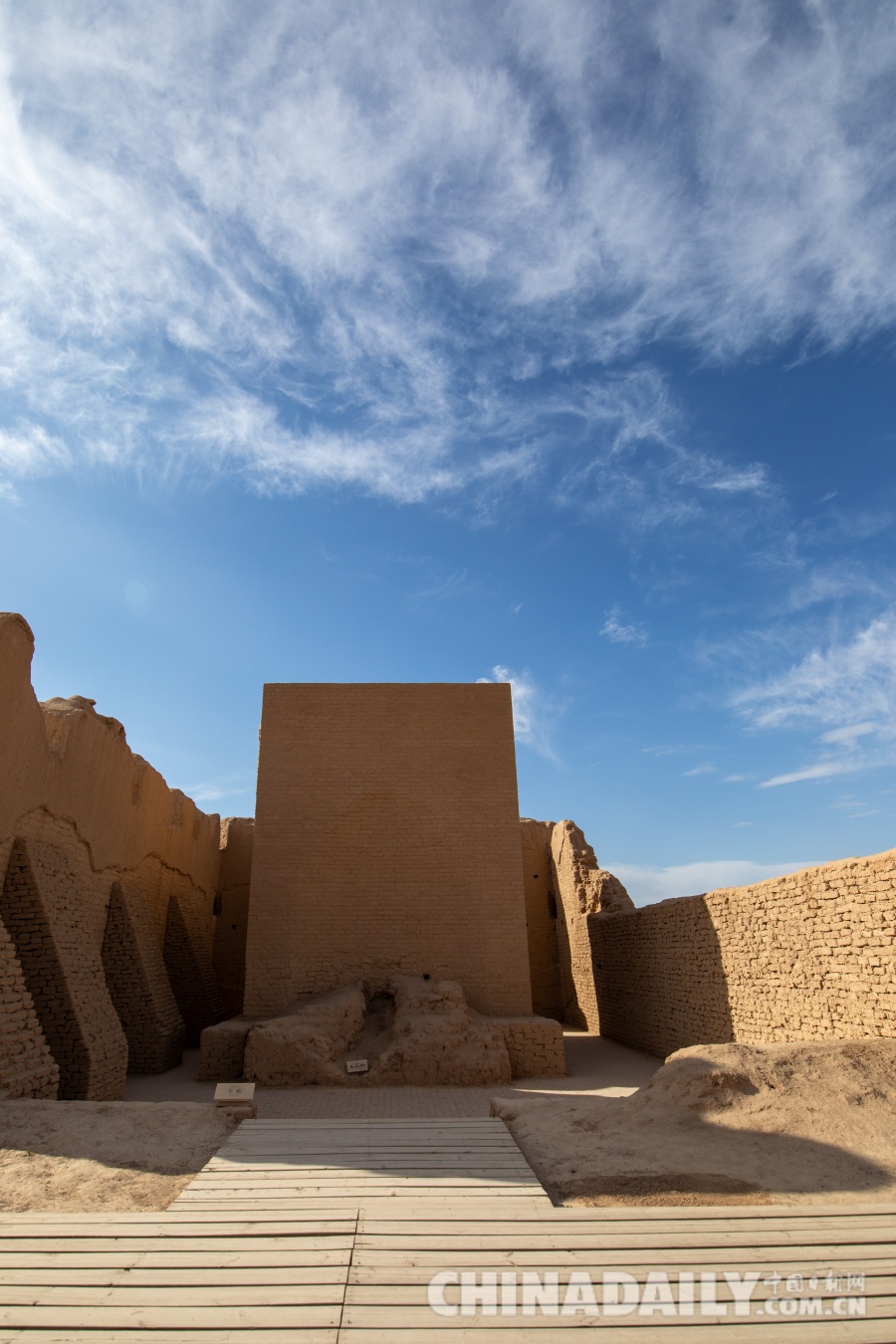
Gaochang (Qocho) city, which mimics the layout of Chang'an (located in present-day Shaanxi province), the capital of the Tang Dynasty (618-907), had been a key point on the Silk Road for over 1,400 years until the early Ming Dynasty (1368-1644).
The ruins, which cover an area of two million square meters, have been included in the World Heritage Site list as segments of the Chang'an-Tianshan Corridor.