China Focus: Moonfaring grass seeds to sprout on Earth









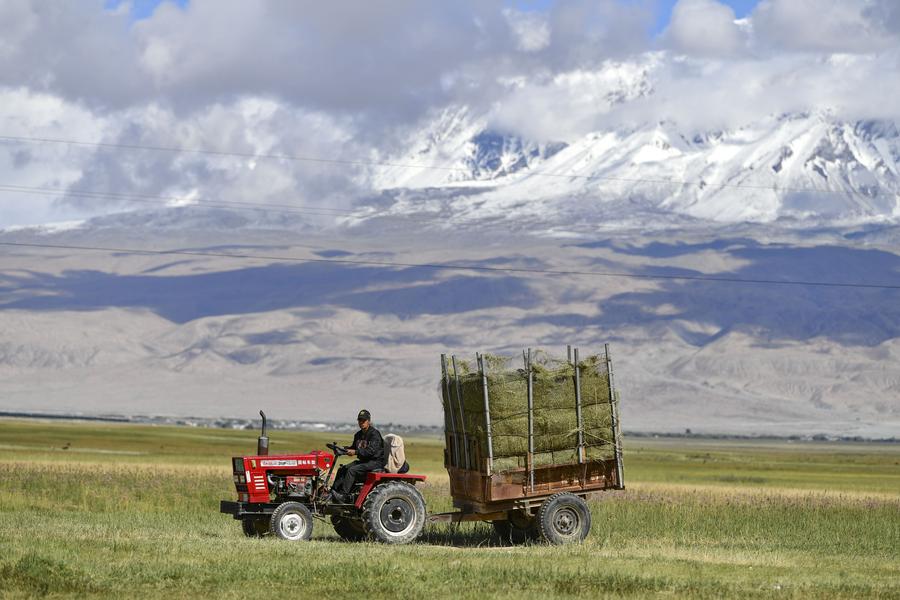
URUMQI -- Herders in Xinjiang Uygur autonomous region may have the chance to feed their cows and sheep with out-of-this-world grass, as a group of new varieties will be developed from seeds that survived a trip to the moon.
Four packages of grass seed samples, weighing 200 grams and originating from Northwest China, were carried aboard the Chang'e 6 lunar probe, which was launched to the previously unexplored far side of the moon in May last year and returned to Earth in late June.
The trial planting of these seeds on Earth will commence in early March this year, Xinjiang's Academy of Animal Science told Xinhua Thursday.
Scientists say that the seeds, exposed to the conditions of deep space, will induce genetic mutations that may create superior varieties on Earth.
The moon-bred seeds, which are commonly found in Xinjiang, include species such as camel thorn and alfalfa. These seeds exhibit remarkable tolerance to saline-alkaline conditions, cold temperatures, and drought, said Zheng Wenxin, vice-president of Xinjiang Agricultural University and the lead researcher of the program.
Some species have high nutritional value and strong survival ability in harsh environments, playing a key role in preventing grassland degradation and combating salinization and desertification in arid agricultural areas.




- Best practices in youth cultural exchange released at Chongqing conference
- Yearender: China's 2025 space endeavors have seen new milestones
- HR conference sparks discussion on talent potentials in AI era
- Exhibition of entries for 6th China animal specimen competition opens in Shanghai
- Steam train ice sculpture wows Harbin ice festival
- Xi congratulates Jose Antonio Kast on election as Chilean president