Join hands to open up vast horizons for development of community with shared future for humanity










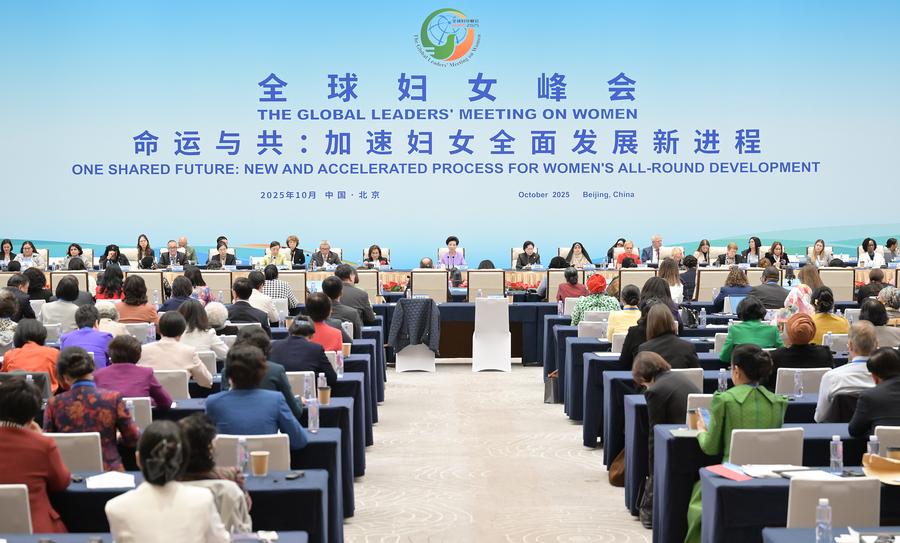
BEIJING -- At the Global Leaders' Meeting on Women held in Beijing from Monday to Tuesday, President Xi Jinping put forward four proposals to accelerate the process of women's all-round development, injecting fresh momentum into global advancement of women's cause and opening new horizons for building a community with a shared future for humanity.
I
Women have been a profound force in shaping the course of history and upholding civilizations.
In the dawn of Sumerian civilization, they figured out the intricate art of fermenting grains to brew fine wine; in the fertile lands along the Nile, they wove their enduring pursuit of eternity into resilient linen; and in the villages of the Yangshao culture in ancient China, they infused reverence for nature and prayers for life into pottery, painting them with intricate patterns.
Through the primitive ages, they sought survival wisdom with relentless labor; in agrarian times, they passed down the wisdom of life with ingenuity; and since modern times, they have brought transformative changes with courage and determination. In the long river of history, women have always been the creators of both material and spiritual civilization, serving as a vital force driving social development and human progress.
"Without women, there would be no continuity of the human race or the human society."
"The pursuit of gender equality is a great cause. A review of history shows that without women's liberation and progress, the liberation and progress of mankind would not be attainable."
President Xi made such remarks in his address as the chair of the Global Leaders' Meeting on Gender Equality and Women's Empowerment at UN headquarters in New York in September 2015.
These remarks, grounded in the human civilization and social progress, pay full tribute to women's pivotal and pioneering role while highlighting their irreplaceable place in human history. Such profound vision and broad empathy have resonated strongly across the international community, galvanizing broad consensus and powerful momentum for the advancement of women's cause worldwide.
This autumn, all eyes were once again on Beijing when it hosted the Global Leaders' Meeting on Women.
Addressing the opening ceremony of the meeting, Xi proposed joining efforts in fostering an enabling environment for women's growth and development; cultivating powerful momentum for the high-quality development of women's cause; developing governance frameworks to protect women's rights and interests; and writing a new chapter in promoting global cooperation on women.
Xi said the proposals were introduced to build a wider consensus, open up broader pathways and take more practical actions for this cause, as women's all-round development is still facing complex challenges.
Humanity shares one common home. Imagine the magnificent vistas that will unfold across our planet when over 4 billion women are empowered to shine and realize their full potential. When they advance together, the global cause of women will unleash the tremendous power of unity and cooperation, thereby propelling the grand vision of building a community with a shared future for humanity.
II
Throughout the course of human civilization, women have played an irreplaceable role, yet their value and status have not always been fully recognized. The profound historical roots of gender inequality can be traced back to the emergence of private ownership, which led to men gradually dominating material production and wealth distribution. Consequently, women were often deprived of property rights, excluded from certain forms of social labor, and relegated to domestic roles, becoming dependent on men. Gender inequality was embedded in social structures and cultural concepts, perpetuating itself throughout history.
Xi pointed out in 2015 that mankind has walked through an uneven and extraordinary course in achieving the lofty ideal of gender equality.
"Woman is born free and lives equal to man in her rights." These powerful words, penned by Olympe de Gouges in September 1791 in the Declaration of the Rights of Woman and the Female Citizen, still resonate deeply even today. "Having cut down a very large part of the forest of prejudices, you would leave standing the oldest and most general of all abuses," lamented women who stormed the barricades during the French Revolution. Even as they petitioned for their rights, women could not enjoy the fairness of "natural and inalienable rights" enshrined in the Declaration of the Rights of Man and of the Citizen adopted by the National Assembly. In October 1793, the French bourgeois government outlawed various women's groups and even labeled women's participation in political activities as a rebellious offense.
The degree to which women are emancipated reflects the true state of universal liberation.
"I desire that they be leaders, awakened lions, forerunners of learning and intelligence; that they may serve as rafts for people who go astray to find their right path, as lamps in dark chambers; that they may let a bright light shine, resplendent and rare in their colorful beauty, from the center of women's realm in our country; that across the globe, they astonish hearts, capture eyes, and inspire everyone to applaud and rejoice."
This statement originates from the inaugural issue of China Women's News, founded by Qiu Jin, a great revolutionist, in 1907. Although the journal published only two issues before its editor was arrested and executed for leading an uprising, its aim — to encourage women to enter society, and strive for economic and personal independence — sparked greater public attention to women's fate and demands for liberation in Chinese society.
In 1910, at the Second International Conference of Socialist Women, Clara Zetkin, a leader in the international women's movement, proposed that March 8 be established as International Working Women's Day. This day not only commemorates the strike and demonstration of the impoverished female workers in Chicago but, more importantly, serves as a call to action to promote equal labor rights and improve working conditions for women globally.
In July 1921, upon its establishment, the Communist Party of China (CPC) made women's liberation a crucial component of its revolutionary cause. The delegates to the First National Congress of the CPC discussed the issue of women's liberation. In December of the same year, the CPC, under the name of the "Chinese Women's Federation", founded Voice of Women in the French concession area of Shanghai to "publicize the liberation of the oppressed classes and awaken women to join the labor movement." The inaugural issue of Voice of Women stated that women as members of human society have inherent obligations and rights, and should be in charge of their own lives. "The result of changes in the economic organization prompts us to leave the fate of domestic slaves and enter society to fulfill our historical mission," it said.
The first International Working Women's Day celebration in China was held on March 8, 1924, in Guangzhou, with He Xiangning, a pioneer of women's movement in China, presiding over the event and delivering a speech. This event was recognized as having a great impact on women across the country and opening up a broad path of women's movement in China.
"People said women couldn't swim the Channel, but I proved they could."
In August 1926, Gertrude Ederle, an American swimmer, became the first woman to swim across the English Channel, shattering the previous record set by a man. However, instead of celebrating her groundbreaking accomplishment, many media outlets focused on her "unconventional" short swimsuit. Some went so far as to dismiss her achievement as just luck, fueled by the assertion that women ultimately could not withstand extreme loads. Yet, in stark contrast to these dismissive reports, a powerful display of support emerged from the British coast. When Ederle faced the danger of being swept away by turbulent currents, residents spontaneously lit bonfires to guide her through the darkness. These flames, rising against the night sky, served as a tribute to the "Queen of the Waves," injecting warmth and strength into the fight to dispel gender prejudices that proved even more challenging to overcome than the English Channel.
The wheels of history kept rolling forward. In 1946, the United Nations (UN) established the Commission on the Status of Women; in 1948, the Universal Declaration of Human Rights incorporated gender equality into the human rights framework; in 1952, the Convention on the Political Rights of Women established that women have equal rights to participate in politics; in 1975, the UN convened the first global intergovernmental conference dedicated to discussing women's issues, proposing the goals of "equality, development, and peace"; in 1979, the Convention on the Elimination of All Forms of Discrimination Against Women systematically defined the scope of discrimination; in 1985, the UN General Assembly approved the Nairobi Forward-looking Strategies for the Advancement of Women to the Year 2000, ensuring that the voices of wishes and demands of women in the vast majority of developing countries were heard; in 1995, the Fourth World Conference on Women in Beijing adopted the Beijing Declaration and the Platform for Action, focusing on the theme of "Action for Equality, Development and Peace" and flagging 12 critical areas of concern for women's development, as well as strategic objectives and policy frameworks for each area. These successive "milestones for equality" have gradually established a global institutional framework for safeguarding women's rights, leading the gender equality movement from awareness to deeper implementation.
Today, many once-distant dreams of gender equality have come true. Between 1995 and 2024, 189 countries and regions enacted over 1,500 legal reforms aimed at promoting gender equality. These changes have protected women's rights to participate in political and economic activities, while access to education, freedom of marriage, and free career choices are increasingly becoming societal norms.
However, levels of women's development vary significantly across countries and regions, and inequalities persist in rights, opportunities, and resource allocation between men and women. Public understanding of women's potential, capabilities, and contributions remains inadequate.
Women are not only a driving force for the advancement of human civilization, but also the masters and creators of their own destinies. Each step forward in women's development is the result of strenuous efforts.
In Nairobi, capital of Kenya, an avenue is named after social activist Wangari Maathai, who believed that economically empowered women are better able to protect their homes, and launched the Green Belt Movement nearly half a century ago, helping rural women plant trees, improve the environment, and increase their income by selling timber and fruit. By 2023, the Green Belt Movement had expanded to over 30 African countries, training hundreds of thousands of women on environmental protection techniques and providing them with opportunities to raise income. The initiative has become a crucial platform for women to participate in ecological conservation.
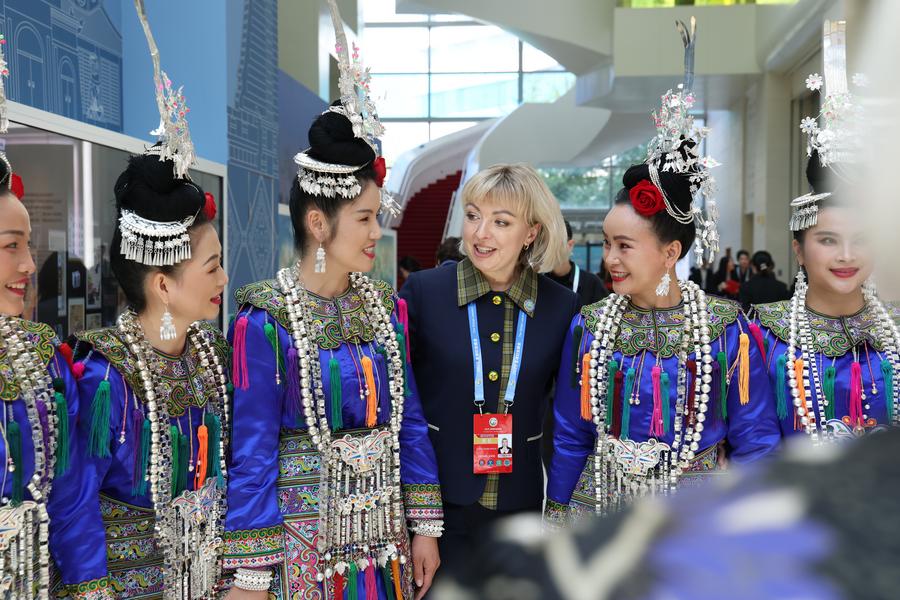
Yang Shuting, a 2025 "Most Beautiful Woman Striver" awardee from a Miao ethnic village in Central China's Hunan province, is also a miracle creator. Despite being paralyzed at age 20 in a traffic accident, Yang refused to be defined by her disability. She started with a very low income by providing power leveling services in online games. Then working as a customer service representative, running an online store, delivering and receiving goods while sitting in a wheelchair, Yang never gives up no matter how difficult it gets. Since 2013, her cooperative and company have created jobs and increased income for thousands, including impoverished individuals and people with disabilities, selling products to multiple countries. Her story demonstrates that "after every storm, there is a rainbow."
The tales of women's struggles for better lives strike a chord with numerous people.
"Life is not easy for any of us. But what of that? We must have perseverance and above all confidence in ourselves. We must believe that we are gifted for something, and that this thing, at whatever cost, must be attained."
These words from Marie Curie's letter to her sister capture the unwavering determination and immense courage of countless women. They embody their resilience to break free from constraints and to thrive, outlining a journey of perseverance and grit. With both tenderness and strength, tears and laughter, the powerful force erupting from the depth of heart drives the struggle of everyone, leaving a trail of footprints that form a Milky Way guiding dream chasers in the night.
III
"Development cannot be achieved without women, and its benefit must be shared by all people, women included."
"In pursuing development, we need to protect women's rights and interests and improve their lives, and ensure that women's development goes hand in hand with economic and social development."
On the basis of a thorough understanding of the evolution of women's liberation and development and its underlying laws over the past two centuries, and following the basic tenets of Marxism that the people are the creators of history and labor is the essential human activity, Xi's important discourse prominently emphasizes women's critical roles, fully affirms their core values as workers and participants in social practice, profoundly reveals the intrinsic connection between women's comprehensive development and the progress of human society, and provides scientific guidance for advancing women's development globally with a clear practical pathway.
In an agrarian society, women's labor was embedded within household collaboration, with them bearing childcare responsibilities in the meantime, and having to depend on family. The Industrial Revolution brought new opportunities, enabling women to leave home and engage in industrial production. Among the first countries to be industrialized, female workers conducted tenacious struggles in the face of harsh working conditions, excessive working hours, and wages only half of those of male workers. These pressures compelled the government to enact laws and regulations aimed at alleviating contradictions. Yet factory owners persisted in exploiting female workers through means like layoffs or wage cuts. The phenomenon of women being "last hired, first fired" meant their menial status in the labor market remained largely unchanged for a long time.
"At a brickworks in Moseley, a 24-year-old woman produced 2,000 bricks daily, assisted only by two underage girls who hauled clay and stacked bricks. Each day, these girls had to excavate 10 tonnes of clay from a 30-foot-deep pit via a slippery slope, then transport it 210 feet away."
In the writings of Karl Marx and Friedrich Engels, the living conditions of 19th century British female workers were documented: some women labored 18 hours a day, with spines and pelvises deformed by the grueling work; they were callously exposed to toxic substances and other hazards; they labored in factories until the very moment of childbirth... Even under these appalling working conditions and with meager wages, they had to accept the exploitation.
In stark contrast to working-class women, bourgeois women spent their "leisure time" at home, serving as ornaments to their husbands' wealth and status. Some found this idle existence unsatisfying and began seeking new meaning of life.
Florence Nightingale (1820-1910) led a group of 38 female nurses to Crimea to care for wounded British soldiers. After the war, she founded the world's first nursing school. Though she did not directly participate in the women's movement, her practical work demonstrated women's professional capabilities and value, playing a pivotal role in expanding women's career opportunities and elevating their social status.
History has always advanced through twists and turns, while women's employment has long been constrained by outdated conventions. During the two world wars, more women joined the workforce. Yet in the postwar era, as large numbers of demobilized soldiers needed to be employed, women in Western countries were pressured to relinquish their jobs to men. Some openly asserted that women's participation in social and economic activities threatened domestic harmony.
"The first requisite for the emancipation of women is that all women participate again in social labor," Friedrich Engels articulated this crucial proposition as early as 1884 in the Origin of the Family, Private Property and the State.
In the late 19th century, Norwegian playwright Henrik Ibsen created Nora, who resolutely leaves to break free from the status of being her "husband's doll," becoming a symbol of awakened women. Yet without economic independence, what would become of Nora after her departure? Famed Chinese writer Lu Xun (1881-1936) sharply observed, "Nora truly has only two paths: either to degenerate or to return home." In China at that time, the influence of feudal ethics still prevailed. Women were fettered by shackles of political, clan, religious, and spousal powers, as profoundly revealed by Comrade Mao Zedong. Even with a Nora-like awakening, without a social revolution to break free from these fourfold shackles, newly awakened women will ultimately remain confined to the fate of being trapped within the household.
Throughout human history, women's participation in economic and social development has reached unprecedented breadth and depth. The UN 2030 Agenda for Sustainable Development integrates a gender perspective across all sectors. The latest report by UN Women and the UN Department of Economic and Social Affairs indicated that in 2024, the labor force participation rate for women aged 25 to 54 stood at 64.5 percent, reflecting their deep integration into various industries. A 2024 UNESCO report showed that between 2000 and 2024, the global gross enrollment rate for women in tertiary education surged from 18 percent to 37 percent.
Advancing women's development in tandem with economic and social progress is a key pathway to enhancing their status. Economic participation empowers them with autonomy, social engagement grants them influence, and full integration dismantles prejudice. The enhancement of women's status is backed by increasingly solid support.
"Nothing in the world can be accomplished properly without the participation of women," Comrade Mao Zedong said at the International Women's Day commemoration held in Northwest China's Yan'an in 1939.
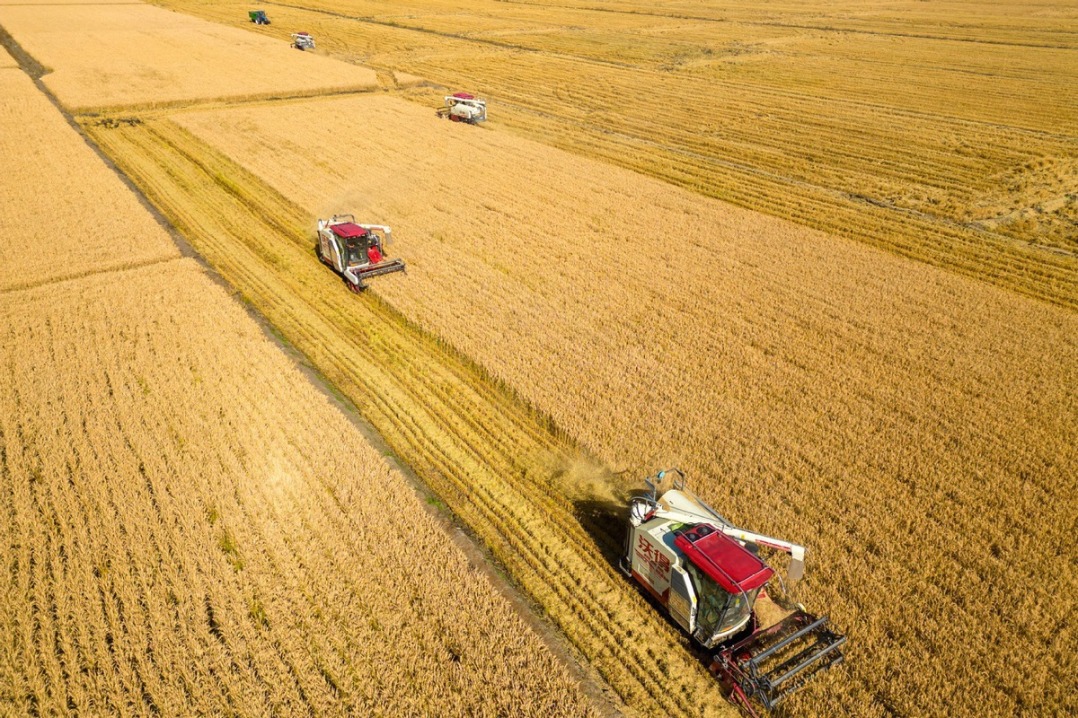
In the new era, "She Power" is emerging as a vital engine driving progress: scientists working on chip research and development in laboratories, community workers safeguarding people's well-being, farmers devoted to agricultural production in the fields, and astronauts exploring the cosmos in outer space...
A World Bank report showed, if women's employment rate equaled that of men, GDP per capita would increase by nearly 20 percent on average. According to a report by UN Women and the UN Department of Economic and Social Affairs, closing the gender digital divide alone would benefit 343 million women and girls worldwide, lift 30 million people out of poverty by 2050, and boost global economic growth by $1.5 trillion by 2030.
To accelerate action for gender equality and women's comprehensive development, it is imperative to formulate more scientifically sound development strategies. These strategies must take into account national conditions, gender differences, and women's specific needs to ensure women share in development achievements equally. They must also innovate policy approaches to unleash women's potential and promote their active participation in economic and social development.
In the 1950s, China's land reform granted women equal access to land. This practice of safeguarding women's land rights aligned with the principle of rural gender equality later advocated by the Food and Agriculture Organization of the UN, providing a reference point for policy makers in Asian agricultural nations. In the 1970s, China's barefoot doctor system, a primary health care program in rural areas, gained recognition from the World Health Organization and was learned from by multiple developing countries, effectively contributing to improvements in grassroots maternal and child health locally. Since China's reform and opening up in 1978, the story of women leaving homes to seek employment at village and township businesses and increase income inspired women in many countries to explore broader horizons and improve financial conditions. In the new era since 2012, models such as small-sum loans to women during poverty alleviation, and support for female entrepreneurship in rural revitalization, have been incorporated into the global experience-sharing system for gender equality through practical cooperation with UN Women, providing valuable references for countries implementing the Sustainable Development Goals.
China's experiences show that a higher level of social and economic participation by women helps to raise their status, and it also boosts social productivity and invigorates the economy.
IV
"(We the peoples of the UN determined) to reaffirm faith in fundamental human rights, in the dignity and worth of the human person, in the equal rights of men and women and of nations large and small."
Like a beam of light piercing through the sky, this powerful statement in the Preamble to the UN Charter fundamentally rejected the long-held prejudice that one's status determines one's rights. It marked a historic leap from gender discrimination to equality of personhood, laying a civilizational foundation for the modern human rights system.
Humanity's progress has never been a walk down a straight boulevard, but a journey forged through the clash of old and new ideas.
In 1945, the UN Conference on International Organization was held in San Francisco, the United States. Of the 51 countries represented, women had voting rights in only 30 of them, and of the 850 delegates who signed the UN Charter, only four were women.
Brazilian delegate Bertha Lutz firmly upheld the principle that human rights are incomplete without gender equality. Aware that this goal could not be achieved by her efforts alone, she worked tirelessly to lobby and rally support from various parties, advocating for the inclusion of gender equality in the UN Charter.
When the inclusion of equal rights of men and women was finally confirmed in the Charter, the female delegates were moved to tears as the hall erupted in thunderous applause.
Looking back on that historic moment, Minerva Bernardino, who represented the Dominican Republic during the signing of the UN Charter, reflected with deep emotion: "I planted good seeds, and they have begun to bear fruit, although not as quickly as I would have liked."
All human beings are born free and equal in dignity and rights. Women's rights are an integral part of human rights; protecting them is a return to the very essence of equality in human rights. Women's rights were long denied in history, and gender discrimination persists today. Ensuring women's rights both redresses historical injustices and addresses current inequalities. The protection of women's rights is a measure of human rights progress and a key to their full realization.
"Women's rights and interests are basic human rights. They must be protected by laws and regulations and integrated into national and social rules and norms." Xi's resonant remarks at the 2015 Global Leaders' Meeting on Gender Equality and Women's Empowerment left a profound mark on the historical advancement of human civilization through the development of women's causes.
In 1953, Shen Jilan traveled abroad with the first Chinese women's delegation to attend the World Congress of Women in Copenhagen, where she shared the story of how, in a village, Chinese women were given equal pay to men following a work contest, and made delegates from around the world understand why it is said that "Chinese women hold up half the sky."
One year later, Shen attended the first session of the First National People's Congress of China, and it was during the session of China's national legislature that she actively advocated for women's labor rights and promoted "equal pay for equal work" to be written into the Constitution.
Rising from practical experiments in a village to institutional guarantees enshrined in the nation's fundamental law, the reconstruction of social and civilizational values responds to the era's demands of hundreds of millions of women.
Over the past seven decades, China has kept pace with the times in strengthening legal protections for gender equality, embedding the safeguarding of women's rights in every link of legislation — sound legislation, strict law enforcement, impartial administration of justice and society-wide adherence to the law.
In the process of building a socialist country under the rule of law and constructing a law-based government and a law-governed society, China has steadily raised the level of assurance for women's rights.
The rights to life and development are the most fundamental of human rights. Protecting them is central to safeguarding women's rights — the right to life provides the foundation for development, while the right to development creates greater space for life.
Subsistence is the foundation of all human rights, and living a life of contentment is the ultimate human right. The improvement in women's quality of life relies on solid safeguards that ensure dignity and freedom from violence, a comprehensive health service system covering all life stages, and effective measures that eliminate livelihood anxieties. Further progress depends on platforms that empower women to achieve economic independence, accessible pathways for them to become leaders, and broader spaces for their participation in governance.
Only by achieving development that is higher-quality, more efficient, fairer, more sustainable, and safer can women's sense of gain, happiness, and security be fuller, more assured, and more enduring.
Globally, there is a growing consensus on the central role of the rights to life and development and their mutually reinforcing relationship, while the assurance of women's rights, as a crucial implementation aspect, is receiving increasingly clear attention.
The Convention on the Elimination of All Forms of Discrimination against Women extends the scope of discrimination from the public to the private sphere, incorporates the assurance of women's reproductive health into the obligations of state parties, places special emphasis on the rights of rural women, and calls for the adoption of temporary special measures and the transformation of discriminatory gender cultures to establish a global framework for combating gender-based discrimination.
The Convention has been ratified by 189 countries, making it one of the most widely recognized human rights treaties worldwide. As of November 2024, the UN's campaign UNiTE to End Violence against Women has helped 165 countries enact laws against domestic violence. Building on this foundation, efforts to improve legal systems and ensure women's rights across all areas through global cooperation are continuing to deepen and yield tangible results.
In September 1995, the Fourth World Conference on Women in Beijing adopted the Beijing Declaration and Platform for Action, outlining a blueprint for promoting gender equality and women's development, and becoming a guiding document for advancing women's causes globally.
The Platform for Action emphasizes that governments should actively fulfill their primary responsibilities, prevent and eliminate all forms of violence against women and girls, and give prominence to issues of greatest concern to developing countries, such as poverty, education, and health. By taking all these measures — fully considering ethnic characteristics, regional conditions, and diverse historical, cultural, and religious contexts — it demonstrates a clear commitment to fairness and pragmatism, and continues to have a positive impact to this day.
"A revolution has begun. There's no going back," said Gertrude Mongella, secretary-general of the Fourth World Conference on Women, at the close of the conference in 1995. Over the past three decades, a series of positive developments in advancing women's rights worldwide has echoed across time and space: girls' education has gradually approached equality, and countries continue to repeal discriminatory laws...
Grounded in this practice, it has increasingly become a global consensus to adapt the universality of human rights to national realities, promote women's development based on a country's conditions and people's needs, and ensure that women lawfully enjoy broad, substantial, concrete, and effective rights. The idea of pursuing a path for women's rights development that aligns with the times and fits national conditions has gained wide acceptance, while countries around the world continue to explore and deepen their efforts.
V
At the 2022 Beijing Winter Olympics, women athletes accounted for a record-high share of participants, and the number of events they participated in also reached an all-time peak. It became the most gender-balanced Winter Games in history, where women's grace and strength were showcased more fully than ever before.
Back at the Paris Olympics of 1900, however, only 22 women from five countries participated in five "feminine-appropriate" sports events such as tennis and golf, and their results were not even included in official records. What may now appear awkward nonetheless marked a breakthrough moment in the history. In Ancient Greece, women were forbidden to participate in or even watch the Games. And even Pierre de Coubertin, founder of the modern Olympic movement, believed that the only Olympic role for women was to crown the champions with laurel wreaths.
To pursue breakthroughs, defy prejudice, and reshape the world -- over more than a century, this enduring spirit of women's cause has stood the test of time, retaining its vitality and relevance to this day.
Gender equality and the all-round development of women are both intrinsic requirements and essential pillars of modern societies seeking fairness, vitality, and sustainable progress.
Xi has said: "Men and women live in the same one world. A society with less discrimination or prejudice against women is often more inclusive and dynamic. We must eradicate all forms of violence against women, including domestic violence. We should focus on gender equality and dismiss outdated mentalities and customs inhibiting women's development." His important remarks provide both guidance and practical approaches for building inclusive cultures and advancing women's development cause worldwide.
In 2012, the Chinese urban romance drama, A Beautiful Daughter-in-law Era, became a hit on African television. The character Mao Doudou, a Chinese daughter-in-law, struck a chord with many African women who saw themselves in her struggles — torn between fulfilling traditional expectations of being a dutiful wife and daughter-in-law and pursuing economic independence and equal say in family decisions. The tension and perseverance in her gradual journey of growth generated strong resonance, becoming a phenomenal case of intercultural communication.
Just a year earlier, an international study on cultural bias had drawn wide attention. Backed by detailed data, it revealed a stark imbalance between male and female scientists in "unpaid work." The double burden left female researchers with less time for deep study and major projects, ultimately affecting their career advancement and academic output.
While explicit legal restrictions on women's rights and participation have largely faded from societal surfaces, deeply ingrained cultural barriers now emerge as the predominant obstacles to gender equality, significantly limiting women's developmental opportunities.
It's time for a change, and it's time for women to be seen.
Stories of women's "absence" are receiving growing attention around the world.
Gender equality does not mean equal distribution of toilet stalls between men and women. In October 2022, China revised the Law on the Protection of Women's Rights and Interests, requiring governments at all levels to take women's special needs into account when planning and building infrastructure, and provide public facilities such as public toilets and family restrooms that meet women's needs.
The fulfillment of women's "small needs" sends a "strong signal" that gender equality is taking root. The systematic advancement of women's rights protection has enabled the concept of gender equality to be more firmly integrated into social governance.
Across the world, countries are exploring their own distinctive paths toward gender equality, tailored to their respective national conditions.
In the new era, China has strengthened top-level planning and system-wide design, factoring in gender differences and women's special interests when drafting laws, policies, plans and programs. It has also promoted social values that respect and care for women, working to make gender equality a widely observed social norm. A series of measures has been taken to create broader space for women to grow and thrive:
— revising the Law on the Protection of Women's Rights and Interests, and enacting the Anti-Domestic Violence Law to strengthen the legal protection of women's rights through a continuously improved legal system;
— advocating values such as gender equality, mutual respect, and shared parenting to refine family-support policies;
— establishing gender-based statistics and monitoring systems to provide scientific evidence for addressing prominent issues that affect or violate women's rights;
— carrying out extensive, multi-channel and targeted public education to promote gender equality as a basic national policy;
— strengthening awareness of equality in the media sector and strictly prohibiting derogatory, dismissive or demeaning portrayals of women in reports or advertisements.
Sweden offers another telling example. In 1974, it became the first country to abolish women-only maternity leave and replace it with shared parental leave. At the time, only 0.5 percent of fathers applied for the leave, and even two decades later, the share still did not exceed 10 percent. Starting in 1995, Sweden gradually introduced a "daddy quota," with non-transferable leave entitlements compelling men to take part in child-rearing. Salary subsidies and anti-discrimination oversight helped remove men's worries that child care would harm their careers. Over time, from schools to media, the image of the "good father" was promoted as a social model. After more than half a century of sustained efforts, fathers pushing strollers have become an everyday scene on Swedish streets.
Advancing gender equality cannot be achieved overnight through campaign-style movements. It requires persistent efforts in continually improving laws and refining policies, as well as gradual cultural transformation.
Building a harmonious and inclusive social culture and promoting the all-round development of women worldwide are crucial to whether human civilization can break free from narrow confines, and to what kind of world we will create for generations to come.
VI
"Women and children are the ones who suffer most when peace or tranquility is disrupted. We must stand firmly for peace, development and win-win cooperation, cherish peace dearly and uphold it so that every woman and child will enjoy the sunshine of happiness and tranquility."
The heartfelt words of Xi at the Global Leaders' Meeting on Gender Equality and Women's Empowerment a decade ago deeply touched the audience and left the international community with much food for thought. They reflect a clear-headed assessment of history and reality and a deep understanding of the inherent logic of safeguarding peace and promoting the well-being of women across the world. They also represent the natural expression of the global vision of a major responsible country and a solemn declaration of its principle and stance. The call of the times to lay a solid foundation for the development of women across the world conveys a firm belief in jointly upholding peace and promoting development.
This year marks the 80th anniversary of the victory of the Chinese People's War of Resistance against Japanese Aggression and the World Anti-Fascist War.
Against the backdrop of a somber commemorative atmosphere, the records of atrocities committed by Japanese soldiers during the Nanjing Massacre in the winter of 1937, documented by Cheng Ruifang, head of the health team at Nanjing's Ginling College Refugee Camp, are particularly suffocating:
"December 17... Tonight, they dragged away 11 girls. I don't know where they were taken or how they will be abused. I feel like crying — what will become of these girls?"
"December 21... Even though we brought the girls from outside into the camp, the soldiers still come to drag them away, both day and night..."
In the very same catastrophe, Anne Frank, a Jewish girl, hid for two years and one month in a dark and cramped attic in Amsterdam to escape the clutches of the Nazis.
"In spite of everything I still believe that people are really good at heart." The year after she wrote these words in her diary, the young girl tragically died at the Bergen-Belsen concentration camp in Germany.
The dream of peace, a brilliant and undimmed light, endures. Yet throughout the long river of history, countless women have become casualties of war and conflict.
At Kamal Adwan Hospital in northern Gaza, Salma gave birth weeks prematurely due to prolonged psychological stress and malnutrition. The baby girl in the incubator weighs only 1.5 kilograms and relies on an oxygen device to breathe. Fearful that her daughter may not survive, Salma constantly weeps and prays.
According to a May 2025 report by UN Women, since the latest round of the Israeli-Palestinian conflict erupted, over 28,000 women and girls have been killed in Gaza — that is one woman and one girl on average killed every hour in attacks by Israeli forces. With the spread of armed conflict, rampant gang violence, and the resurgence of terrorist forces... around 676 million women lived within 50 kilometers of a deadly conflict in 2024, the highest recorded number and share since the end of the Cold War.
Women face disproportionate hardships during wartime, a reality rooted in their biological distinctions, gendered social roles and structural disadvantages in resource access. When social order collapses and protective systems fail, amid scarce and chaotically allocated resources, women become the most directly impacted and tragically affected group.
War has never truly left women untouched.
"Women had been those who suffered most in our civil conflict, and women had been the ones to resolve it," said Ellen Johnson Sirleaf, former President of Liberia. From 2006 to 2018, she led the Liberian people in rebuilding peace and stability from the ruins of war.
As early as the year 2000, the UN Security Council adopted Resolution 1325 on Women, Peace and Security, reaffirming the important role of women in the prevention and resolution of conflicts, peace negotiations, peace-building, and peacekeeping. It urges all actors to incorporate gender perspectives in all UN peace and security efforts.
Under the scorching sun, amid swirling dust, rusted barbed wire, and ubiquitous warning signs... Chinese female peacekeeping officer Xin Yuan, born in the 1990s, repeatedly risked her life alongside the mine clearance team as they entered minefields. Scanning, marking, and disposing of explosives, they ultimately completed their mission 34 days ahead of schedule.
As the only female staff officer in the UN Interim Force in Lebanon responsible for mine sweeping, Xin demonstrated with courage, intelligence, and resilience that "female peacekeepers can perform the same roles as their male counterparts under equally challenging conditions." In May 2020, she received the honorary certificate of the UN Military Gender Advocate Award. Her peacekeeping story stands as yet another powerful example of China's active implementation of the UN's Women, Peace and Security Agenda.
"Women's organizations in different countries should strengthen interactions with each other to enhance friendship, pursue development and make progress together. We should continue to carry out women-related international development cooperation. Developed countries should scale up financial and technological assistance to developing countries and narrow the development gap among women in different countries," said Xi at the Global Leaders' Meeting on Gender Equality and Women's Empowerment in 2015.
Xi has deeply grasped the characteristics of this era in global women's development and actively responded to the aspirations of people worldwide for building and sharing a better world, providing intellectual guidance for improving international cooperation mechanisms.
In today's world, humanity is increasingly becoming a community with a shared future, where all are intertwined. From the perspective of overall human progress, the entire human civilization cannot be said to have shaken off the shackles of gender oppression as long as women in some countries still face threats of violence, workplace discrimination and deprivation of the right to education. Effectively safeguarding women's rights to health, education, and employment in developing countries will inevitably inject new vitality into sustainable global economic development.
It is precisely by upholding the vision of building a community with a shared future for humanity that China integrates its own development into the global process. Through practical cooperation and active participation in global governance, China contributes its wisdom and solutions to promoting gender equality and women's all-round development worldwide.
The process of a country's continuously growing international influence, appeal, and power to shape is also one where its national governance practices and the global governance system mutually reinforce and effectively interact.
China has supported the work of UN Women, partnered with UNESCO in setting up the Prize for Girls' and Women's Education, helped fellow developing countries in implementing 100 maternal and child health projects, and trained over 200,000 female professionals for more than 180 countries and regions. These concrete actions epitomize China's active participation in the reform and construction of the global governance system in the new era.
Over a century ago, the concept of "gender equality" reached China with the eastward spread of Western ideas, igniting a great awakening among Chinese women to break free from feudal constraints. Following the founding of New China, the notion that "women hold up half the sky" transcended the Eurocentric confines of the global women's movement, initiating a new practice that deeply integrated women's liberation with national development.
In today's China, as the country strides closer to the center of the world stage, it is emerging as a leader in women's development, an active advocate and a steadfast actor in global cooperation for women's advancement.
VII
The Human Rights and Alliance of Civilizations Room (former Room XX) of the Palace of Nations in Geneva, Switzerland, known as the "most beautiful conference room" at the UN Geneva headquarters, features a magnificent ceiling sculpture by the prominent contemporary Spanish artist Miquel Barceló. Using pigments sourced from across the globe, the Spanish artist created a kaleidoscopic work that embodies the spirit of pluralism and inclusion, carrying the dream of jointly building a future of peace and prosperity.
On Oct. 9, 2024, the 57th session of the UN Human Rights Council was held here. Omar Zniber, president of the Human Rights Council, asked the representatives if any delegation requested a vote on draft resolution L.2 due to objections. A silence fell over the room, and Zniber promptly announced its adoption without a vote.
This resolution, aimed at revitalizing the spirit of the Beijing Declaration from the Fourth World Conference on Women, was initiated by China and co-sponsored by more than 110 countries, making it the Human Rights Council resolution with the largest number of co-sponsors in recent years. At a time when forging broad international consensus has become increasingly difficult and effective international cooperation is hard to advance, the promotion of women's all-round development remains one of the issues within the UN agenda that continue to command widespread support from all sides.
Women's issues concern all humanity, the advancement of women is a cause for all humanity, and progress for women represents progress for all.
In the history of human civilization, the over-two-century-long international women's movement is but a "fleeting moment in time."
During this "fleeting moment in time," what Karl Marx described as "feminine ferment" has powerfully catalyzed profound transformations in human institutions, social structures, and ideologies. Meanwhile, the call by Li Dazhao, an influential early revolutionary leader in China, for "women to seek their own identity" and for "men to discover the significance of women" has greatly advanced humanity's civilizational pursuit of liberation and all-round development.
During this "fleeting moment in time," the advancement of women's cause has increasingly evolved into a global systemic undertaking. It transcends linguistic and geographical boundaries, bridges differences in systems and cultures, and weaves ties of friendship and cooperation among different peoples and nations. It is intrinsically linked to fundamental human concerns such as survival and reproduction, war and peace, while also being deeply intertwined with contemporary challenges including sustainable development, digital transformation, and climate change.
Amidst the transformative changes unfolding on a scale not seen in a century, the global cause for women faces both opportunities and challenges. In March this year, UN Women launched the Beijing+30 Action Agenda. Achieving gender equality is not a task any single country can accomplish alone, said UN Women Executive Director Sima Bahous, adding that the cause of women requires a strong and united multilateral system to sustain it.
Building a world where women are free from discrimination and forging an inclusive society for all remains a long-term undertaking that requires redoubled efforts. It is a must to accelerate the achievement of gender equality and advance the global cause for women.
Bearing this profound mission, the Global Leaders' Meeting on Women in Beijing has written a remarkable chapter of this era, leaving its own indelible mark on the great journey of building a community with a shared future for humanity.