
The China Story
at your Fingertips
OPEN
China Daily launched Vision China in 2018 as a bridge for communication between China and the rest of the world. Focusing on developments in both China and abroad, Vision China invites well-known opinion leaders to share their ideas on a wide range of topics.
Sept 12, 2024?–?"Inspiration from the Past, Vision for the Future",?New York, US
June 9, 2024 – "Treasuring the Past, Enriching the Future", Jinzhou, Liaoning province
"It was through my coworkers in China, I really learned about China," said Bill Einreinhofer, three-time Emmy Award winner, at the Vision China event in New York on September 12. He also said, "You're never going to read in a guidebook. You're never going to read in a magazine article. This information just isn't there, but it gives you such an insight."



At the Vision China event in New York on September 12, The Van Dries sisters, Katie and Kelly, looked back on Deng Xiaoping's visit to the United States 45 years ago. They shared memorable moments of presenting both national flags and described the historic scene of Deng Xiaoping wearing a cowboy hat. As important witnesses to the establishment of US-China diplomatic relations, they still feel both moved and honored as they recall this significant event.

At the Vision China event in New York on Sept 12, Inaugural President and CEO of the George H. W. Bush Foundation for US-China Relations David Firestein noted that historically, mutual dependence was seen as a means to reduce conflict and enhance security. However, he observed that now the US views this dependence as a risk, leading to efforts to decouple. Firestein emphasized that this zero-sum mentality is causing both nations to miss valuable cooperation opportunities. #VisionChina #USChinaRelations #MutualDependence

At the Vision China event in New York on Sept 12, Inaugural President and CEO of the George H. W. Bush Foundation for US-China Relations David Firestein pointed out that US assumptions about China have undergone a fundamental shift—from viewing China as a "partner" to now considering it an "enemy". Firestein noted that these erroneous assumptions have directly impacted US policy towards China, causing deviations and a lack of precision in its approach. #VisionChina #USChinaRelations #PolicyShift

"We welcome more American young people to come, meet Chinese friends, experience Chinese culture and gain a genuine, multi-dimensional understanding of China," said Xie Feng, Chinese ambassador to the US, at the Vision China event in New York on Sept 12.

"Politicization, imposing prescriptions on others for one's own illness and overstretching 'national security' lead to nowhere," said Xie Feng, Chinese ambassador to the US, at the Vision China event in New York on Sept 12.

"Sino-US relations are the most important bilateral relations in the world, and they must be managed well," said Qu Yingpu, publisher and editor-in-chief of China Daily at the Vision China event in New York on Sept 12th.?


Finding the right way for China and the United States to get along with each other is what both nations and the international community need the most, a top Chinese envoy said on Thursday.
Chinese Ambassador to the US Xie Feng, speaking at the Vision China event at the Asia Society in New York, said that for the past 50 years, the reopening and development of China-US relations was the most important event in international relations and the biggest contributor to global peace and prosperity.
"History provides us inspirations to look ahead to the future," Xie said in a keynote speech.
He said that in the next 50 years, charting that proper course will be critical to international relations.
Jointly hosted by China Daily and Bank of China, the event brought together more than 200 people to discuss "inspiration from the past" and "vision for the future".
Also speaking at the event, Qu Yingpu, publisher and editor-in-chief of China Daily, said the country's only national English-language newspaper has chronicled the development of Sino-US relations and "faithfully recorded the bonds forged between the two peoples".
"China-US relations are the most important bilateral relations in the world, and they must be managed well, despite the risks and challenges," Qu said.
Qu said the newspaper "has never been absent" when important moments unfolded in and between the two countries.
"Just as President Xi Jinping pointed out 'the hope of the China-US relationship lies in the people, its foundation is in grassroots connections, its future depends on the youth, and its vitality comes from subnational exchanges' — those are the key aspects we should constantly work to strengthen," Qu said.
The veteran journalist said he is a firm believer that "mutual understanding is the foundation of friendly cooperation" and that "a modernized China represents an opportunity, rather than a challenge, to the US".
Given that China and the US have accumulated remarkable "cognitive deficits" amid profound changes taking place in the world, it is crucial that the two peoples reacquaint themselves with a real, multidimensional and comprehensive view of each other's country, he said.
In his keynote speech, Xie, the ambassador, said: "The history of the China-US relationship in the past 45 years, especially the ups and downs in recent years, tells us that pressure, sanctions, isolation, containment and blockade don't serve the purpose. Rather, they bring self-inflicted trouble and require extra work to offset the unwanted results.
"The idea of 'decoupling' is illusive. Viewing each other as new Cold War adversaries will prove to be the biggest strategic misjudgment in the 21st century," he said.
The envoy underscored that among the four red lines that China has drawn — Taiwan, democracy and human rights, path and system, and development rights — the Taiwan question is paramount in China-US relations and is a red line that must not be crossed.
"For China-US relations to have a 'stable floor', it is critical to avoid touching these 'high-voltage wires'," Xie said.
The Vision China morning session featured presentations from six Americans. They came to tell stories of friendship with China in a time wrought with uncertainty. They are people who have remained steadfast in their support of China while trade and political tensions persist, particularly in a US presidential election year.
US' wrong assumptions
US policy on China has veered off course because the assumptions have changed, in many ways radically, David Firestein, CEO and president of the George H.W. Bush Foundation for US-China Relations, said during his speech at the event.
"They have changed in a way that they have become less accurate than they were before," he said.
He outlined six wrong assumptions: China is no longer a partner but an enemy; building a constructive relationship with China does not serve the long-term interests of the US; China no longer accepts the existing world order and seeks to reshape it; China is trying to replace the US as the sole superpower; excessive engagement with China harms the US and makes it vulnerable; China-US relations are a "zero-sum game".
"They're all wrong, every one of them," Firestein said of the assumptions.
In 1979, teenagers Kelly Van Dries and her elder sister Kitty were working at a rodeo in Simonton, Texas, which was owned by their parents. Kelly had the honor of presenting a cowboy hat to Chinese leader Deng Xiaoping.
Sarah Lande of Iowa recalled the friendly exchanges of the city of Muscatine with Hebei province.
Their presentations were followed by a Gen Z debate and exchange in the afternoon, at which US and Chinese youths debated "The impact of artificial intelligence on human life" and discussed how to avoid the Thucydides Trap, while overcoming "information bubbles" for better China-US communication.
Ge Haijiao, chairman of Bank of China, said it is the longest continuously operating and most globalized bank in China. The bank has been a witness, participant and contributor to the ever-deepening and mutually beneficial cooperation between China and the US.
"Bank of China is firmly committed to promoting trade and commerce between China and the United States, to the benefit of both societies," Ge said in a message read in New York by Hu Wei, president and CEO of Bank of China USA and chairman of the China General Chamber of Commerce-USA.
Steve Blake, chief representative for the environmental group Wild-Aid in Beijing, said his experience in China "has really shaped my entire life for the most part".
"Study Chinese, go check out China. ... On the ground, it's still an amazing place," he said.
Angela Chen, co-chair of the New York Philharmonic's International Advisory Board, said: "I'm really touched by these stories. You should share them with US audiences."
"I encourage your team to make a documentary featuring all the stories shared today — US audiences should know that there are still many people building connections between the US and China," she added.
Belinda Robinson, Minlu Zhang and Heng Weili in New York contributed to this story.


Debate on impact of AI brings youths of two nations closer
In a clash of opinions that bridged borders, eight young voices from the United States and China converged in New York City to debate one of the world's most pressing issues — artificial intelligence.
This wasn't a typical debate. These contestants, fluent in each other's respective languages and steeped in the cultures of both nations, brought a unique perspective to the issue. Their goal was to inspire collaboration between people in the two countries on a technology that could reshape humanity's future.
Liam Green, a member of the "pro-AI" team, focused on the technology's potential to revolutionize education in the debate organized by China Daily with the theme "Bridging Futures: China-US Youth Debate and Exchange".
"AI can assist students as a companion, and this is advantageous for both lesser economically developed countries and more economically developed ones," Green said. He emphasized AI's unique ability to promote accessibility and equality, countering concerns about potential societal disparities.
Green, who spent eight years in China before going to university in New York, highlighted the importance of collaboration between the US and China on AI policy.

"These two countries are able to work together to pass laws that are effective," he said, stressing the need for transnational cooperation in an increasingly globalized world.
On the opposing side, Zixin Wang, a Harvard Kennedy School graduate from Chengdu, China, voiced concerns about AI's potential negative impact. "Right now, in society, we have seen so many misuses of artificial intelligence, from scams using fake faces and fake videos to trick you, to those who use artificial intelligence to make falsified documents," Wang said. While acknowledging AI's benefits, he emphasized the current lack of regulations and the potential threats posed by advanced AI systems.
Despite their opposing stances, the debaters recognized the value of this cross-cultural exchange. Wang expressed his enthusiasm for engaging with young people from both countries. "I believe conversations can alleviate all the barriers of understanding and also enhance the understanding of each other," he said.
Amelia Yuan, a California native studying at New York University-Shanghai, echoed that sentiment. She viewed the debate as an opportunity to gain diverse perspectives on international relations and finance, adding she had benefited from working with her team members. "It's super exciting," she said, referring to the past week that she spent preparing for the debate.

The debate's significance resonated beyond the participants themselves. After observing the event, John W. Allen, a founding member of the New York-based Chinese Cultural Foundation, told China Daily, "It's a good debate because I can see both sides".
"Above the pros and cons," Allen said, "what is more important about the debate is to make sure that as artificial intelligence plays more of a role in our lives and as we make this transition, we influence artificial intelligence with the human values we have today."
Allen saw the debate as a microcosm of a larger trend: increased collaboration between young people from the US and China. "If I go to China and learn Chinese, and you come to the US and learn English, and then we multiply that relationship," he said.

6 'wrong' US assumptions damage ties
The United States has changed "six assumptions" it has historically held about China — and all the new viewpoints are "wrong", David Firestein, CEO and president of the George H.W. Bush Foundation for US-China Relations, said on Thursday.
"One of the things that has happened in recent years, speaking from an American standpoint, is that I think American policy for China has veered off course because the assumptions have changed, in many ways radically," said Firestein, one of the featured speakers at the Vision China event at the Asia Society in Manhattan. The event was co-hosted by China Daily and the Bank of China.
"They have changed in a way that they have become less accurate than they were before," he said.
Firestein detailed the assumptions that the US now makes about China, and what they used to be.
"Number one, we used to assume that China was a partner of the United States and that China approached the relationship as a partner," he said. Today, the overwhelming assumption in the US government, the media and to a significant degree in American society is that, "China is the enemy of our nation, not the partner".
Second, the US used to assume that it was in the long-term interest of the US to have a constructive relationship with China. "And oddly enough now, in official Washington and across much of the country, we seem to believe that it is in the longterm interest of the United States to not have a constructive relationship with China but rather to have an adversarial relationship with China."
Third, the US used to assume that China wanted to be deeply invested as a stakeholder in the existing global system, but now believes that, "China seeks to bring an end to the existing international order, to topple the international order and to recreate some new order that presumably would work to a greater degree to China's advantage".
Fourth, he said that the US used to believe that China aspired to be a major power but did not seek to displace and supplant the US as the world's only superpower.
"But now, in official Washington, we see many voices who articulate the view that China seeks to displace and supplant the United States as the world's only superpower and to basically kick us off the top of the hill and take our place," he said.
Fifth, the US used to assume that trade and other exchanges were good, and "mutual dependence between the United States and China was actually a good thing because it made conflict less likely".
Now the US assumes "that the more engagement, the worse for the United States, that relying unduly on China creates vulnerability for the United States and thus it has led to these efforts coming out of Washington and the rhetoric, which talks about decoupling and so forth and so on".
Finally, the US used to believe that the relationship generated mutual benefit but now sees that anything that China does is bad for the US, which has a zero-sum mentality.
"They're all wrong, every one of them," Firestein said of the assumptions.
"So, in conclusion, the assumptions have changed. I think we have veered offtarget and off-course. As a result, US policy toward China is not working optimally, meaning we're not getting the results that we ourselves say that we want," he concluded. "When it comes to US-China relations, "dependence" is good, and "it increases our security, not decreases it," Firestein said.
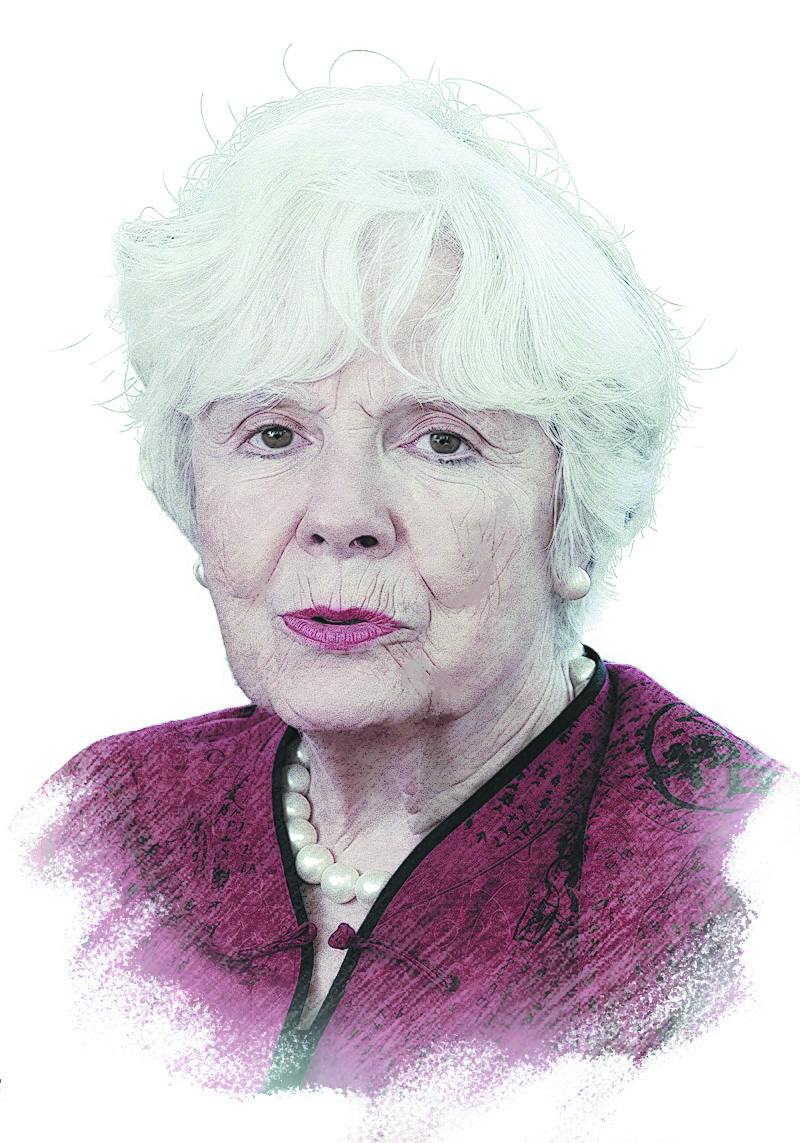
Xi's unique bonding with America
Sarah Lande, hailing from the small Iowa city of Muscatine, has a special bond with Chinese President Xi Jinping since 1985.
She has even published a memoir titled Old Friends: The Xi Jinping-Iowa Story in 2017.
"Our relationship started with friendship. It has continued to grow through the years as people of all ages and all interests have had the opportunity to learn and share each other's culture, history and government," Lande told the audience at the Vision China event in New York through a video recording.
Lande first met Xi when he led a delegation to the riverfront city in southeast Iowa "to learn to feed his people" in 1985.
"He came to Muscatine, visited farms, had a boat ride on the Mississippi (River), stayed at the family house, and I was honored to have a potluck dinner hosting him in my home," Lande said.
When Xi revisited Muscatine in 2012 to meet with his "old friends" there, Lande hosted him and his delegation at her Muscatine home, and the friendship was renewed, she said.
At the reunion, Xi told Lande and others, "You were the first people in America I met, and to me you are America."
Years of exchanges between China and Iowa made Lande publish the memoir. It was inspired by the memories and impressions written by the four gentlemen who were part of the 1985 delegation to Iowa led by Xi.
In November last year, Lande and other longtime friends were invited to meet with Xi when he was attending the APEC forum in San Francisco. There, Xi announced a program to invite 50,000 US citizen students to visit China and to get to know the language and culture.
"President Xi's generous support of youth education exchange has resulted in over 40 Muscatine High School students, educators and citizens traveling to China this year," Lande said.
She said the special relationship has resulted in numerous exchange visits to Muscatine this year. A Chinese delegation brought dances and acrobatics to Muscatine to celebrate Chinese New Year with local residents.
A dragon boat festival was held to savor a piece of Chinese traditions. High-ranking officials from Beijing and Hebei province visited the city.
Those "old friends" also participated in events in China and at the Chinese embassy in the US. About 120 students are taking Chinese-language classes at Muscatine High School. More exchanges are planned for the fall and next year.
"At this time, the world, our Earth needs the bright minds and big hearts of the peoples and leaders of the two largest economies to work together to solve critical issues of the day, including climate, food security, drugs and conflicts," she concluded.
Lande shared an August message from Xi in which the president said: "I thank you for your long-term efforts to promote cultural exchanges and people's goodwill between China and the United States. I count on you to continue to play your role as envoy of friendship between our two countries and make greater contributions to the friendship between our two peoples."
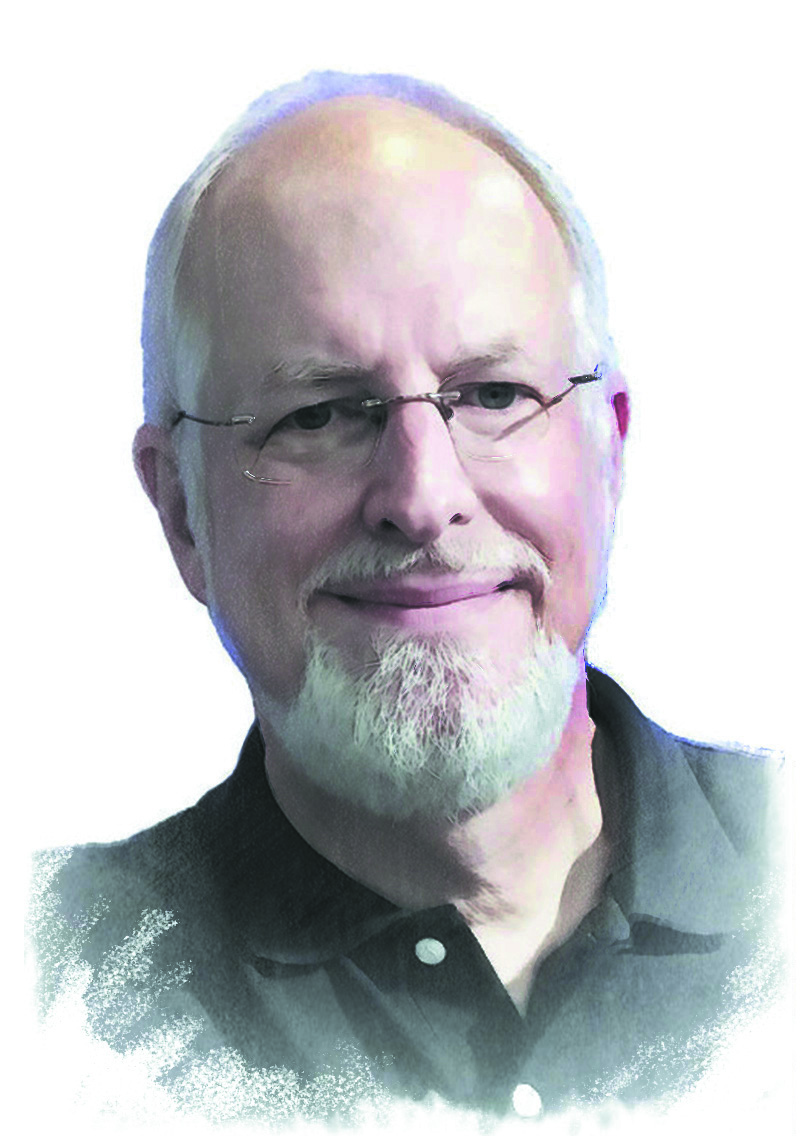
Emmy-winning producer documents forgotten story to bridge the gap
Three-time Emmy Award-winning film producer Bill Einreinhofer has long been a bridge between the United States and China, forming bonds with both new and old friends. Whether traveling with film crews or sharing personal moments, his experiences have highlighted the deep connections between the two nations.
On a scorching August afternoon 20 years ago, Einreinhofer interviewed the oldest taxi driver in Shanghai. After climbing five flights of stairs in the heat, he was warmly welcomed and served a steaming cup of coffee.
Trying to be polite, he sipped it, but the family soon thought they "made a mistake" to their American guest. They quickly decided that what their American guest really needed on such a hot day was ice cream. The taxi driver's granddaughter dashed to a nearby store and returned with Wawa ice cream, which Einreinhofer said he thoroughly enjoyed.
"These people didn't need to do any of this. After all, I had arrived at their apartment and disrupted their lives. I was a stranger who they would probably never see again. But that was the whole point. I was a visitor from afar. Chinese hospitality insisted I feel welcome in their home," Einreinhofer said in his speech during the Vision China event in New York.
His new documentary Valor and Memory will air this November on PBS TV stations across the US and focuses on the complex historical relationship between the US and China during World War II, and a friendship build-up that has lasted between the two countries for decades.
"Last October I was in Beijing. I was amazed at the media coverage being given to two elderly American military veterans. They were members of a group called the Flying Tigers — American pilots who risked their lives to help China during World War II or The War of Resistance — as it is known in China. Everywhere they went, they were greeted as heroes. Here in America, they are pretty much forgotten," Einreinhofer said. He then decided to pick up his camera and document the lasting friendship.
The documentary comes as the current China-US relations have deteriorated.
"Now, more than ever, it is important for America and China to understand each other. That doesn't necessarily mean agreeing. Instead, it is each side having knowledge of how history and culture have brought us to this moment, and how potentially we can move forward," Einreinhofer said.
He has also made many new friends in China as he traveled and shared meals with filmmakers in cities such as Beijing, Shanghai and Guangzhou in Guangdong province. Some later sought his help as the only international producer and director they knew to take their programs globally.
"Almost accidentally, I became something of a 'bridge' between two countries and two cultures," he said.
Einreinhofer added through his interactions with film colleagues in China, "I really learned what it is like to live in China. You don't find that information in guidebooks or newspaper stories. Plus, if you are there long enough, you begin to experience that reality firsthand".
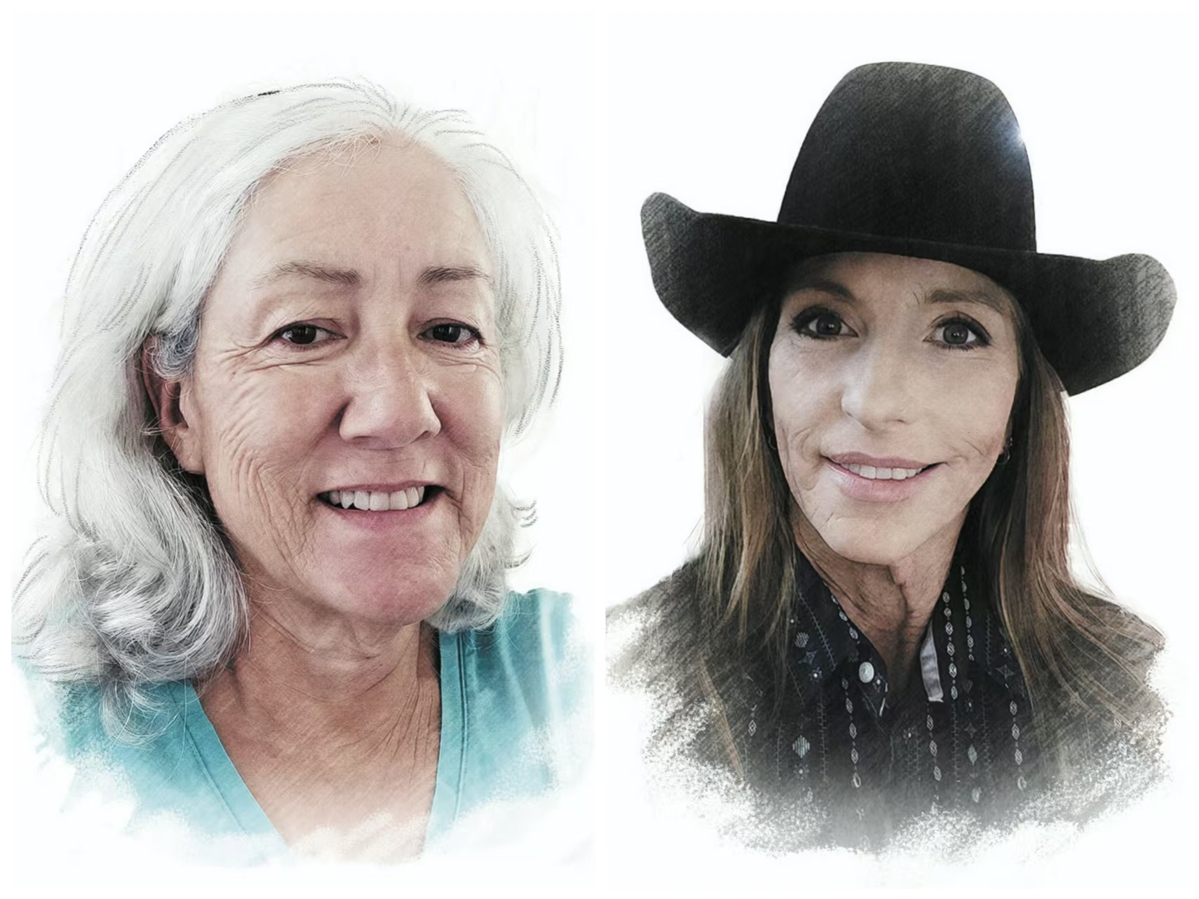
How a Texas rodeo and a cowboy hat became a symbol of US-China relations
A memorable moment in the US-China relationship was revealed in the form of an American cowboy hat, as two sisters, Kitty Van Dries and Kelly Van Dries, shared their extraordinary memory — leading the grand entry at their family's Round-Up Rodeo in Simonton, Texas, during Chinese leader Deng Xiaoping's historic visit in 1979.
Their story, interwoven with the excitement of the rodeo and the gravity of a pivotal moment in US-China relations, captivated the audience during the Vision China event in New York. It painted a vivid picture of how two young Texan girls, then in high school, became an unexpected part of a diplomatic milestone.
"When we were told the vice-premier of China was coming to Simonton to see a rodeo, we didn't know what to expect," Kelly said at her pair presentation with her elder sister, Kitty.
The sisters' father had purchased the rodeo arena a few years earlier, turning their regular Saturday night entertainment into a family business and an unforgettable chapter in their lives. Six months of preparation culminated in a day filled with bright lights and reporters worldwide.
According to their speech, it is a tradition that they begin every rodeo with a grand entry. "On Feb 2, 1979, the grand entry was led by my sister and I. I carried the American flag, and my sister Kelly carried the Chinese flag," Kitty said.
Kelly said the Chinese flag was nearly twice the size of the American flag. She showed a picture from that day of her riding a horse with part of the flag tucked into her boot and the rest in her hand. Their performance wasn't without its challenges. Kitty just recovered from a knee surgery; her horse lost its footing and fell, sending her tumbling.
Replacing his sister, Kelly rode her horse up to the fence, holding her reins in one hand and presenting the cowboy hat for Deng in the other. "As I gifted him the hat, he accepted the gift and placed it on his head," she recalled, describing the arena "went wild" with applauses, flashlights and shouts.
"It was a once-in-a-lifetime experience and I am more than grateful as I was able to be part of it," Kelly said.
Kitty said when she was carried to the back, Deng sent his personal physician there to make sure she was okay. Then, she was invited to sit with Deng, his wife and the translator in the stands for a while. "They asked me questions about the different rodeo events and I explained everything to them in detail."
And Kitty still remembered what happened the next day. "The People's Republic of China sent our family a three-foot multiple five-foot needlepoint of the Great Wall of China, which was beyond beautiful!" In their memory, this art had been hanging in their parents' living room for many years.
Kitty said, "People back home still talk about Deng's visit even 45 years later!"
Kelly said, "Who would have thought a cowboy hat would become a huge deal for the relationship between the United States and China!"
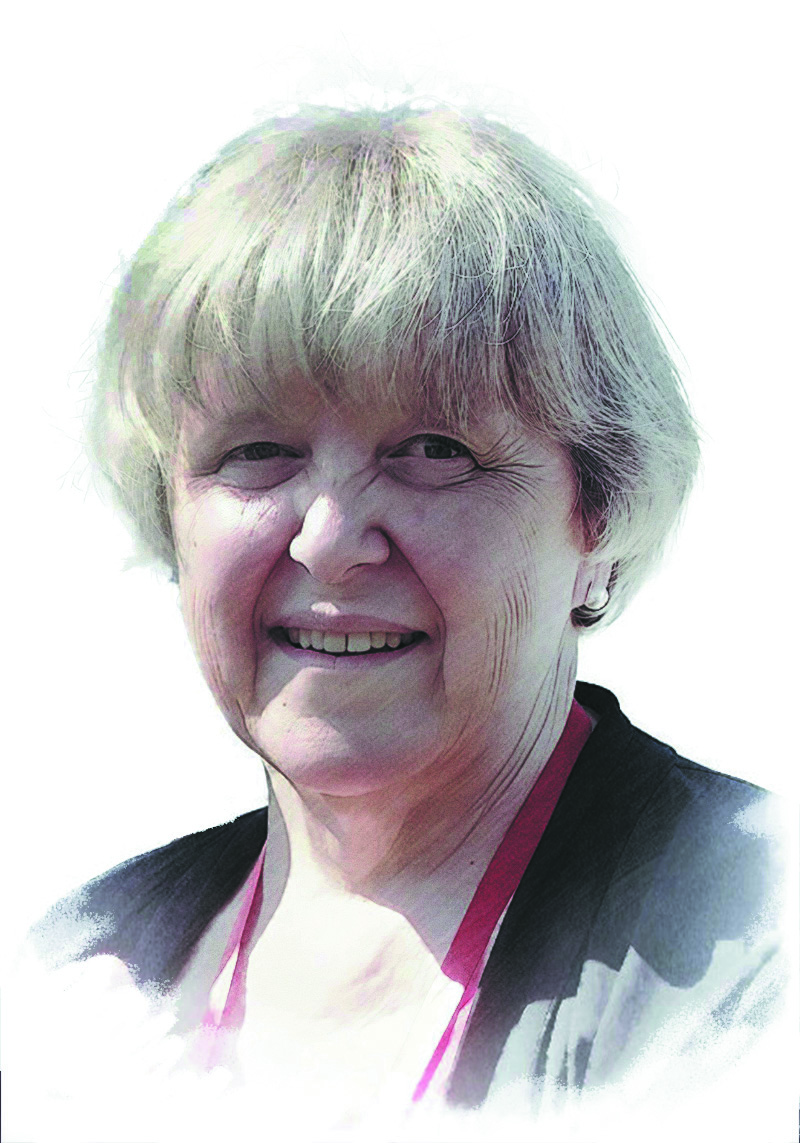
Mountain of memories: Kuliang's legacy brings East and West together
China's Kuliang, nestled in the mountains and shrouded in a light mist, has produced countless stories that span time and distance.
The small town in East China's Fujian province, once a popular summer retreat from the late 1800s until 1949, attracted many foreigners who lived in harmony with the local community generation after generation. "For eight years, it was almost like a treasure hunt," Elyn MacInnis, the consultant for the Kuliang history and culture research organization and also the founder of "Friends of Kuliang", said in a speech on Thursday at the Vision China event in New York.
"We found so many treasures along the way, but especially the discoveries of people from the US and other countries who worked and lived with the Chinese people with understanding and respect.
"Their love and friendship was so deep that it is still echoing in our families to this day," said MacInnis.
After living and working in China for 30 years, MacInnis, who speaks fluent Mandarin, returned one day to Kuliang, the town where her husband, Peter, a descendant of a World War II Flying Tigers member, was born.
Initially, she was merely curious about her husband's family's roots, but as they delved deeper into their research, more and more stories — like those of her own family — began to unfold, through museum archives, newspaper reports, diaries and albums.
"We had no idea where his former cottage was located. The local government came to our rescue, welcomed us, and took us on a tour, starting at the old post office, where we found a map on the wall," she said.
MacInnis found her family's old house, even though it was in ruins, but also found more details about the town, with the help of locals from Fujian and Chinese scholars, who were also are interested in exploring Kuliang. "We had Peter and I, Professor Lin Yinan (an associate professor at East China University of Science and Technology) and his students in Shanghai, and later, we found Guo Qing, who lives there and knows the people and the mountain like the back of his hand," she said.
MacInnis also mentioned that younger-generation students help translate documents. It took her and Peter eight years to search for stories and documents, and now, with the contribution of artificial intelligence, they were able to better identify people in old photos.
"Friendship requires spending time together," she said. MacInnis said that many of the foreign people who summered on the mountain were very committed to their work in China and worked in China for 20, 30, 40 years and generations, as educators, doctors and pharmacists.
Locals and foreigners in Kuliang helped each other by exchanging homegrown vegetables and fruits, sharing the public well for water, building houses and rebuilding after typhoons passed through. Meanwhile, children explored the mountains and trees, MacInnis said.
"The foreigners left the mountain in the late 1940s, but they kept this beautiful place, full of friendship and good memories, in their hearts," she said. "Thank you, Kuliang — thank you, Fuzhou and Fujian, and thank you, China, for giving me this beautiful story to share with you today."


Finding the right way for China and the United States to get along with each other is what both nations and the international community need the most, a top Chinese envoy said on Thursday.
Chinese Ambassador to the US Xie Feng, speaking at the Vision China forum at the Asia Society in New York, said that for the past 50 years, the reopening and development of China-US relations was the most important event in international relations and the biggest contributor to global peace and prosperity.
"History provides us inspirations to look ahead to the future," Xie said in a keynote speech.
He said that in the next 50 years, charting that proper course will be critical to international relations.
The forum, co-hosted by China Daily and Bank of China to commemorate the 45th anniversary of the establishment of China-US diplomatic relations, brought together more than 200 witnesses, participants and contributors to those relations to discuss "inspiration from the past" and "vision for the future".
The envoy noted that the best way to commemorate the anniversary is to explore the right way to get along in the new era and usher in a brighter future.
"The history of the China-US relationship in the past 45 years, especially the ups and downs in recent years, tell us that pressure, sanctions, isolation, containment and blockade don't serve the purpose.
"Rather, they bring self-inflicted trouble and require extra work to offset the unwanted results," Xie said.
He said that the two countries share ever-broader common interests, as the global significance of their relationship is increasing.
"The idea of 'decoupling' is illusive; viewing each other as new Cold War adversaries will prove to be the biggest strategic misjudgment in the 21st century," Xie said, adding that a conflict between China and the US would be unbearable for both and the world.
The envoy underscored that among the four red lines China has drawn — Taiwan, democracy and human rights, path and system, and development rights, the Taiwan question is paramount in China-US relations and must not be crossed.
"For China-US relations to have a 'stable floor', it is critical to avoid touching these 'high-voltage wires'," Xie said.
In his speech, Xie said that more than 10,000 American youths have visited China since President Xi Jinping proposed during his summit with US President Joe Biden last November to invite 50,000 American young people to China for exchanges and study programs over five years.
"The growth of China-US relations has primarily come from the joint efforts of our peoples," he said. "We will build more bridges of dialogue and communication between our peoples to sustain the tradition of friendship."
Also speaking at the forum, Qu Yingpu, publisher and editor-in-chief of China Daily, said the country's only English-language newspaper has chronicled the development of Sino-US relations and "faithfully recorded the bonds forged between the two peoples".
"China-US relations are the most important bilateral relations in the world, and they must be managed well, despite the risks and challenges," Qu said.
Qu said the newspaper "has never been absent" when important moments unfolded in and between the two countries.
Most recently, it covered stories including American families who once lived in the Fujian resort of Kuliang, US youth visiting China, the 80th anniversary commemoration of the "Flying Tigers", and the August debut of the giant pandas "Yun Chuan" and "Xin Bao" at San Diego Zoo.
"Just as President Xi Jinping pointed out 'the hope of the China-US relationship?lies in the people, its foundation is in grassroots connections, its future depends on the youth, and its vitality comes from subnational exchanges' — those are the key aspects we should constantly work to strengthen," Qu said.
The veteran journalist said he is a firm believer that "mutual understanding is the foundation of friendly cooperation" and that "a modernized China represents an opportunity, rather than a challenge, to the United States".
Given that China and the US have accumulated remarkable "cognitive deficits" amid profound changes taking place in the world, it is crucial that the two peoples reacquaint themselves with a real, multidimensional and comprehensive view of each other's country, he said.
For five years in a row, the newspaper has worked with the Chinese embassy in the US to stage an annual story-sharing event titled "My China Album", presenting photo albums that show a unique pathway to understanding, while acting as a lens through which one can appreciate the richness of another culture, Qu said.
The Vision China morning session featured presentations from six Americans. They came to tell stories of friendship with China in a time wrought with uncertainty. They are people who have remained steadfast in their support of China while trade and political tensions persist, particularly in a US presidential election year.
American policy for China has veered off course because the assumptions have changed, in many ways radically, David Firestein, CEO and president of the George H.W. Bush Foundation for US-China Relations said during his speech at the event.
"They have changed in a way that they have become less accurate than they were before," he said.
He outlined six wrong assumptions: China is no longer a partner but an enemy; building a constructive relationship with China does not serve the long-term interests of the US; China no longer accepts the existing world order and seeks to reshape it; China is trying to replace the US as the sole superpower; excessive engagement with China harms the US and makes it vulnerable; China-US relations are a "zero-sum game".
"They're all wrong, every one of them," Firestein said of the assumptions.
In 1979, teenagers Kelly Van Dries and her elder sister Kitty were working at a rodeo in Simonton, Texas, owned by their parents. Kelly had the honor of presenting a cowboy hat to Chinese leader Deng Xiaoping.
Sarah Lande of Iowa recalled the friendly exchanges of the city of Muscatine with Hebei province.
Their presentations were followed by a Gen Z debate and exchange in the afternoon, when American and Chinese youths debated "The impact of artificial intelligence on human life" and discussed how to avoid the Thucydides Trap, while overcoming "information bubbles" for better China-US communication.
Ge Haijiao, chairman of Bank of China, said it is the longest continuously operating and most globalized bank in China. The bank has been a witness, participant and contributor to the ever-deepening and mutually beneficial cooperation between China and the US.
"Bank of China is firmly committed to promoting trade and commerce between China and the United States, to the benefit of both societies," Ge said in a message read in New York by Hu Wei, president and CEO of Bank of China USA and chairman of the China General Chamber of Commerce-USA.
Steve Blake, chief representative for the environmental group WildAid in Beijing, said his experience in China "has really shaped my entire life for the most part".
"Study Chinese, go check out China. Don't pay so much attention to the high level — a lot of negativity around China these days. On the ground, it's still an absolutely amazing place," he said.
Angela Chen, co-chair of the New York Philharmonic's International Advisory Board and the founder and president of the China Arts Foundation International, said: "I'm really touched by these stories. You should share them with US audiences. I encourage your team to make a documentary featuring all the stories shared today — US audiences should know that there are still many people building connections between the US and China," she said.
John W. Allen, chairman and CEO of Greater China Corp, said:"Vision China brought us together beautifully, and the young people are our hope for all of us. I was so impressed with all of the members of the panel. I've been a friend of China Daily for decades."
Belinda Robinson, Minlu Zhang and Heng Weili in New York contributed to this story.

On Sept 12 EST, "Vision China: Inspiration from the Past, Vision for the Future" is held in New York. Prominent figures are invited to reflect on friendly exchanges between the two countries. A China-US Gen Z debate also takes place on the same day.

"Italy shares the same values with China. We both love our history, know where we come from, and understand our positions in the world. This is not easily achieved," said Marcella Festa, associate professor at the School of Cultural Heritage of Northwest University.
A group of scholars and international students studying in China visited Jinzhou city, Liaoning province on June 9 to explore local culture and tourism and discuss similarities between Chinese culture and their own.

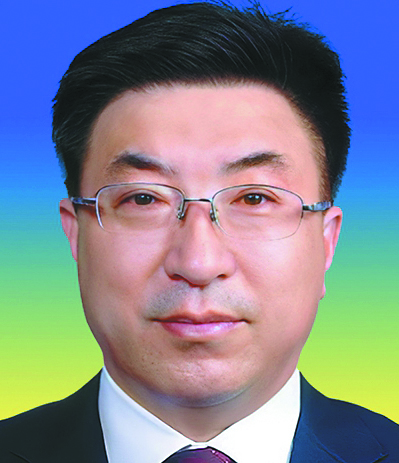
Jinzhou is striving to become a cultural city and a top tourism destination. We are committed to preserving the treasures of Chinese culture and continuing the city's historical heritage. We warmly invite everyone to visit Jinzhou and experience the unique charm of the historic cultural hub, coastal leisure destination and culinary haven.
Liu Kewu, secretary of the CPC Jinzhou Municipal Committee
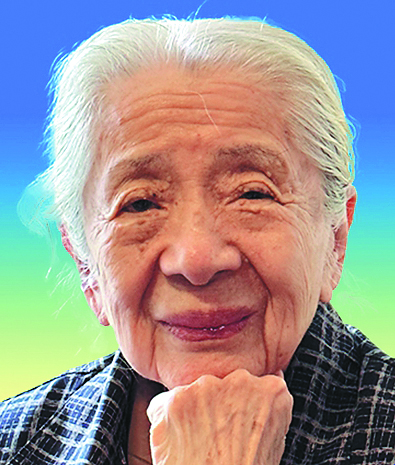
Cultural heritage carries the precious wealth and collective memory of our nation. May everyone work together, pass on the torch and safeguard the light of civilization.
Chang Shana, designer and scholar of Dunhuang art
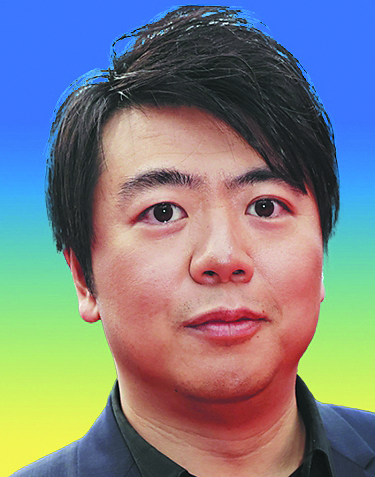
Culture, like music, has the power to transcend time and space, connecting people and places. With a long and rich history, the Chinese civilization has deep roots, and every one of us Chinese people takes immense pride and joy in our profound cultural heritage. Culture serves as the soul of a nation.
Lang Lang, pianist

"My best friend is very interested in coming to China. She understands that China is one of the best places to develop, travel and experience culture," said Hryshayeva Katsiaryna, an international student of Beijing Foreign Studies University at the latest Vision China event themed "Treasuring the Past, Enriching the Future".

At the Vision China event themed "Treasuring the Past, Enriching the Future" on June 9, Zhong Lina, dean of the Institute for Tourism and Culture Planning at Beijing International Studies University, emphasized Liaoning’s pivotal role at the crossroads of Eurasia and the Pacific, influencing both China and the world.

China Daily and the Publicity Department of the CPC Liaoning Provincial Committee jointly invited over 20 domestic and foreign scholars, opinion leaders, travel bloggers, outstanding industry representatives and media representatives to visit Liaoning for the Vision China event "Treasuring the Past, Enriching the Future". They split into two groups and visited several famous places, such as Shenyang Imperial Palace and Fengguo Temple.

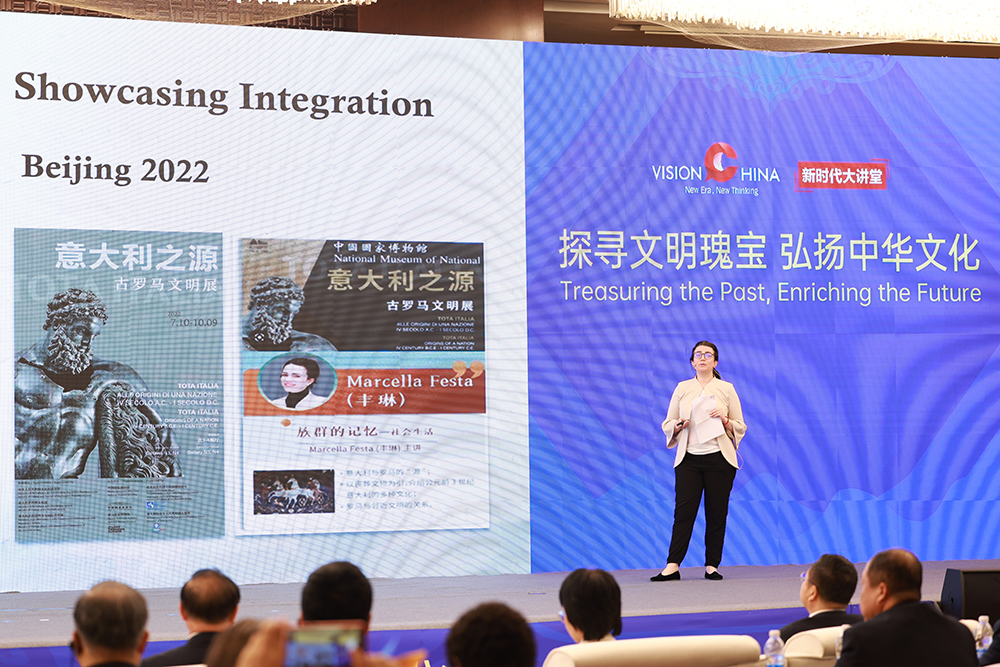
Marcella Festa, associate professor at the School of Cultural Heritage of Northwest University
As an archaeologist, it is my privilege to uncover the secrets of ancient civilizations and piece together the stories that have shaped our world. These stories are shared histories, which foster a deeper appreciation for the diversities and commonalities that define humanity, and by doing so, enriches our understanding and educates and inspires future generations.
One of the most iconic examples of cultural integration is the Silk Road, an ancient network of routes that for centuries connected Asian and European civilizations.
In the contemporary world, the legacy of the Silk Road continues through initiatives like China's Belt and Road Initiative, launched in 2013. This initiative not only seeks to foster economic integration but also enhances regional connectivity, facilitating cultural and educational exchanges on a global scale.
One of the ways in which archaeology helps to connect the world is through exhibitions. These exhibitions are not just about showcasing artifacts; they're about fostering cultural exchange and appreciation of cultural diversity.
In academic archaeology, the growing interest in an interconnected world is evident not only in the surge of articles published in academic journals on this topic, but also in the emergence of new journals in Europe and the United States dedicated to the Asian region, with a heavy focus on discoveries from China.
In archaeological research, we have witnessed an increase in collaborations among researchers from different countries, characterized by a growing number of scholarships, visiting student and scholar programs and joint research projects.
Archaeology has another crucial role — challenging and reshaping narratives. It has the power to debunk stereotypes or misconceptions about history and culture, fostering a sense of shared heritage. This shared heritage can promote mutual respect and understanding among different cultures in today's globalized world.
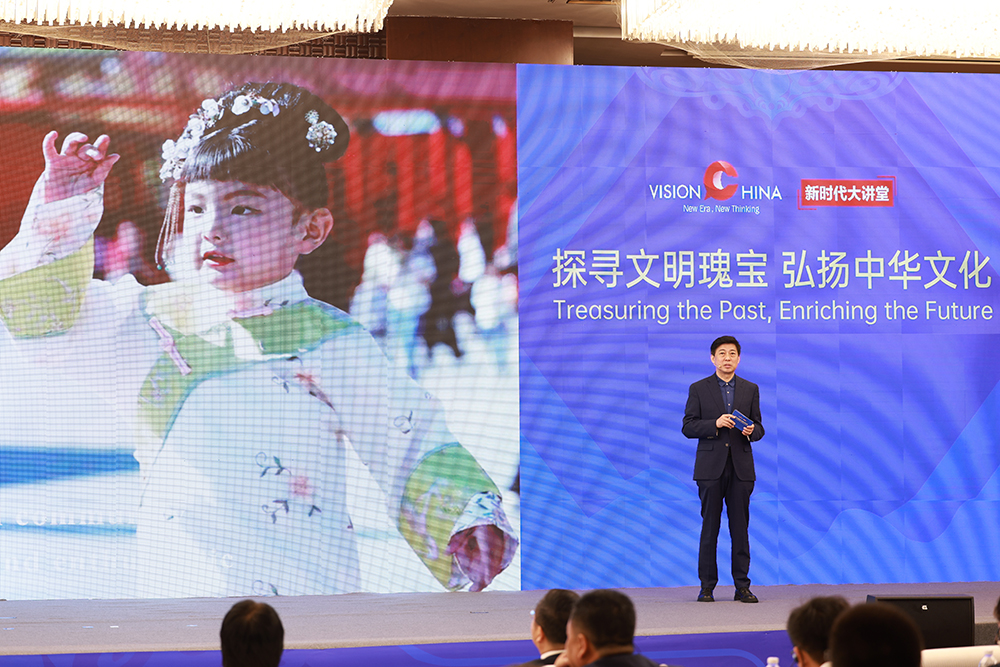
Zhu Yong, research librarian at the Palace Museum, director of the Palace Museum Cultural Communication Researcher Institute
Chinese civilization is essentially a diversified and integrated civilization. Dating back 6,000 years, from the present-day Liaoning province in the north to Liangzhu in today's Zhejiang province in the south, the sparkles of civilization shone across the vast land of China. Su Bingqi described it as a "sky full of stars". Among these "stars", the Hongshan culture in Liaoning shines particularly brightly.
Liaoning is located at the forefront of where the fishing and hunting culture that once boomed met the agrarian culture that had China's Central Plains as a hub, as well as grassland culture. Hongshan culture, by absorbing advanced elements from the Central Plains agrarian cultures, was the first to usher in the dawn of civilization.
Various systems of civilizations, in their process of development and spread, merged and converged. This continuous transformation has led to the optimization and growth of itself, making the Chinese nation a melting pot of many cultures and different ethnic groups. The characteristics of consistency, originality, uniformity, inclusiveness and peacefulness are exemplified in a very typical way in Liaoning.
Liaoning's geography is not closed but open, whether traveling from north to south through Liaoning into the Central Plains, west into the Inner Mongolia autonomous region today, or east to the Korean Peninsula. This freedom of movement provided by the open landscape allowed for the formation of an economic and cultural community shared by various ethnic groups.
Liaoning's culture reflects the continuity of Chinese civilization, the innovative acceptance of new things, the unity that brings people together, the inclusiveness that embraces diversity, and the promotion of coexistence, harmony and peace. It shines as an outstanding example of the prominent features of Chinese civilization.
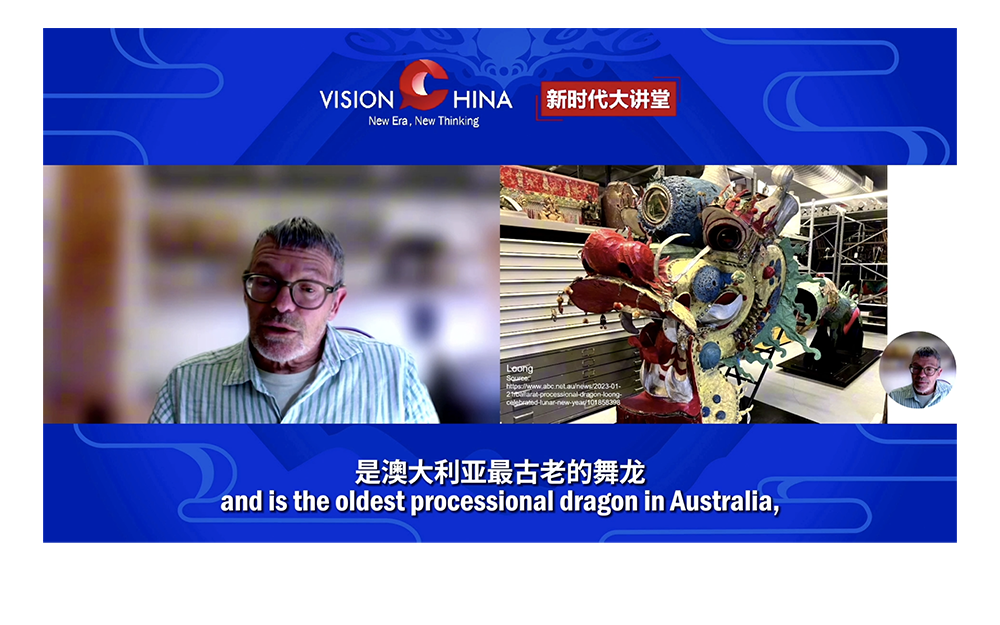
Steve Brown, senior research fellow at the University of Canberra's Centre for Creative and Cultural Research
Australia has a rich heritage that expresses the story of migration working and living in Australia.
For example, the Huawang Chinese Temple and Museum, located in the tropical region of Far North Queensland, is the last timber and corrugated iron Chinese temple in Australia.
Established in 1903, most of the temple fittings, including the elaborate carvings, the bell and metal vessels, were made in China and transported to Australia.
Australia's heritage consists of three categories. First, indigenous or First Nations heritage. Australian Aboriginal people have lived in Australia for more than 65,000 years and occupied all parts of the continent's landscapes.
These landscapes are rich in stories as much as they are in built structures, history and heritage. The best known heritage structure in Australia is the Sydney Opera House, shown here in its beautiful setting in Sydney Harbor.
It is important to note that no landscape in Australia is entirely natural. All landscapes are the product of natural systems, indigenous land use and migrant settler work and leisure.
While some places are listed on the UNESCO World Heritage List, and many important objects are in museums, much of our heritage is the everyday things that individuals and families love and value.
I express my warmest, the most sincere wishes for a happy and joyous Chinese Cultural and Natural Heritage Day. Please do celebrate the biggest and best heritage of your (Liaoning) province, but also the everyday family heritage and stories that are so important to our modern societies. By treasuring a past whether in Australia, China or elsewhere, we can enrich our future.
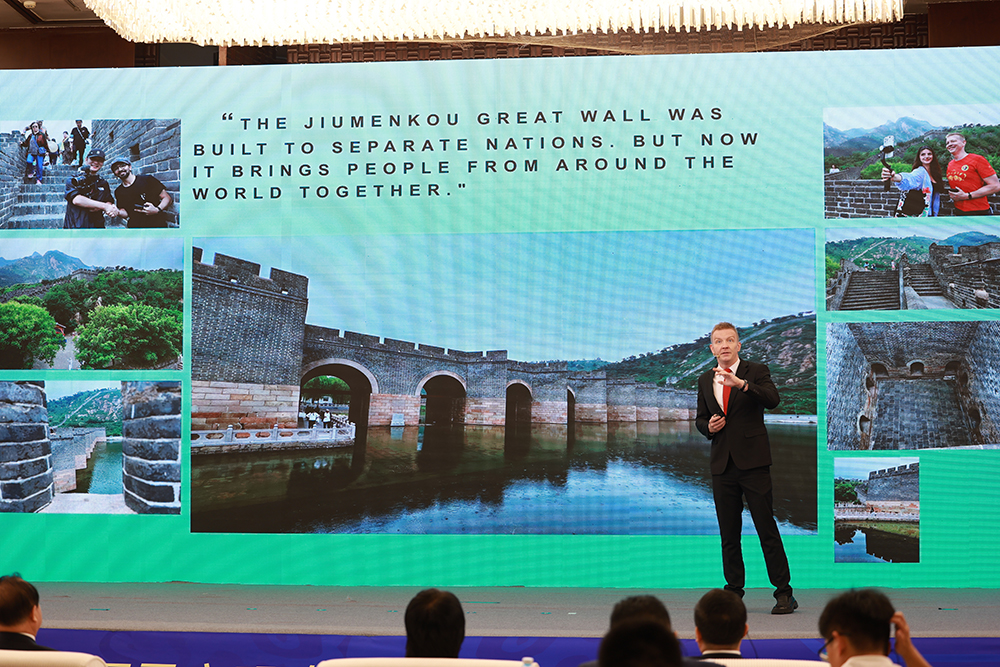
Erik Nilsson, senior journalist, core member of the Edgar Snow Newsroom, China Daily
Exchanges and innovations bring diversity to the DNA of cultures that evolve, in every sense, like species that must adapt to changing environments or face extinction.
For example, in today's China, Spring Festival hongbao are still red envelopes containing cash — albeit they are increasingly digital packets containing digital currency sent by WeChat.
Indeed, exchanges are as crucial to intangible culture's conservation as corporeal technologies are to the preservation of physical specimens.
One way we can think about cultural exchanges is like the ancient Silk Road transported to today and then, through digital technologies, from today to the future — like a digital Belt and Road.
While few of the tangible cultural items, like silk and porcelain, that were traded among civilizations along the ancient Silk Road physically survive today, many of the intangible cultural products that moved along these trade routes psychically remain — be they religions or recipes, musical instruments or culinary ingredients, artistic styles or mathematical concepts.
No matter who you are or where you are on this planet, these cultural exchanges from long ago and far away have shaped your life since you were born and will continue to do so for your children, their children and those born after them.
For all of human history, so many peoples have spoken their own distinctive dialects in their respective regions.
But increasingly, all of humanity speaks to one another in a shared language of ones and zeroes, not only rewriting the cultural exchanges of today, globally, but also their legacies beyond tomorrow, for our world yet to come and for time immemorial.
While technology can enhance cultural exchanges and preservation... there will always remain value in meeting person-to-person, face-to-face and hand-in-hand to better see eye-to-eye. That is, the personal touch in every sense of the phrase, the value of which can never be fully replaced with any number of ones and zeroes.
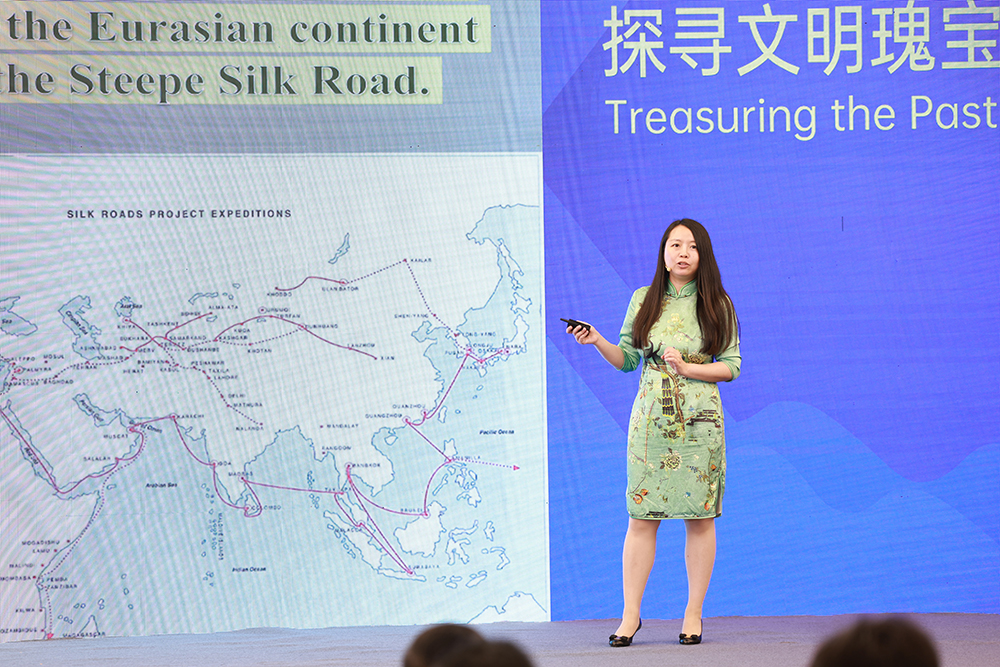
Zhong Lina, professor from the Beijing International Studies University
Imagine if time were to flow backward like a river, to 5,000 years ago. At that point, the early Chinese civilizations, including the Taosi and Longshan cultures in the Central Plains, would not have yet emerged from the water. But, the Niuheliang culture and the Chahai culture... would be floating serenely on the surface.
The academic community believes that over 5,000 years ago, there existed a primitive civilized society with the rudiments of a state structure in this region. At that time, Niuheliang was one of the few regions in the entire Chinese landmass to have reached this stage of development.
There are traces of agriculture, fishing, hunting and nomadic mixed cultures. The land of Liaoning was always in a state of endless vitality and change.
Liaoning is not just the connection between Northeast China and Central China, but more importantly, it is the key that connects Northeast Asia with the inland Eurasian world and even the Western world. It is the land-sea key that links the Eurasian continent of Northeast Asia and the Pacific Plate.
Geography played a very important role in the development of human history. The location of Liaoning determined that Liaoning's story influenced China and the world on a larger scale.
Right now, coastal and border areas in Liaoning are further opening up and cooperating with Northeast Asian countries, and smart manufacturing based on a complete industrial chain is taking off.
The profound culture came from the unparalleled geographical environment, and the geographical environment also determined Liaoning's unique value in countless takeoff processes of China.

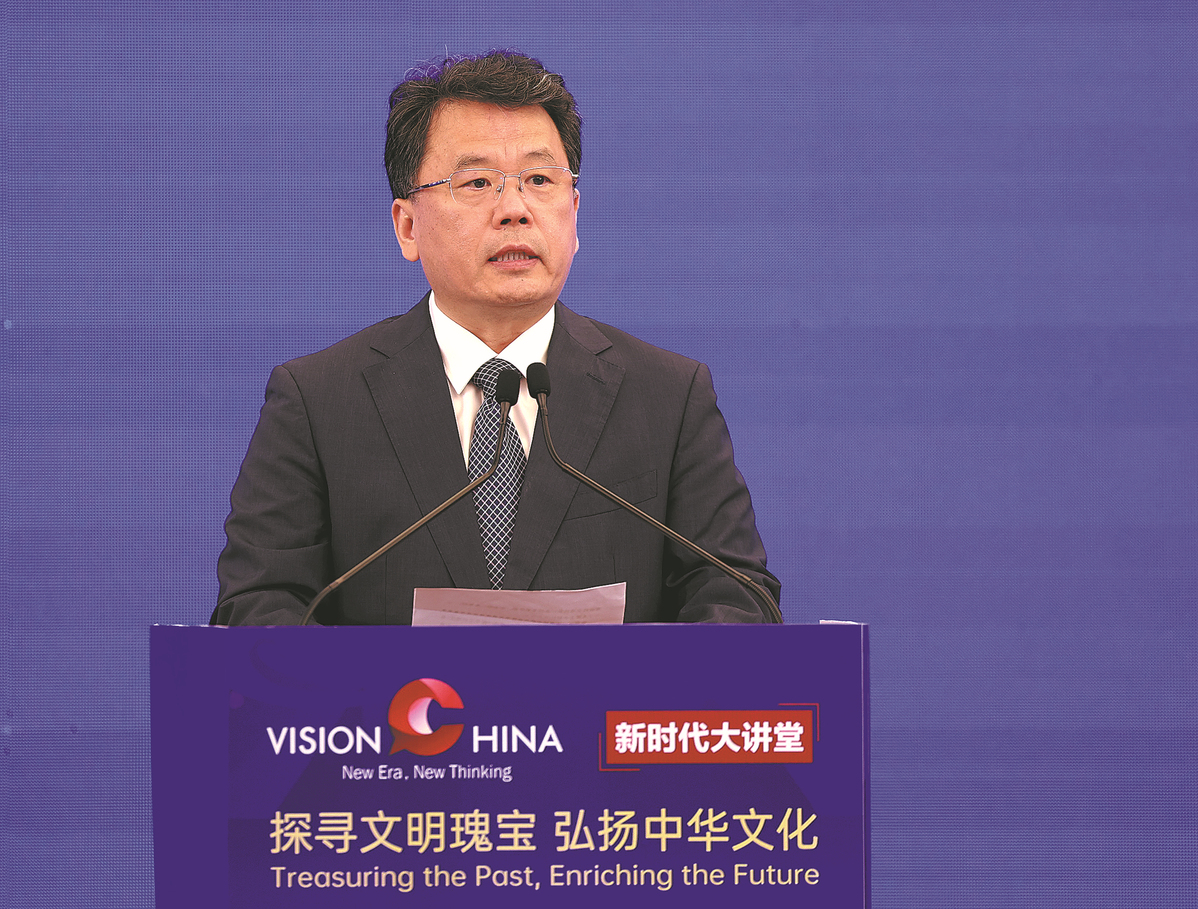
Liaoning's cultural undertakings and industries are exhibiting unprecedented vigor and vitality, ushering in a dynamic phase of great development and prosperity, a senior official said at a Vision China event held on Sunday in Jinzhou, Liaoning province.
Liaoning's socioeconomic development presents a positive outlook that has not been seen in many years, said Liu Huiyan, member of the Standing Committee of the Communist Party of China Liaoning Provincial Committee and head of the committee's publicity department, adding that cultural revitalization is an integral aspect of Liaoning's comprehensive revitalization.
"Guided by the objective of 'building a high-quality model for the integrated development of culture, sports and tourism', we adhere to the principles of 'culture shaping tourism, tourism promoting culture, and the comprehensive and coordinated development of culture, sports and tourism'," Liu said.
Liaoning is celebrated for its long history and profound cultural heritage. For example, Niuheliang, a famous archaeological site in the province, is a key piece of ancient Chinese history. It pushes the benchmark of the origins of Chinese civilization back a further 500 to 600 years, highlighting Liaoning's importance in the story of human development, according to Liu.
He highlighted that Liaoning is home to many ethnicities, each contributing to its uniquely charming Sanyan culture, Liao-Jin culture, and pre-Qing Dynasty (1644-1911) culture. The region is renowned for its multiple World Heritage Sites.
"These sites, alongside the province's unique Red culture and leading industrial culture, create a vibrant and diverse tapestry of historical and cultural brilliance," Liu said.
"With its mountains and seas, Liaoning, this fertile cultural land, has countless cultural treasures waiting to be unearthed, and countless mysterious stories waiting to be discovered," he said.
liyingxue@chinadaily.com.cn

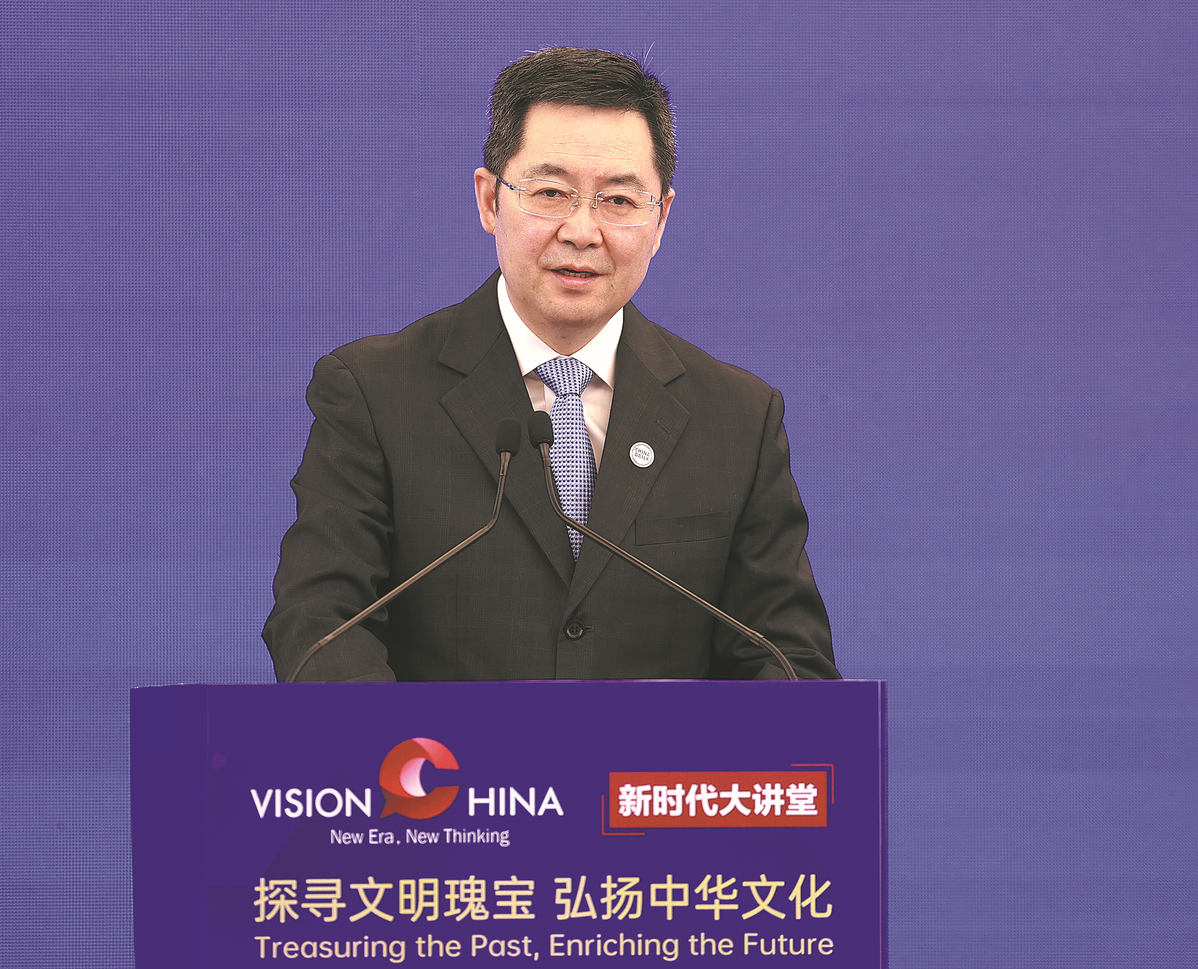
The five prominent characteristics of the Chinese civilization have enriched the building of a modern civilization for the Chinese nation, according to Qu Yingpu, publisher and editor-in-chief of China Daily.
Speaking at a Vision China event in Jinzhou, Northeast China's Liaoning province on Sunday, Qu said the growing situation the world faces involves an evolution of changes with a magnitude unseen in a century, and so it's important to enhance international communication.
"We need to tell China's stories well, such as the story of the modern civilization of the Chinese nation, and showcase the glorious chapter of China's modernization through vivid practice and diversified cultural heritage on this land, including Liaoning," said Qu.
He cited the example of Liaoning and analyzed how its past reflects the five prominent features of the Chinese civilization: consistency, originality, uniformity, inclusiveness and peacefulness.
Liaoning boasts many sites of Hongshan culture, a key Neolithic culture that covered parts of today's Liaoning and Hebei provinces, as well as the Inner Mongolia autonomous region.
In the early 1980s, archaeologists discovered the Niuheliang Site dating back 5,000 to 5,500 years in Chaoyang, Liaoning, marking a milestone in the study of Hongshan culture.
"Hongshan culture, hailed as 'one of the most important tap roots in the total root system of Chinese culture', is one of the cradles of Chinese civilization," said Qu. "With various archaeological discoveries of Hongshan culture such as dragon-shaped jade artifacts and the head sculpture of a goddess, as well as related sites, the verifiable history of Chinese civilization can be traced back much earlier than previously believed."
Moreover, Yiwulyu Mountain in Jinzhou is where a lot of historical stories spanning more than four millennia were written, from the time of the early legendary ruler Shun to the Ming (1368-1644) and Qing (1644-1911) dynasties.
As a result, in Liaoning, people can see the dawn of China's 5,000-plus years of civilization and trace its continuous development to this day, reflecting the consistency of the Chinese civilization, he said.
Since Hongshan culture is renowned for its exquisite jade artifacts, they embody the wisdom and creativity of our ancestors, as a reflection of the originality of the Chinese civilization, Qu said.
The industrial progress of modern Liaoning also demonstrates this feature, as the province became the "first industrial base of New China" with symbolic innovative achievements, according to Qu.
Liaoning is home to many "firsts" in New China, including being the place where the first high-powered internal combustion locomotive and first fighter jet were built, and where the first synthetic petroleum in China was made. The first domestic aircraft carrier and first underwater glider also came from the province.
"Liaoning, the fast-changing traditional industrial area, is vigorously developing new quality productive forces and promoting overall revitalization with comprehensive innovation," said Qu.
The inclusive nature of Chinese civilization is evident in Liaoning's diverse population, which includes all 56 ethnic groups in China. The province has fostered interaction and integration among these groups, with ethnic minorities accounting for over 15 percent of the total population, he said.
He also mentioned the similarities in Liaoning's and southern China's cultural elements, and that the Liaoning people's fight against imperialist aggression in the 20th century was vivid testimony to the uniformity and peacefulness of the Chinese civilization.
"We have drawn strength and confidence from cultural inheritance and development. We are striding forward toward promoting cultural prosperity, building up China's cultural strength and constructing a modern civilization for the Chinese nation," said Qu.
These days, Liaoning is accelerating the construction of a new northeastern land and sea channel to Mongolia and Russia, and integrating itself deeply into the grand picture of the high-quality joint construction of the Belt and Road Initiative.
"China is offering the international community a constant stream of new opportunities in the new era with its higher level of opening-up and high-quality development," said Qu.
wangru1@chinadaily.com.cn


The youth dialogue segment of Vision China invited young representatives from various countries, who had just completed a two-day tour of historical attractions and scenic areas across Liaoning, to share their insights on exploring Chinese culture and protecting cultural heritage.
Reflecting on the tour, Aleksandra Antonenko, a Russian youth representative who holds a master's degree in Chinese politics from Shanghai Jiao Tong University, said that Liaoning made her feel at home.
"With its vast farmland and coastline, the food here is exceptionally fresh and delicious. I believe many tourists from Russia will love Liaoning," she said.
The young woman began a social media channel with her boyfriend, a native of Shanghai, last year.
"Through the channel, we can tell China's stories, share our personal perspectives and create a more understandable image for our fellows from other countries," she said.
Similarly, Bence Lengyel, a postgraduate student from Renmin University of China, has traveled to more than 30 cities across China. Since 2022, he has been sharing his travel logs and photos in a monthly online column for The China Cultural Center in Budapest, Hungary.
"Throughout my stay in China, one of my main goals should be to represent this beautiful country to my people back home as much as possible," he said.
When asked about the most important factors in telling China's story, he said, "The most important thing is to stay trustworthy and be open, to communicate with people, especially those whose opinions differ from ours."
Throughout the two-day trip, Lengyel was impressed by the strong sense of pride the local people in Liaoning have for their cultural heritage and history.
"Our tour guide at the Wunyushan Mountain scenic area was a woman from the Manchu ethnic group. As we hiked, she not only talked about the history of the mountain but also shared her own life stories with us. I think it's very important for us to understand how important it is to protect our cultural heritage. It represents not just our country, but also who we really are," he said.
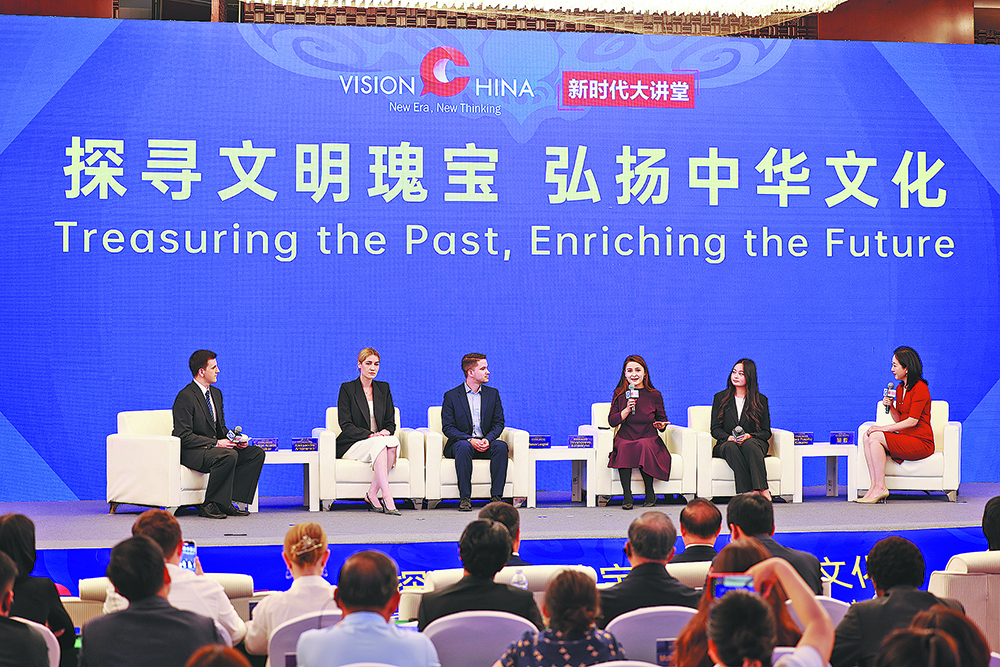
He emphasized the need for international students in China to understand not only their own cultural heritage but also that of other countries. He believes that in the future, they might have the chance to positively influence the cultural heritage of others, fostering greater understanding and collaboration through partnerships.
Hryshayeva Katsiaryna, a Belorussian doctoral student from the School of Chinese Language and Literature at Beijing Foreign Studies University, agreed. "I think that cultural heritage serves as a link between the past, present and future and connects people to their roots," she said.
While discussing the impact of artificial intelligence and other advanced technologies on heritage protection, she expressed a positive viewpoint.
She said that the emergence of AI technologies has opened up new opportunities for cultural preservation. For example, VR can create exact replicas of cultural artifacts, which educators, the public, researchers and conservationists can use. AI algorithms can identify damage and plan for restoration. Additionally, AI can aid in protecting cultural heritage sites through environmental monitoring and data analytics, detecting potential risks like temperature and humidity changes.
"Of course, AI can have some disadvantages. But if we balance AI technologies with concerns, we can curate our heritage in a sustainable and inclusive way for future generations," she added.
Clara Puspita Kusuma, an Indonesian student at the University of International Business and Economics who has been living in Beijing for a year, said she learned more about the diversity of Chinese culture during her trip in Liaoning.
She believes such activities help boost cross-cultural understanding and exchange. "Through firsthand experience, mutual respect can be fostered. As a foreigner in China, I see myself as representing my country, Indonesia, and Southeast Asia. During my time here in Liaoning and my stay in China, I've met many people interested in my country. We share our cultures and have meaningful cultural experiences together," she said.
xingwen@chinadaily.com.cn




