
The China Story
at your Fingertips
OPEN
As the Russia-Ukraine conflict enters its fourth year, its ripple effects continue to shape global geopolitics, economies, and everyday lives. Let's examine the evolving dynamics of the conflict, the diplomatic efforts for peace, and the shifting sentiments on the ground and look at the current situation as well as the shifting US stance and EU commitments that may affect the conflict's outcome.
MOSCOW - Russia remains open to negotiations to resolve the conflict in Ukraine, local media reported Sunday, citing Kremlin Spokesman Dmitry Peskov.
"We maintain our openness," Peskov said when speaking about the prospects for a peaceful settlement on the Russia-Ukraine conflict, adding that Russian President Vladimir Putin is consistent in his approach.
Putin and US President Donald Trump agreed on the possibility of negotiations on Ukraine in their telephone conversation earlier this month, Peskov said.
Russian and US delegations held talks on Tuesday in Riyadh, capital of Saudi Arabia, agreeing to work to end the conflict and improve bilateral ties.



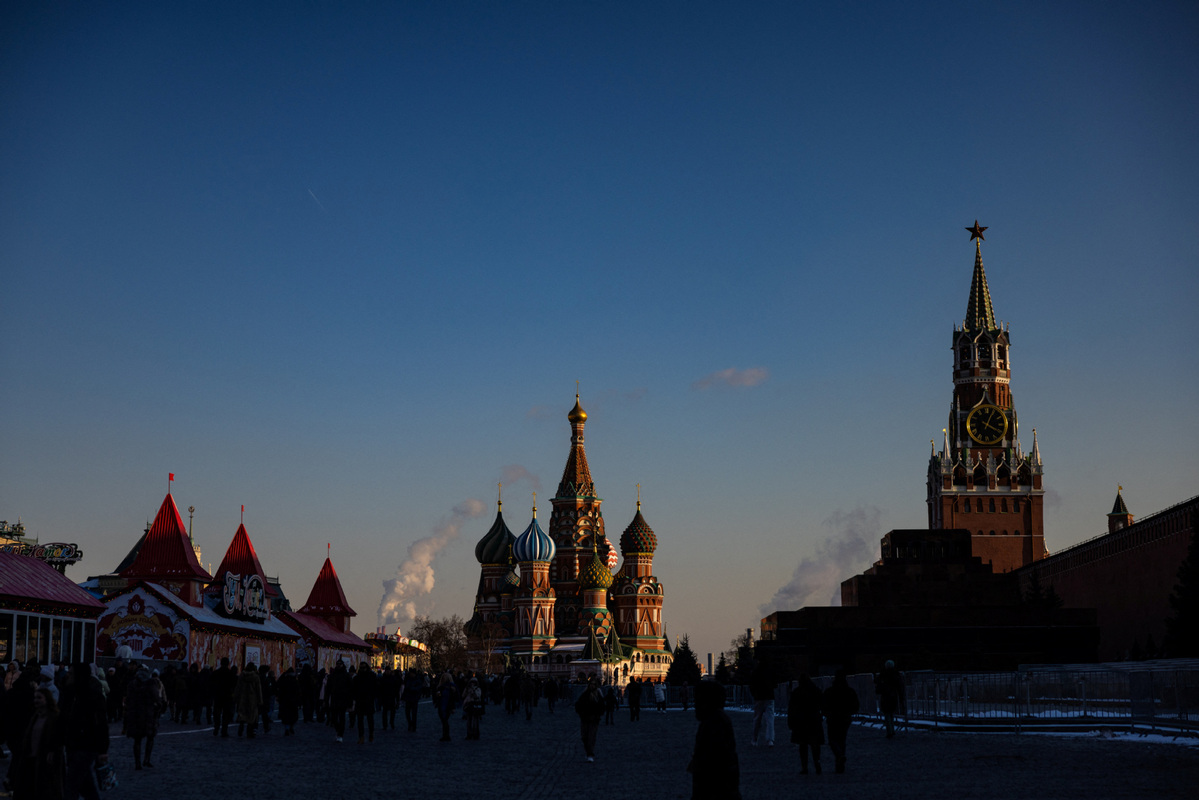
The atmosphere brought about by the New Year decorations in Russia for 2025 feels noticeably different from what I observed years ago.

I still remember December 2022. Alongside the traditional tall fir trees, giant Zs and Vs stood prominently — symbols of victory for the country's special military operation in Ukraine, which began on Feb 24 that year. This year, however, there are no Zs, no Vs, and no slogans at Moscow's main gatherings, as the conflict enters its fourth year.
A similar shift is evident in parts of Central Russia's Siberia. Two years ago in Chita, towering ice sculptures of Russian soldiers clutching Kalashnikov rifles stood among the New Year and Orthodox Christmas decorations. This year, such displays are absent — replaced by snow figures.
Among the Russians I've met and stayed in touch with over my seven years in the country, more now prefer to avoid reminders of military conflicts, both within Russia and along its border with Ukraine.
In the heart of Moscow, retired schoolteacher Tatiana Ivanovna sits on a park bench. Her voice, though soft, carries the weight of years of wisdom — and a yearning for peace.
"We have seen enough suffering. The world needs to stop fighting. As ordinary people, we just want to live our lives, raise our children, and not worry about tomorrow," she says.
Tatiana's words reflect a growing sentiment among everyday Russians: a deep desire for peace amid global tensions. As I traveled through Moscow, St. Petersburg, and smaller towns, I noticed a common thread — a longing for stability and harmony.
According to a recent survey by Russian pollster Levada Center, more than 60 percent of Russians favor peaceful resolutions to international disputes. While patriotism remains strong, there is an increasing awareness of the human and economic costs of prolonged tensions.
Sanctions have hit hard, particularly for the middle and lower classes. Since 2022, Western countries have imposed multiple rounds of sanctions on Russia, prompting the Russian government to respond with countermeasures — banning imports of many food products, including fruit, dairy, and meat, from the United States, the European Union, and other nations.
At the time, officials framed these restrictions as an opportunity to strengthen Russia's agricultural sector and achieve food self-sufficiency. To some extent, the strategy has worked. Domestic agricultural production has expanded, making Russia one of the world's largest wheat exporters.
Even after years of sanctions, supermarket shelves remain well-stocked, filled with Russian-made cheeses, sausages, and other products that were once imported. However, this shift has come at a cost.
For the majority of ordinary families, affordability has become a problem. Last year, the price of potatoes went up by 88 percent, while butter rose by 35 percent. In some places, butter is placed in security boxes as theft becomes increasingly common.
"Russian agriculture has grown, but it's not always efficient," says economist Oleg Sokolov. "The lack of competition from foreign producers has allowed domestic companies to raise prices without significantly improving quality. Add inflation and logistical challenges, and you get the situation we have today — food is available, but it's expensive."
Olga Grigorieva, an office worker in Yaroslavl, says she used to buy French cheese and Italian wine. Now, she struggles to afford basic groceries.
"I hope the fight will end. That's the most important thing," she says. "Then, everything will get back on the right track."

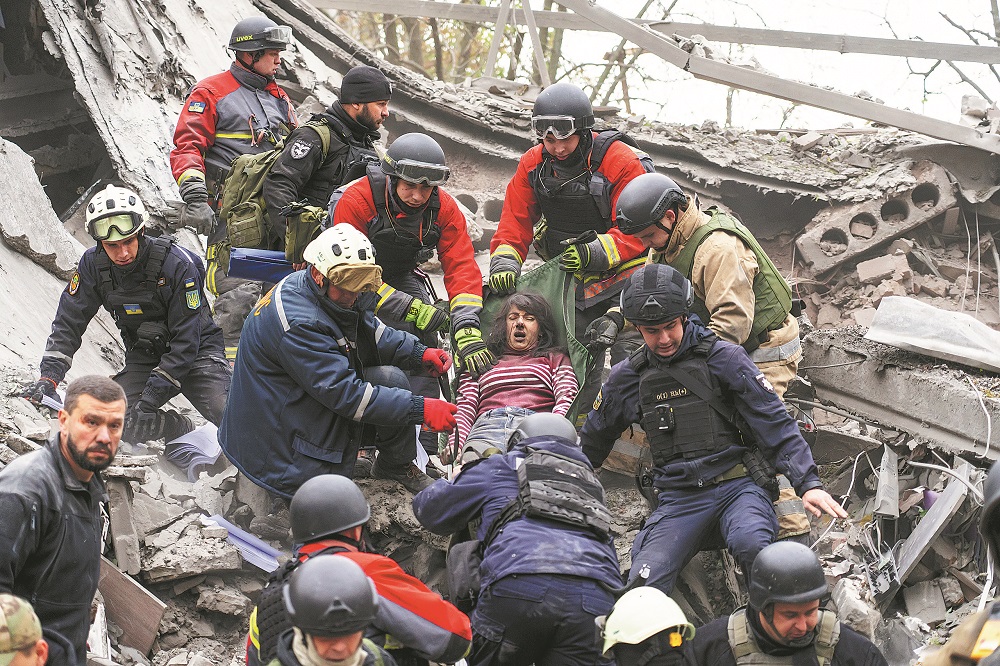
The United States' approach to the Russia-Ukraine conflict has dramatically changed with the new administration in Washington.
US President Donald Trump, who started his second term last month, has questioned the multibillion-dollar aid and weapons sent to Ukraine during the Joe Biden administration.
Trump has called for a return of aid money from Kyiv, and demanded that Ukraine provide the US with rare earth minerals in exchange.
A deal for the minerals is estimated to be worth $500 billion, a price tag Ukraine has balked at and which is much higher than published US aid figures. Despite growing pressure from the US side, Ukrainian President Volodymyr Zelensky is "not ready" to sign a minerals deal with the US, Agence France-Presse reported, citing a source. But Trump said on Saturday the US is "close" to an agreement on sharing revenue from Ukrainian minerals.
Zelensky and European Union representatives were not invited for preliminary talks between the US and Russia on Feb 18.
The talks to settle the three-year conflict between Russia and Ukraine — which started on Feb 24, 2022 — were led by US Secretary of State Marco Rubio and Russian Foreign Minister Sergey Lavrov as they met in Saudi Arabia's capital Riyadh on Tuesday.
The discussions were a prelude to an expected meeting between Trump and Russian President Vladimir Putin later this month.
Jack Midgley, principal of the global consultancy Midgley & Co, told China Daily that the conflict's outcome rests with Russia and the US.
"If the United States and Russia reach an agreement, the Ukrainians have to come along," Midgley said.
"If you look at the actual assistance that's gone into the war, the Americans have put in about $114 billion. The next biggest contributions are from Germany and the UK, and those are at about 10 percent of what the Americans have put in," he said.
The figures on the number of casualties in the conflict vary widely. According to figures released by Kyiv, United Nations statistics, and open-source data published by BBC Russia, the death toll of Ukrainian and Russian soldiers, and Ukrainian civilians stood at 148,359 as of Feb 13.
On Feb 16, Zelensky said more than 46,000 Ukrainian soldiers had been killed, and in a Feb 4 interview with journalist Piers Morgan, he said 390,000 Ukrainian soldiers were injured.
Midgley said: "There are some areas where the Americans and the Russians agree or have a common interest."
The first one is excluding Ukraine from NATO, he said. "The Americans don't want Ukrainians in NATO as it would mean providing a nuclear guarantee to Ukraine, which is not in America's interest. And the Russians don't want Ukraine in NATO either, as it means there will be American, British and German troops stationed in Ukraine."
He said the second sticking point is EU membership for Ukraine. "If you put Ukraine in the EU, it is the poorest country in Europe. They will require huge economic assistance."
"There's a third area … safety of the Chernobyl nuclear plant (in northern Ukraine). The Chernobyl plant … is an environmental disaster. And it needs huge investment to keep it safe," he said.
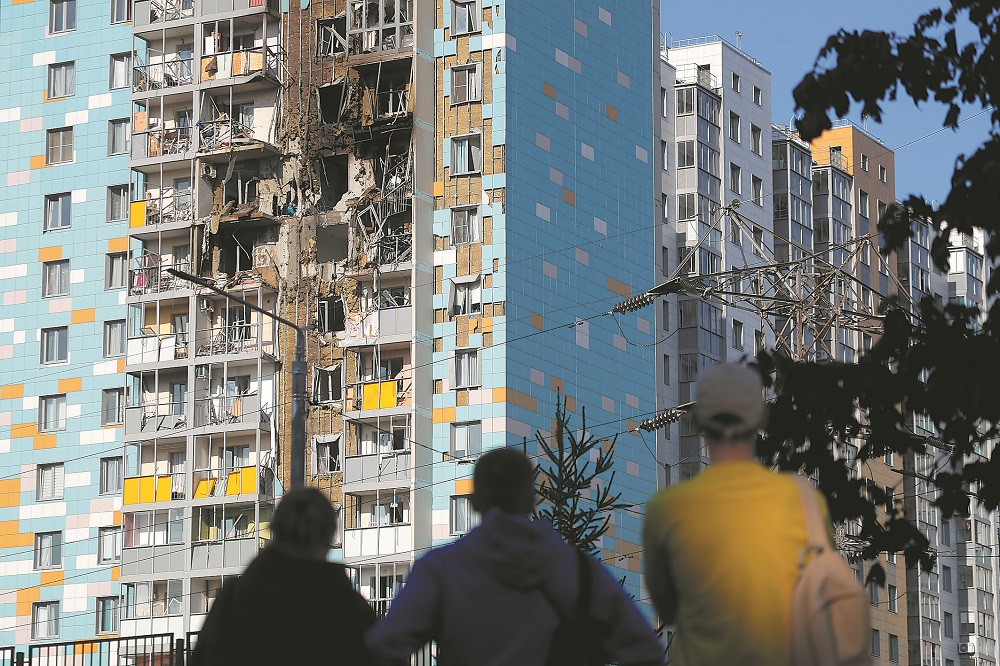
Sourabh Gupta, a senior fellow at the Institute for China-America Studies in Washington, DC, told China Daily that "while NATO will continue to be the premier Western defense body in the Euro-Atlantic space, a nucleus of autonomous Western and Central European defense — and defense industrial base — capability will also coalesce in the years ahead".
The Pew Research poll published on Feb 14 found that 37 percent of US citizens felt the country was doing too much to help Ukraine, 31 percent said it was doing the right amount, with 30 percent saying it's not enough.
There was a partisan divide in the US. Republicans and Republican-leaning independents are far more likely than Democrats and their supporters to say the US is giving Ukraine too much support.
Gallup has conducted polls on the conflict six times since August 2022. For the first time, it saw 48 percent support (as of December) for the US in helping Ukraine reclaim its territory, slipping below the majority mark.
Ukrainian officials were not part of the Riyadh talks, and Zelensky has said Kyiv will not accept the results of negotiations that do not involve Ukraine.
On Feb 19, Trump called Zelensky a "dictator without elections" after the Ukrainian president said Trump was "living in this disinformation space".
US special envoy Keith Kellogg, however, met with Zelensky in Kyiv on Thursday, but a scheduled news conference between the two was canceled. Zelensky later wrote on social media that he had a "productive meeting" with Kellogg.
Dmitry Suslov, deputy director of the Center for Comprehensive European and International Studies at the Higher School of Economics, said Trump's team faces significant challenges in advancing its plan to resolve the conflict in Ukraine.
He said Kellogg's plan involves a cease-fire, elections in Ukraine, and continued negotiations, but these are almost impossible to realize. "Zelensky does not want to hold elections, as this could mean the end of his political career," he said.
"Two things are certain though: Kyiv will have to sit directly across the table and be willing to negotiate with Moscow at some point of time," Gupta said. "And Europe will have to be involved too, given that European security architecture issues (which the Russians are keen to discuss also) cannot be established over the heads of the Europeans."
Gupta said US concerns about rare earth minerals in Ukraine "should be interpreted in exactly the same way as Trump has framed it: as a form of insurance payment for the security that would be provided to Ukraine in the form of security cooperation and arms sales by the US. Nothing more, nothing less".
Dmitry Novikov, associate professor at the Faculty of World Economy and International Affairs at the Higher School of Economics, believes that Trump is testing the waters, which explains the seemingly contradictory steps: pressuring Ukraine on territorial issues and elections while simultaneously pressuring Russia with promises to supply weapons to Kyiv.
"This is a war that never should have happened," said Jeffrey Sachs, director of the Center for Sustainable Development at Columbia University and president of the UN Sustainable Development Solutions Network, in a Feb 18 panel discussion on the nonprofit news outlet Democracy Now.
"The Trump administration, for the first time, is telling the truth about the fundamental causes of this war," Sachs said. "The American role in this has been quite sordid for a very, very long time. The goal, starting back in 1994, was to expand NATO and surround Russia in the Black Sea region. President Clinton signed off on that in 1994."
In February 2014, the US "participated actively in a violent coup to overthrow Viktor Yanukovych, the president of Ukraine, who favored neutrality", Sachs said. "This is very important to understand. The coup took place on Feb 22, 2014. US forces paid for this coup to an important extent. They stirred up this coup."
"In 2015, the war could have ended with the Minsk II agreements, but the US and Ukraine, despite the UN Security Council backing, said, 'No, you don't have to do that.' That was not a territorial claim on the Donbas by Russia. It was a claim for autonomy that the UN Security Council unanimously supported, and the US and the governments in Ukraine, at the US behest, to an important extent, completely dissed," Sachs said.
He said that in December 2021, Putin proposed a draft US-Russia security agreement. Sachs said the US rejected negotiation over the central point, "which was non-NATO enlargement to Ukraine. … It was a terrible mistake, terrible mistake of the Democrats… and of President Biden and his team".
In March 2022, just days after the start of the conflict, "they went to the negotiating table. And they came very close to an agreement, until the US and Britain stopped it", Sachs said.
"Boris Johnson (former UK prime minister)… said this is a war about preserving Western hegemony. Yes, this was a proxy war against Russia. This was the plan all along."
Ren Qi in Beijing and agencies contributed to this story.

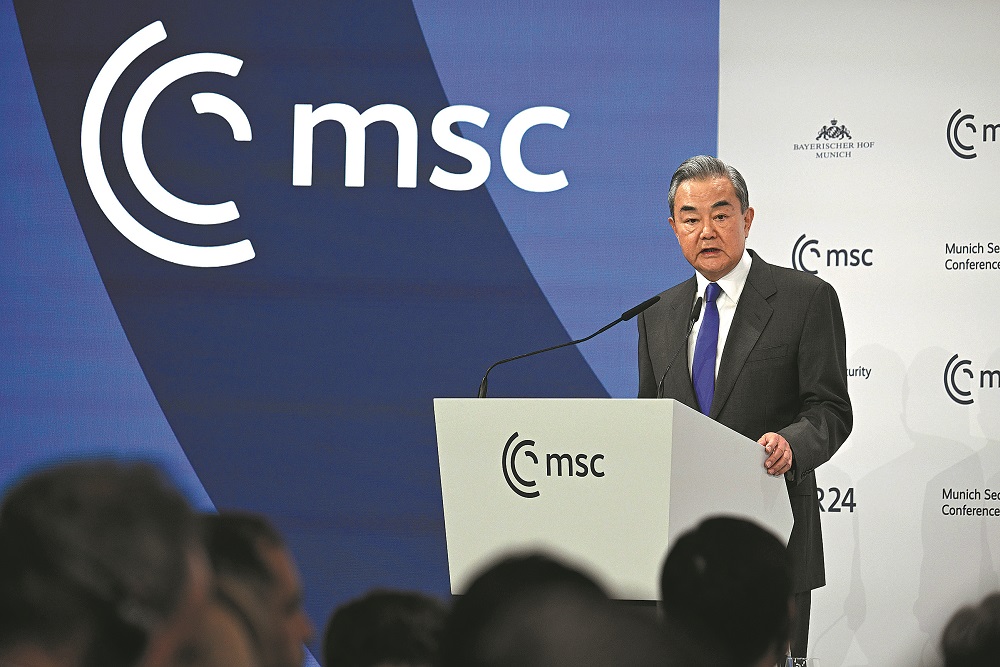
As global efforts to negotiate a settlement on the Ukraine crisis gain momentum, experts commend China's persistent peace efforts as a responsible major country, underscoring the need for patience and the inclusion of all parties' concerns in the peace talks.
As the Russia-Ukraine conflict reaches its third anniversary, attention is turning to its future trajectory. Last week, the United States and Russia held talks in Riyadh, Saudi Arabia, in an effort to address the conflict — though without the participation of Ukraine or European countries.
During a meeting with Ukrainian Foreign Minister Andrii Sybiha in Munich, Germany, on Feb 15, Chinese Foreign Minister Wang Yi said the evolving situation reaffirms that the principles proposed by President Xi Jinping, including the four points on what must be done, are objective, fair, rational and pragmatic.
Wang also emphasized China's commitment to playing a constructive role in promoting a political settlement and lasting peace, while Sybiha expressed appreciation for China's balanced stance and its diplomatic influence.
Zhang Hong, a researcher at the Institute of Russian, Eastern European and Central Asian Studies of the Chinese Academy of Social Sciences, said China's proposals for resolving the conflict were initially not well received.
"However, after three years, all sides have recognized the negative effects of Cold War mentality. They now realize that zero-sum games and bloc politics only harm regional stability," Zhang said.
China's consistent stance on the Ukraine crisis demonstrates its rational approach to international affairs, addressing problems at their roots, he added.
Wang Shuo, a professor at Beijing Foreign Studies University's School of International Relations and Diplomacy, described the Ukraine crisis as a typical security dilemma.
"China maintains that peace can only be achieved through dialogue, not warfare," he said. "Its position is consistent and has stood the test of time, and the current situation is indeed evolving in that direction."
After last week's US-Russia talks, Kremlin adviser Yuri Ushakov reported "positive" progress, with both sides agreeing to consider each other's interests. However, Ukraine and Europe expressed dissatisfaction at being sidelined in the negotiations.
Ukrainian President Volodymyr Zelensky said Kyiv would not accept results excluding Ukraine, while German Chancellor Olaf Scholz emphasized continued support for Ukraine and reiterated that "there must be no decision over the heads of Ukraine".
Committed to peace
Chinese Foreign Ministry spokesman Guo Jiakun expressed China's support for all efforts committed to peace. "We hope all parties concerned and stakeholders will take part in the peace talks process at an appropriate time," Guo said.
Zhang said resolving the crisis requires considering the positions of Europe and other involved countries, as the conflict is fundamentally a geopolitical crisis in Europe.
"Reaching a consensus accepted by all parties could be a long process, one that requires patience and rationality," he said.
Wang Shuo warned that excluding European stakeholders from peace negotiations would not ensure lasting security for Europe, as it cannot resolve the distrust and hostility between Russia and the rest of Europe, potentially leading to renewed conflict.
Given the lack of mutual trust among the conflicting parties, China could play a bigger role in facilitating peace talks, he added, highlighting China's consistent advocacy for rational and impartial views since the outbreak of the conflict.
In the past three years, China has been actively engaged in diplomatic mediation, maintaining contact with relevant parties.
At the recent Munich Security Conference in Germany, Wang Yi met with leaders and diplomats from France, Germany, Ukraine, the European Union and NATO.
Last year, China partnered with Brazil to form the Group of Friends for Peace, leveraging the collective wisdom of the Global South to promote peace.
On the first anniversary of the conflict, China issued a 12-point position paper, reaffirming its consistent stance and emphasizing the need to resolve the conflict through dialogue and negotiation.
"The West, at that time, criticized this position paper for lacking specific solutions or clear statements," Wang Shuo said. "But China has consistently expressed its willingness to promote a peaceful resolution when conditions are ripe."
China's recent diplomatic efforts and the Group of Friends for Peace are some of the concrete steps taken to implement the 12-point proposal, he said.
"China's commitment to peace isn't just talk. It's taking concrete actions and moving forward as conditions allow. The approach is consistent and genuine."
Agencies contributed to this story.


The spillover effects of the Russia-Ukraine conflict continue to weigh on the European Union's economic recovery, dragging down its performance in manufacturing, consumption and investment, experts say.
Following a prolonged stagnation, the EU's real GDP growth is expected to reach 0.9 percent for last year, signaling a "subdued, yet steady" growth pace, according to the European Commission's Autumn Forecast released in November.
However, the report said the future remains "highly uncertain", with risks largely tilted to the downside.
Structural challenges in the EU's manufacturing sector add further downward pressure, as the industry grapples with the lingering effects of the energy shock while navigating rapid technological advancements, shifting consumer preferences, and global competition, the report said.
Although the eurozone's energy inflation rates have dropped significantly because of a multipronged approach taken by the EU — including increasing supplies from the United States — the closure of access to Russia's cheap energy has somehow undermined European industrial competitiveness, said Marian Duris, an international affairs analyst and adviser to a member of the European Parliament.
"Energy costs are rising because the EU prefers more expensive imports from 'allies with similar values'," he said, adding that the "overloading" of free trade regulations and treaties signed by the EU with third countries have also harmed domestic interests.
"After all, we observe energy-intensive sectors face high costs, pushing some companies to relocate production outside Europe, mainly to the US and Asia. Raw material shortages after illogical sanctions force European manufacturers to seek alternative suppliers, increasing costs and delays."
An analysis from the US Energy Information Administration in February last year showed that the US has remained the largest supplier of liquefied natural gas to Europe since 2021, with imports nearly tripling from 2021 to 2023.
"Reducing dependencies on one partner creates dependencies on others," Duris said. "Many policies and reactions of the EU to the situation show that various types of ideologies and interests often prevail over pragmatism."
The European Commission has also been pushing its green transition process, with unequivocal support for domestically manufactured products.
While it is right for the EU to value its homemade goods, Chris Aylett, a research associate at the Environment and Society Centre at Chatham House in London, said in an analysis that clean products produced in Europe remain expensive.
Also, EU-level investment in the industry falls "far short" with no signs of improvement, suggesting that the union will need to rely on China's affordable imports to realize its ambitious net-zero targets.
Yet, tariffs imposed on Chinese electric vehicles and other anti-subsidy probes into the country's clean products have raised trade tensions and risk being counterproductive, Aylett said.
Dampening consumption
Beyond manufacturing, growing political instability and rising polarization could further dampen domestic consumption and investment, the Autumn Forecast noted.
Households may continue precautionary saving rather than spending, while businesses could further delay investment decisions, constraining productivity growth and innovation at a time when the EU economy is already struggling with competitiveness challenges, the forecast said.
However, Duris said the same burdens are not equally shared among EU member states, as their economic structures and vulnerabilities toward shocks vary, which underscores the challenge of achieving balanced growth across the unity.
And the cost of living crisis — with Eurozone Harmonized Index of Consumer Prices once peaking at 10.6 percent — hit the poorest harder, as reported by a 2023 analysis from Britain's Economics Observatory.
When asked whether the EU has been more united amid series of shocks, Duris said, "The unifying consequences of the conflict brought changes in the field of security and defense, but there are areas like skepticism toward deeper European integration, mass migration, the green deal, and international relations where we can perceive divisions."

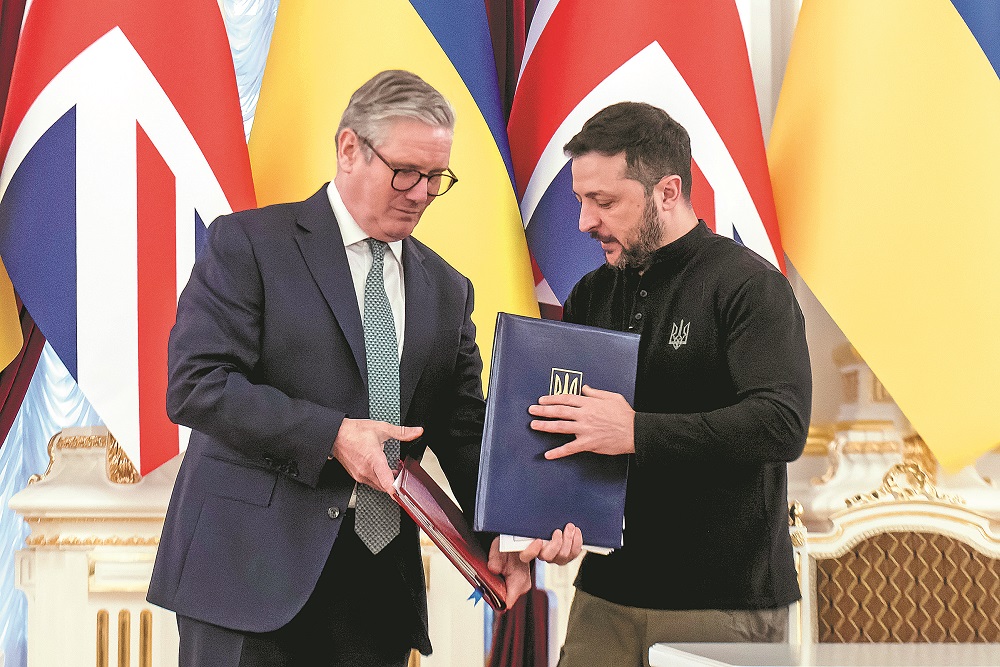
The United Kingdom should spend more on public services instead of arms for Ukraine, which only prolongs the conflict, experts say, criticizing the government's proposals for a "100-year alliance "and putting British troops "on the ground" as dangerous political gimmicks.
Over the past three years, the UK has provided 12.8 billion pounds ($16.2 billion) to Ukraine, with military assistance accounting for 7.8 billion pounds, including tanks, air defense systems, artillery, and long-range precision strike missiles, according to a briefing published by the UK Parliament on Feb 14.
That amount ranked second among European countries, with Germany the most important donor, providing 17 billion euros ($17.8 billion) in total, according to the Ukraine Support Tracker by the Kiel Institute for the World Economy.
During UK Prime Minister Keir Starmer's visit to Kyiv last month, the two countries signed a 100-year partnership agreement, with the UK government committing $3.8 billion in military aid per year for Ukraine. More recently, Starmer, for the first time, explicitly said he was considering deploying British peacekeepers to Ukraine.
"The UK is ready to play a leading role in accelerating work on security guarantees for Ukraine.… It also means being ready and willing to contribute to security guarantees to Ukraine by putting our own troops on the ground if necessary," he wrote in an opinion piece published by The Daily Telegraph on Feb 16.
Keith Bennett, a senior analyst of international relations in London, criticized those stances of the UK government as attacking British people's living standards — such as limiting child care support and the winter fuel allowance — while pledging an annual minimum of $3.8 billion in aid for Ukraine.
"The government is constantly claiming to have discovered a 'black hole' in the nation's finances… Yet, on the other hand, it declares that it will continue to give the notoriously corrupt Ukrainian government 'whatever it takes for as long as it takes'," Bennett told China Daily, adding that the supposed "100-year partnership" is just a gimmick.
"How can such an agreement be reached without serious preparations? Britain has no such 100-year agreement with any other country," he said. The most Starmer might be able to guarantee "is 5 years, not 100", he added.
Bennett also said Starmer's statement on deploying British troops in Ukraine is another "dangerous" and "bellicose gimmick" because Britain is a member of NATO and will be seen by Russia not as a neutral observer but an actual, hostile participant in the conflict.
"In a word, if there are to be British troops in Ukraine, there isn't going to be a cease-fire. So, it is simply an attempt to prevent a ceasefire — to continue fighting Russia to the last Ukrainian."
Lindsey German, convener of Stop the War Coalition, expressed a similar view in her opinion piece on Feb 17, saying Starmer's "vainglorious behavior over Ukraine — promising a 100-year alliance with the country and repeatedly claiming that Britain will support fighting to the end and total victory — has been little short of delusional".
'At our expense'
"Big increases in arms spending will come from our pockets and our public services. Preparing for real security in Britain and elsewhere means providing security of work, health, housing, not more weaponry and militarism at our expense which will only create greater insecurity and feed far-right forces," she wrote.
Writing for the Morning Star newspaper on Feb 13, Andrew Murray, a former political adviser to the Labour Party from 2018 to 2020, said the current government's stance on the Russia-Ukraine conflict is "reckless" and "doomed to fail" as the United States has pivoted its stance for a potential peace deal.
"Raising entirely unrealistic slogans is no help to Ukraine and damaging to the interests of British workers," he said. "Rather, the labor movement should unite in demanding that the government assist in getting negotiations going or at least get out of the way."

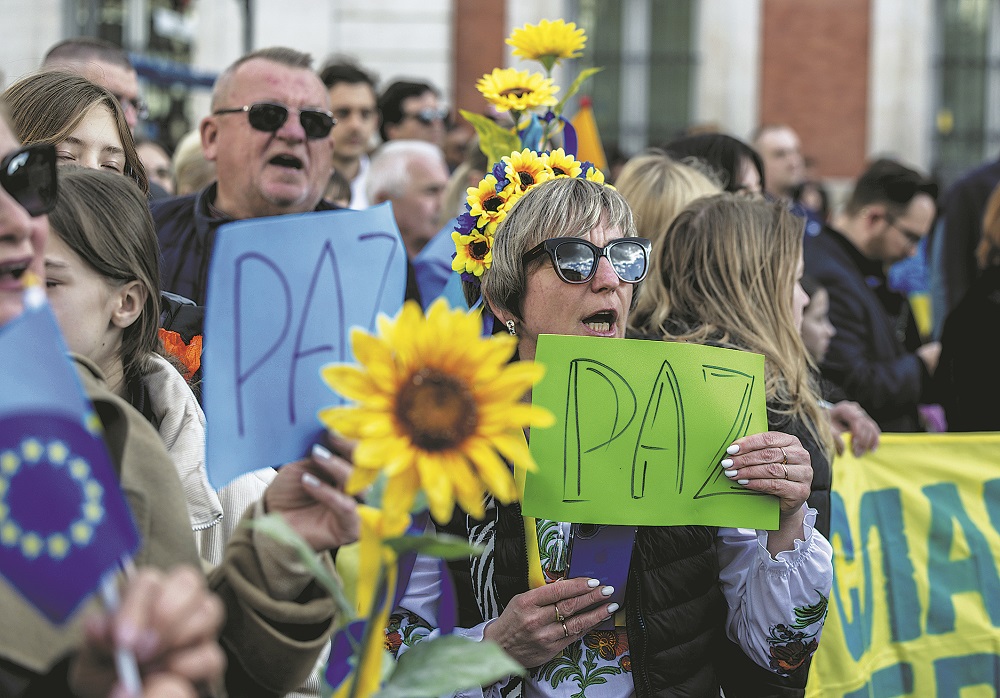
European leaders vowed continued support for Ukraine despite their outrage against the administration of US President Donald Trump for discarding its allies in the ongoing peace talks on the Russia-Ukraine conflict.
European Council President Antonio Costa announced on Thursday that he will go to Kyiv on Monday with European Commission President Ursula von der Leyen to reaffirm the EU's support. Monday marks the third anniversary of the Russia-Ukraine conflict.
European leaders were shocked after US Secretary of Defense Pete Hegseth told the Ukraine Defense Contact Group in Brussels on Feb 12 that US troops won't be deployed in Ukraine for peacekeeping while soldiers from NATO's European member states there won't be covered by Article 5, which stipulates that an attack on any member is an attack on the whole alliance.
US envoy to Ukraine Keith Kellogg told the Munich Security Conference on Feb 15 that Europeans won't have a seat at the negotiation table. On Feb 14, in Munich, US Vice-President JD Vance delivered a blistering attack on Europe — from democracy and freedom of speech to migration.
French President Emmanuel Macron hastily assembled a meeting in Paris on Feb 17 with several European leaders to discuss the crisis. He held another larger meeting of 19 nations on Feb 19, with many attending via video link, to discuss how to respond to Trump.
Macron said it was unacceptable for the US and Russia to negotiate over European leaders' heads. "The security concerns of the Europeans will have to be taken into account," he said.
Macron and British Prime Minister Keir Starmer will travel separately to Washington this week. They are expected to try to convince Trump not to rush to a cease-fire deal with Russia at any cost, keep Europe involved and discuss military guarantees to Ukraine, Reuters reported.
EU ambassadors met twice last week to talk about sending arms to Ukraine and bolstering defense. But Costa has not yet called for a summit of all member states' leaders to address the crisis.
EU leaders have fought back against Trump who called Ukraine President Volodymyr Zelensky a "dictator" last week. German Chancellor Olaf Scholz, who is likely to step down after the Sunday election in his country, said that "it's simply wrong and dangerous to deny President Zelensky democratic legitimacy".
Von der Leyen also rebuffed US criticism. She said in Munich that Europe's financial and military support to Ukraine has amounted to 134 billion euros ($141 billion), more than anyone else.
The 27 EU member states currently spend around 2 percent of their GDP on defense. Their total defense spending has jumped from 200 billion euros before the conflict to over 320 billion euros in 2024.
"But we will need to increase that number considerably once again. Because from just below 2 percent to above 3 percent will mean hundreds of billions of more investment every year," she said, clearly in a response to Trump's call for NATO members to spend 5 percent of GDP on defense, which no NATO member has reached so far.
The European Commission estimated that the EU may need to spend an extra 500 billion euros over the next decade to fill the critical gaps in European defense.
While most European leaders agreed to boost defense spending, there is no consensus on where the money will come from. For instance, issuing joint debt is a controversial issue among the member states.
Von der Leyen and Costa both expressed that the EU has several potential financing options, including national spending, an expanded role for the EU's European Investment Bank and private capital.
The current European Commission, which took office on Dec 1, has promised to present its White Paper on the Future of European Defense in its first 100 days in office.
"Europe's disunity and dependence on the US means that European countries will broadly accept whatever emerges from talks between the US and Russia," Jeremy Shapiro, director of research at the European Council on Foreign Relations, said after senior US and Russian officials met in Riyadh.
Shapiro believes that Europeans need to form their own peace plan, deploy carrots and sticks, and above all, show that they have sufficient unity to implement these.
He sighed that instead, Europeans emerged from the Feb 17 summit in Paris publicly fighting over deploying a peacekeeping force to Ukraine.
"The message to the US(and Russia) was clear: we do not need to invite Europeans to the table. Until they can put their own house in order, Europeans will have no choice but to watch from the sidelines," he wrote on the council's website.
He Zhigao, a researcher at the Institute of European Studies at the Chinese Academy of Social Sciences, said the EU is both disappointed and outraged by the Trump-led peace talks with Russia. "There is no doubt that the EU's role in the conflict will be heavily influenced by the US-Russia peace talks," he said, citing the fractures among EU member states and between the EU and the US.
"EU is incapable of handling the Russian threat by itself and incapable of supplanting the US military aid to Ukraine. But it can play a role in helping Ukraine join the EU and providing financial assistance," He said.
Nigel Gould-Davies, a senior fellow at the London-based International Institute for Strategic Studies, described the current situation as an "unprecedented trans-Atlantic crisis".
"By negotiating with Russia over European heads and intervening in European politics, the United States is not only decoupling from but deciding for and disrupting Europe," he said.
In a post on Thursday right after Polish Prime Minister Donald Tusk's call for financing Ukraine with frozen Russian assets, Gould-Davies said that "with the US signaling abandonment of Ukraine and scaling back of commitment to Europe, the case for seizing $300 billion of frozen Russian assets and transferring them to Ukraine is now unassailable".

In the wake of a challenging week for Europe amid the US diplomatic blitz on Ukraine, longstanding allies feel sidelined.
As the Ukraine conflict nears its fourth year, Europe seeks a role in negotiations, yet the US appears indifferent. Tensions peaked at the Munich Security Conference, with US officials even casting doubt on Europe's security commitments.
A pivotal moment arose as top US and Russian diplomats met in Saudi Arabia, excluding Kyiv and European allies.
Despite White House assurances, EU leaders emphasize unity. Europe faces a crucial juncture, potentially steering toward greater autonomy and complicating US-Europe ties.
As a peace promoter, China supports all efforts for peace, urging inclusive dialogue that involves all parties and stakeholders.

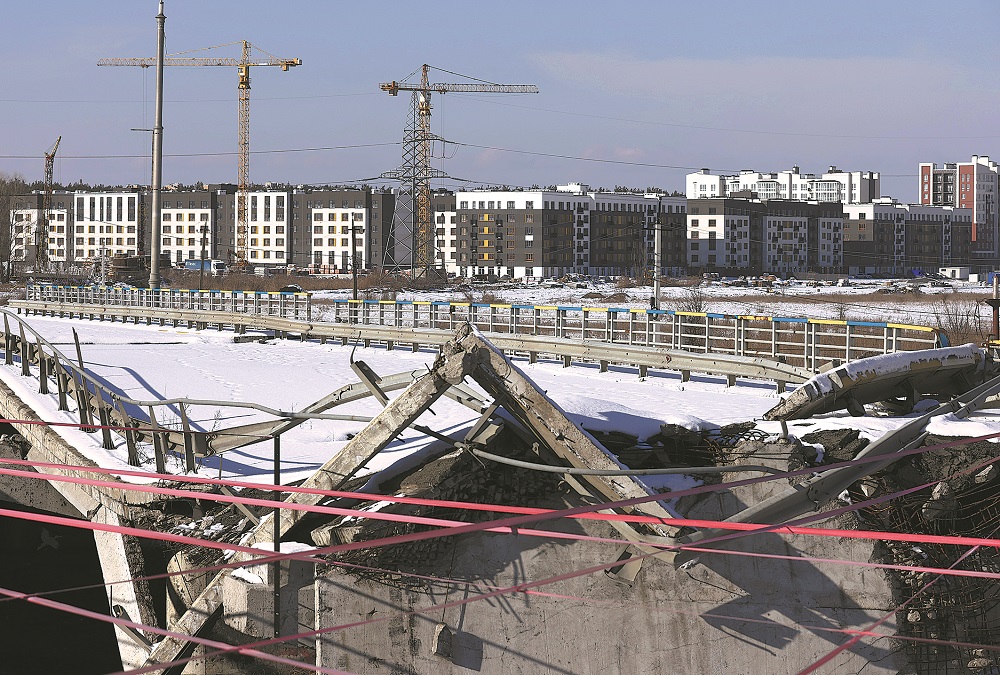
KYIV — Relations between Ukrainian President Volodymyr Zelensky and US President Donald Trump deteriorated rapidly on Wednesday as Zelensky said Trump was living in a "disinformation space", and Trump called Zelensky "a dictator without elections" in comments that were sure to complicate efforts to end the conflict.
Zelensky also said he would like Trump's team "to be more truthful "as he offered his first response to a series of striking claims that Trump made a day earlier, including suggesting that Kyiv was to blame for the Russia-Ukraine conflict, which enters its fourth year next week.
The comments were a staggering back-and-forth between leaders of two countries that have been staunch allies in recent years under Trump's predecessor, Joe Biden.
The Trump administration has started charting a new course, reaching out to Russia and pushing for a peace deal. Senior officials from both countries held talks on Tuesday to discuss improving ties, negotiating an end to the conflict and potentially preparing a meeting between Trump and Russian President Vladimir Putin after years of frosty relations.
Trump lashed out at Zelensky in a social media post that apparently referred to the fact that Ukraine has delayed elections because of the conflict and the subsequent imposition of martial law by the Ukrainian Constitution.
Trump also called Zelensky "a modestly successful comedian" who "talked the United States of America into spending $350 Billion Dollars, to go into a War that couldn't be won, that never had to start, but a War that he, without the US and 'TRUMP', will never be able to settle".
The president went on to advise Zelensky to "move fast or he is not going to have a Country left".
The outburst followed Zelensky's comments on Tuesday that Trump "lives in this disinformation space "fostered by Moscow when he asserted that Ukraine "should never have started" the conflict.
Separately, Zelensky has suggested giving US companies the right to extract valuable minerals in Ukraine in return for US security guarantees.
He rejected a US proposal last week that would have seen Washington receiving 50 percent of Ukraine's critical minerals, including lithium, a key component in electric car batteries.
Zelensky told reporters on Wednesday that the deal was too focused on US interests, saying, "I can't sell our country."
Speaking to reporters aboard Air Force One on Wednesday, Trump said Ukraine had "more or less "agreed to the proposal and complained that US Treasury Secretary Scott Bessent was treated "rather rudely" while visiting Kyiv.
The president said he would seek to resurrect the minerals deal.
Possible meeting
Meanwhile, Putin said he would like to meet with Trump.
Russia started its special military operation on Feb 24, 2022, accusing the US and its allies of ignoring Russia's demand to prevent Ukraine from joining NATO and to offer Moscow security guarantees.
"I would like to have a meeting, but it needs to be prepared so that it brings results," Putin said on Wednesday in televised remarks.
He added that he would be "pleased" to meet Trump but noted that Trump has acknowledged that a Ukrainian settlement could take longer than he initially hoped.
The Russian leader hailed Tuesday's talks between senior Russian and US officials in Riyadh, Saudi Arabia, as "very positive".
"The goal and subject" of the talks "was the restoration of Russia-US relations", Putin said.
"Without increasing the level of trust between Russia and the United States, it is impossible to resolve many issues, including the Ukrainian crisis. The goal of this meeting was precisely to increase trust between Russia and the United States."
Agencies - Xinhua

MOSCOW -- Potential plans to deploy North Atlantic Treaty Organization (NATO) forces to Ukraine are concerning, Kremlin spokesman Dmitry Peskov said on Thursday.
The statement comes following reports that British Prime Minister Keir Starmer is set to propose to US President Donald Trump a Ukraine peacekeeping plan, which is expected to send up to 30,000 European troops to Ukrainian cities.
Peskov said Moscow was closely monitoring all the statements made by European officials.
"This is a matter of concern to us ... as we are discussing the potential deployment of military contingents from NATO countries to Ukraine," Peskov said.
He also said that all objectives in Ukraine should preferably be achieved through peaceful means, adding that the Trump administration believes it is necessary to achieve peace as soon as possible through negotiations, and that Moscow strongly agrees with this approach.

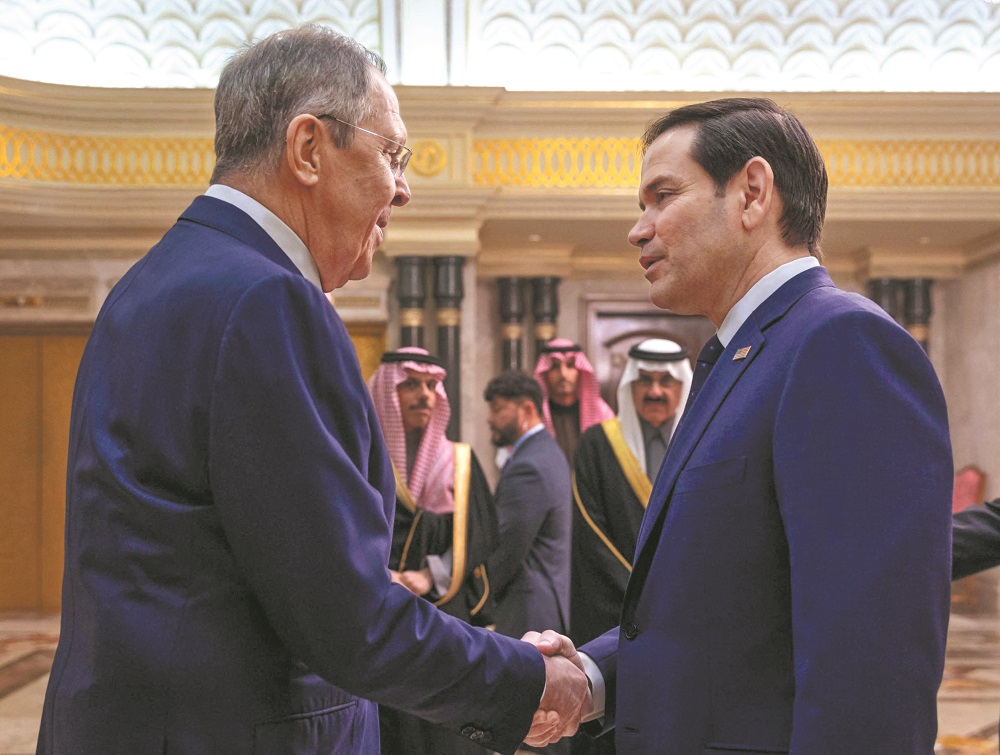
The exclusion of Europe and Ukraine from US-Russia talks on the Ukraine crisis has exposed deepening rifts in trans-Atlantic relations, experts say.
They also suggest that a thaw in relations between Washington and Moscow could reshape the course of the Russia-Ukraine conflict, with Europe and Ukraine fearing their interests might be ignored in peace negotiations.
During high-level talks in Riyadh, Saudi Arabia, on Tuesday, the United States and Russia agreed to work on a path toward ending the conflict and improving bilateral ties.
Although US Secretary of State Marco Rubio later assured there would be engagement and consultation with Ukraine and European nations on the Ukraine issue, European leaders expressed concern over being sidelined from the closed-door talks, fearing their interests might be ignored in US President Donald Trump's pursuit of his Ukraine deal.
European nations have been left at "the kids' table" in discussions over the future of Ukraine, said Armin Papperger, CEO of Rheinmetall, Germany's largest defense contractor, on the sidelines of the Munich Security Conference, as reported by the Financial Times on Tuesday.
Zhang Hong, a researcher at the Institute of Russian, Eastern European and Central Asian Studies of the Chinese Academy of Social Sciences, told China Daily that if the US and Russia have set the direction and framework for resolving the Ukraine crisis, involving Ukraine and the European Union would just be a formality.
"When the US mentions future European participation, it doesn't imply genuine involvement. Once the US and Russia reach a consensus, they can persuade Europe and Ukraine to accept the outcome, addressing some of their security concerns," Zhang said.
"This is why some say Europe has been relegated to the 'kids' table', losing its major say and gaining neither substantive benefits nor its respectability in the peace talks."
Ukrainian President Volodymyr Zelensky criticized his nation's exclusion from the Riyadh talks, saying that Ukraine would not accept any outcome from discussions in which Kyiv was not involved. In response, he postponed his trip to Saudi Arabia.
Trump rebuked Kyiv's complaints, stating: "Today I heard, 'Oh, well, we weren't invited.' Well, you've been there for three years. You should have never started it. You could have made a deal."
Zhao Yongsheng, a professor at the Institute of Regional and International Studies at the University of International Business and Economics in Beijing, highlighted the contrast between the US and Europe in their views on the crisis.
"For Europe, the conflict is an existential matter, while for Trump, it's a matter of cost-benefit," he said.
"The Trump administration, viewing the conflict through an interest-based lens, believes it's not worth the investment and seeks to strategically withdraw from Europe to focus on other strategic priorities, including easing tensions with Russia.
"Conversely, Europe sees the Ukraine issue through a values-based perspective, with deep-seated distrust and hostility toward Russia, leading them to discuss supporting Ukraine independently."
French President Emmanuel Macron was scheduled to host a meeting on Ukraine on Wednesday, aiming to coordinate a European response to what he describes as an "existential threat" from Russia, following the US policy shift.
Zhao said, "These US-Europe differences may reduce the conflict's intensity, but future disagreements still require consultation to resolve."
The Riyadh talks marked the first face-to-face meeting between senior US and Russian officials since the Russia-Ukraine conflict broke out three years ago. The discussions resulted in several agreements aimed at resolving bilateral issues and thawing diplomatic ties.
Yuri Ushakov, the Kremlin's foreign affairs adviser, described the talks as "positive".
According to a US State Department statement, both countries agreed to set up a consultation mechanism to manage bilateral relations and normalize diplomatic missions. They will also appoint high-level teams to work toward a lasting resolution of the conflict while exploring future cooperation on geopolitical and economic interests tied to a resolution of the conflict.
Dmitry Suslov, deputy director of the Center for Comprehensive European and International Studies at the National Research University-Higher School of Economics in Moscow, said the discussions revolved around initiating full-scale negotiations to resolve the Ukraine crisis, with both sides resuming normal diplomatic interactions across a broad agenda.
Agencies contributed to this story.

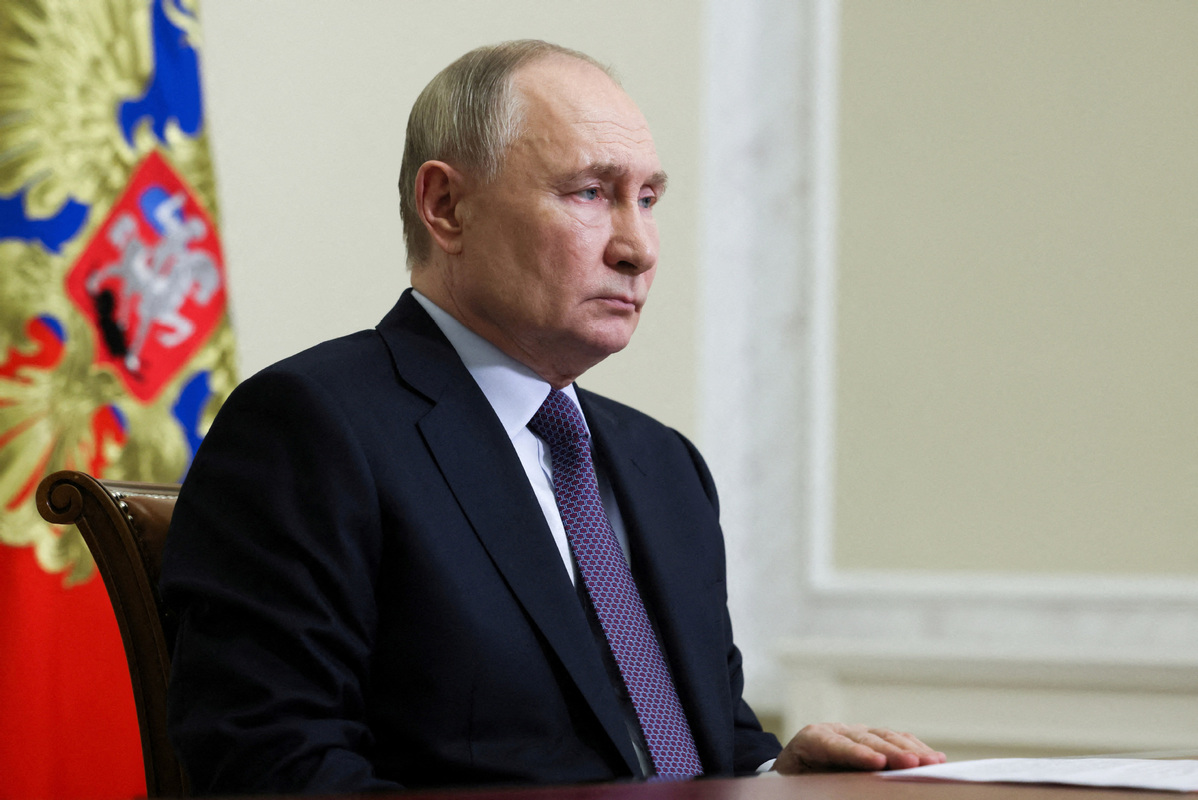
MOSCOW - Russian President Vladimir Putin said he was informed about the recent Russia-US talks in Riyadh, describing the results as positive, local media reported on Wednesday.
"I've been briefed on the talks. I appreciate them. There is a result," Putin said answering media questions during a visit to an UAV production plant in St. Petersburg.
Putin said he highly valued the outcome of the high-level meeting, and said the negotiations paved the way towards resuming cooperation in various areas of mutual interest.
The talks were primarily focused on restoring relations between Moscow and Washington, Putin noted, adding that strengthening trust between both countries was crucial for resolving pressing issues, including the Ukraine conflict.
Russia and the United States are working together on key issues related to economic, space, and energy cooperation, he stated.
Putin also said that he would like to meet with US President Donald Trump, though some preparation was necessary beforehand.
Talking about the possible negotiation on Ukraine, Putin said Trump had told him in their phone conversation that the United States assumed that both Russia and Ukraine would take part in it.
Russian and US delegations held talks on Tuesday in Riyadh, Saudi Arabia, in the first face-to-face interactions between senior US and Russian officials since the outbreak of the Russia-Ukraine conflict in February 2022.

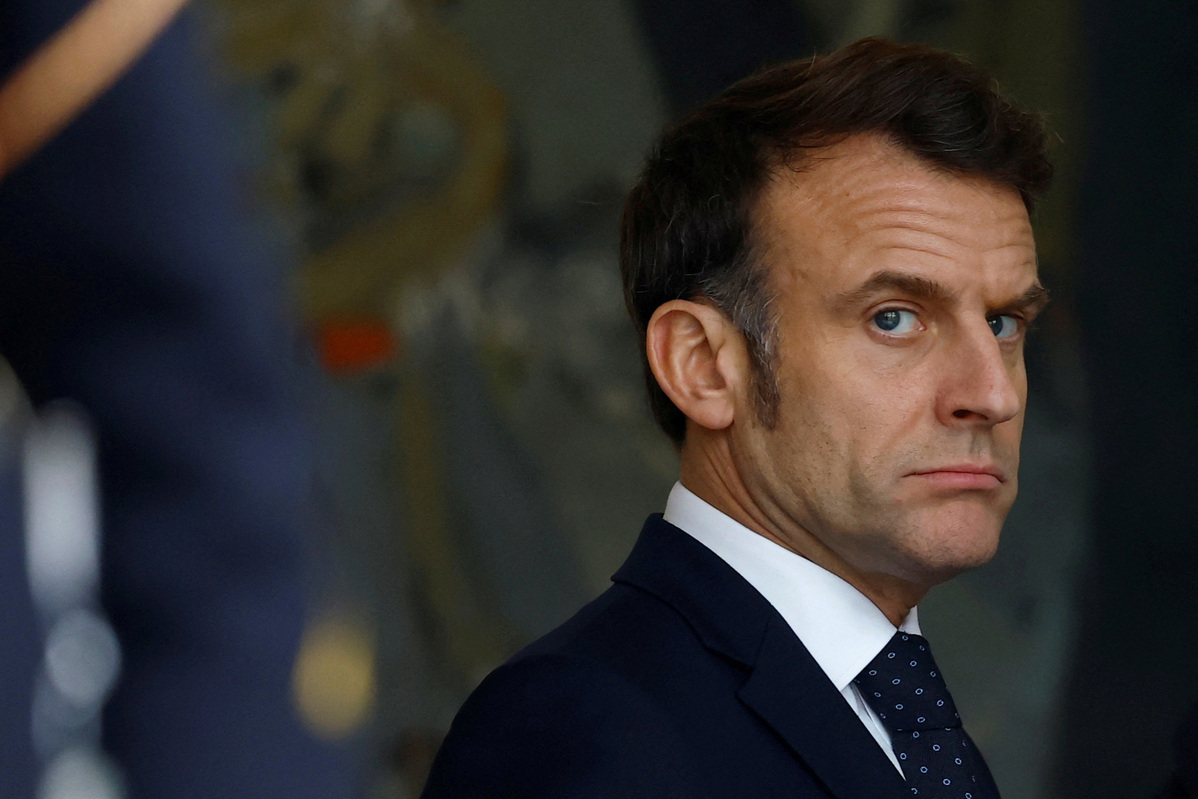
Monday's emergency meeting in Paris exposed underlying divisions among European leaders regarding Ukraine and transatlantic relations, an expert has said.
The small, informal summit was called by France's President Emmanuel Macron, to discuss Ukraine and European security amid a growing rift between Europe and the United States, after the Donald Trump administration arranged bilateral talks with Russia, excluding Europe and Ukraine, aimed at exploring ways to end the Russia-Ukraine conflict.
Key participants at Monday's summit included the leaders of Denmark, France, Germany, Italy, Poland, Spain, the Netherlands and the United Kingdom, as well as NATO Secretary-General Mark Rutte, European Council President Antonio Costa and European Commission President Ursula von der Leyen.
"Even with just a small number of European leaders gathered there, important differences emerged among them," said Radhika Desai, a professor in the department of political studies at the University of Manitoba in Canada and a visiting fellow at the London School of Economics and Political Science. "Clearly, the idea behind keeping the numbers small was to increase the possibility of agreement, but now you have a variety of rather strange positions.
"These horizontal differences among European countries are always there, I would say, but they have now come out in the open."
The European leaders in attendance called for more spending on defense but remained divided on the possible deployment of peacekeeping troops to Ukraine, Reuters reported.
UK Prime Minister Keir Starmer said he was prepared to put British troops into Ukraine to enforce a peace deal, if necessary, but Germany and Poland opposed the idea.
Desai pointed out that there were even nuances in nations' stances on issues on which they agreed, such as on increased defense spending.
"Obviously, some countries, particularly the British, have been more in favor of the US interventions. But I think, while France is generally in favor of increasing military spending, this means that Europeans should start paying more for their security and seek a greater say within NATO. It does not necessarily mean that they are complying with what the US wants," she said.
Starmer said any Ukraine peace deal would require a "US backstop" to deter Russia.
And EU member states that were not invited to Monday's gathering, including Hungary, have shown "reluctance" about the approaches taken by major European powers, Desai said.
Hungary's Foreign Minister Peter Szijjarto slammed the Paris summit as a gathering of "frustrated European politicians" looking to "pour oil on the fire" and "prevent a peace agreement with Ukraine", according to the Hungarian state news agency MTI.
The Politico news website described the meeting as a "radical step", because the small group of the continent's leading powers "dumped the traditional craving for 27-nation consensus at Brussels summits and tried to sort out the mess themselves".
"Besides the horizontal differences, there are also vertical differences (within nations), between the rulers and the ruled that will erupt out into the open," said Desai. "People said the Joe Biden administration has united Europe and NATO, and now Trump is disuniting them. No, Biden seemed to unite them, but only at the cost of imposing such pressures as to divide European societies amongst one another and divide them internally."
Wake-up call
Trump's shift in stance on Ukraine was seen by Europe as a wake-up call to take responsibility for its own defense, as the US president seeks to shift the burden onto his European allies.
In fact, there has long been an attempt to establish a common European security policy, Desai noted. However, she said the key realization for the bloc is that Europeans do not need to adopt a "belligerent foreign policy" to protect the continent.
"Shouldering its own security does not mean that all must arm themselves to the teeth," she said. "That's getting security completely wrong. Security does not consist of making enemies of all your neighbors. On the contrary, it consists of making friends with all your neighbors.
"You may not love all your neighbors, you may have your differences with them, but you essentially ensure that you can live side-by-side, if possible to mutual benefit.
"A good, neighborly relationship, both with the Atlantic powers on the one hand but also with Russia, Africa, China, and all its neighbors, can allow it to prosper. There is absolutely no reason why it should not."
zhengwanyin@mail.chinadailyuk.com

MOSCOW - Russian President Vladimir Putin remains ready to hold negotiations with Ukrainian President Volodymyr Zelensky if necessary, Kremlin Spokesman Dmitry Peskov said Tuesday.
Russia has been committed to finding a peaceful resolution to the Ukrainian conflict from the very beginning, Peskov was quoted by TASS news agency as saying.
He stressed that a long-term settlement of the Ukrainian conflict cannot be achieved without addressing security concerns.
"As for the security architecture in Europe, of course, a comprehensive settlement, a long-term and viable settlement is impossible without a comprehensive consideration of security issues on the continent," Peskov said.

UNITED NATIONS - The United Nations welcomes all efforts to resolve the Ukraine-Russia conflict and sees the phone call between the US and Russian leaders as a "positive thing", a UN spokesman said Wednesday.
"What we would appreciate is any efforts to resolve the war in Ukraine that would involve the Russian and Ukrainian sides. And so obviously, if both of them are willing to be involved in a process, that would be a welcome development," said Farhan Haq, deputy spokesman for UN Secretary-General Antonio Guterres, speaking of the phone conversation.
"Given the importance of the United States and the Russian Federation, the UN welcomes any efforts to resolve issues through regular contact," the spokesman said at a daily press briefing, calling the conversation between the two leaders "a positive thing".
The White House and the Kremlin announced separately on Wednesday that US President Donald Trump and Russian President Vladimir Putin held a phone conversation.
Trump said on social media he and Putin agreed that Washington and Moscow will immediately engage in direct negotiations aimed at ending the Ukraine-Russia conflict.
When asked whether the UN will be part of the negotiations, Haq said, "We would have to see what role we would have to play. Obviously, as we've said many times over the last three years, the United Nations is willing to play a good offices role if asked to by the parties."




