Moderate Prosperity in All Respects: Another Milestone Achieved in China's Human Rights









III. Boosting Human Rights with Development and Securing Economic, Social and Cultural Rights
In building a moderately prosperous society in all respects, China is committed to boosting human rights with development and securing economic, social, cultural, educational and environmental rights. As a result, its people now lead more prosperous, secure, harmonious and happier lives.
1. Putting Life First in Fighting Covid-19
The Covid-19 pandemic is the most serious global health emergency in a century. Facing this crisis, China has put the people's interests first-nothing is more precious than people's lives. It has adopted thorough, rigorous and effective prevention and control measures, regardless of huge economic and social costs. It has turned the tide in the battle against the virus and safeguarded people's lives and health.
In the early days of the epidemic, China mobilized the whole nation and carried out a campaign to save lives on an unprecedented scale. It pooled the best doctors, the most advanced equipment, and critical supplies from across the country to aid Hubei Province, especially its capital city of Wuhan.
From January 24 to March 8, 2020, it rallied 346 national medical teams, consisting of 42,600 medical workers and more than 900 public health professionals to the immediate aid of Hubei; it mobilized 40,000 construction workers and a huge array of machinery and equipment to build the 1,000-bed Huoshenshan Hospital in 10 days, the 1,600-bed Leishenshan Hospital in 12 days, and 16 temporary treatment centers providing more than 14,000 beds in just over 10 days. Across Hubei, more than 3,000 patients over the age of 80, including seven centenarians, were cured, with many of them brought back to life from the verge of death. This fully demonstrated that the state respects and protects each and every life.
China did everything possible to treat all patients. The government promptly adopted policies to subsidize medical expenses for Covid-19 to ensure that patients could receive timely treatment and that medical institutions could proceed smoothly with admission and treatment. They proved to be very effective in raising the cure rate and lowering the fatality rate.
China has combined ongoing targeted control and local emergency response, and consolidated the gains in its fight against Covid-19. It is making every effort to vaccinate its people and moving faster to form nationwide immunity.
2. Ensuring Equitable and Accessible Health Services
Prosperity for all is impossible without health for all. China gives top priority to improving its people's health. It is carrying out the Healthy China initiative and has worked out action plans to ensure that basic public health services are inclusive and efficient, and to make health and medical services more equitable, accessible, convenient and affordable.
A basic public health services system is in place. The number of medical and health institutions in China, including hospitals, grassroots medical institutions and specialized public health institutions, increased from 170,000 in 1978 to over 1 million in 2020. A public health services system consisting of various specialized institutions has taken shape, providing disease prevention and control, health education, maternal and child health care, mental health care, emergency response, blood collection and supply, health inspection, and other services.
The range of public health services is expanding. Free basic public health services increased from nine categories in 2010 to 12 categories in 2020, spanning the entire life cycle. The state promotes many preventive services, such as screening for stroke and cardiovascular disease risk, comprehensive oral disease prevention and intervention, and early screening and treatment of cancer. China's capacity to prevent and control chronic illnesses has improved remarkably. Major infectious diseases have been effectively contained. By raising the vaccination rates under the national immunization program, China eradicated polio in 2000 and neonatal tetanus in 2012. It eliminated malaria in 2020 and was awarded a malaria-free certification from the World Health Organization (WHO) in 2021. The spread of HIV remains at a low level, and the cure rate of tuberculosis is maintained at over 90 percent.
China's medical services system has been improving. The country is committed to building an integrated medical services system of high quality and efficiency and improving the availability and accessibility of medical resources. As a result, public satisfaction with medical services is rising notably.
In 2020, the number of beds in medical institutions across the country reached 9.1 million, including 7.1 million beds in hospitals and 1.4 million in township-level health centers. There were 10.7 million health professionals, including 4.1 million licensed doctors and assistant doctors and 4.7 million registered nurses. That year recorded 7.8 billion medical visits. The rate of prenatal care was 96.8 percent, and the rate of hospital deliveries reached 99.9 percent.
China provides a reasonable distribution of medical resources. It is building a tiered treatment system featuring primary treatment at the community level, flexible interhospital patient transfer, differentiated treatment for acute and chronic illnesses, and coordination across different levels. It has put an end to the practice of hospitals subsidizing their medical services with drug sales and established a system of essential medicines. All government-funded medical institutions across the country are supplied with essential medicines, which are guaranteed to meet priority health care needs and sold with zero markup.
Public health indicators are steadily improving. The core health indicators of the Chinese have generally surpassed the average level of middle- and high-income countries. The average life expectancy in China rose from 67.8 years in 1981 to 77.3 years in 2019. Infant mortality declined from 37.6 per 1,000 in the early days of reform and opening up to 5.4 per 1,000 in 2020; and maternal mortality dropped from 43.2 per 100,000 in 2002 to 16.9 per 100,000 in 2020. In recognition of its achievements, China has been hailed by the WHO as a role model for developing countries and a fast-track country in improving maternal and child health.
The Law on the Promotion of Basic Medical and Health Care has been adopted and implemented, providing a legal guarantee for comprehensive health care for the full life cycle and for the Healthy China initiative. With steady social and economic improvement, the state devotes itself to helping citizens develop healthy lifestyles. A social atmosphere has taken shape where both urban and rural residents do regular exercise in their spare time and pay attention to a healthy diet.
3. Upgrading the Quality of Life
Incomes continue to rise. For four decades, China's economy has been growing steadily. From 1978 to 2020, the country's per capita GDP increased from RMB 385 to RMB 72,000. In 2020, the average per capita disposable income was RMB 32,189. Consumption patterns are improving. In 2020, the Engel coefficient was 30.2 percent, down 33.7 percentage points from 1978. Housing conditions have improved markedly. In 2019, the per capita floor space of urban residents was 39.8 sq m, up from 4.2 sq m in 1978, and that of rural residents was 48.9 sq m, up from 8.1 sq m in 1978. Urban park green space per capita increased from 1.5 sq m in 1981 to 14.36 sq m in 2019. Construction projects have been launched to provide affordable housing to urban residents, helping nearly 200 million poor people improve their housing conditions.
China's transport infrastructure network has been improving steadily, resulting in more convenient and safer public transport. By the end of 2020, the country's rail length had grown to 146,000 km, and high-speed rail had reached 38,000 km; road length had increased to 5.2 million km, including 161,000 km of expressways; urban rail transit had reached 7,355 km.
The availability of IT applications has improved greatly. The Chinese government makes great efforts to develop new types of infrastructure to ensure that the people benefit more from the use of information technology. In 2020, every 100 people had 113.9 mobile phones; internet usage was 70.4 percent nationwide and 55.9 percent in rural areas. By June 2021, 847,000 5G base stations had been built and put into operation across the country. New business forms represented by online shopping are thriving. In 2020, there were 782 million online shoppers, accounting for 79.1 percent of all internet users, and nationwide online retail sales reached RMB 11.8 trillion, up 10.9 percent from 2019.
4. Maximizing Employment
China advocates an employment-first strategy and a proactive employment policy. It encourages widespread entrepreneurship and innovation, and gives top priority to ensuring stability in employment and people's wellbeing. It is committed to realizing fuller employment, with decent jobs for all and harmonious labor relations. It has established a five-tiered employment services network covering the province, city, county, sub-district/township, and community/village levels.
As of 2020, there were 45,800 employment services agencies in China, helping 290 million people find temporary or long-term work; China's employed population reached 750 million, of whom 463 million were in urban areas. In 2019, the growth in new jobs in urban areas was 13.5 million, and the figure had remained above 13 million for seven consecutive years. In 2020, despite the impact of the Covid-19 pandemic, there were 11.9 million new jobs in urban areas.
Private enterprises provide more than 80 percent of urban jobs. New industries and new business forms and models continue to emerge, creating a large number of part-time or flexible jobs. Workers' incomes are increasing rapidly. The average annual salary of employees in urban non-private units rose from RMB 615 in 1978 to RMB 90,501 in 2019.
5. Enhancing Public Cultural Services
Over the past four decades, China's public cultural services have continued to improve. Art, literature, culture and sports are thriving.
In 2020, China had 3,212 public libraries, 5,788 museums, 3,321 cultural centers, 32,825 township-level cultural stations, and 575,384 village-level cultural service centers. In publishing, 27.7 billion copies of newspapers, 2 billion copies of magazines, and 10.1 billion copies of books were issued, a per capita average of 7.2 books.
In 2020, the coverage of radio programs was 99.4 percent, and the coverage of TV programs 99.6 percent. The country produced 202 TV series, TV animations with a total length of 116,688 minutes, 531 feature films, and 119 popular science films, documentaries, animated cartoons and special films. Public-interest cultural initiatives to ensure radio and television coverage for all households, bring cinema to rural communities, and set up rural libraries were implemented to provide consistent and equal access to basic public cultural services and to protect the people's basic cultural rights and interests.
In 2020, a total of 1,274 terabytes of public cultural resources were created through projects under the public digital cultural services program. Among them, the digital library project covered 39 provincial-level and 376 city-level libraries, with services radiating into 2,760 county-level libraries.
The state is promoting a national fitness program. Sports venues of various types have been built or renovated, including public stadiums, fitness centers, sports parks, running trails, soccer fields, and multifunctional fitness facilities. In 2020, there were 3.7 million sports venues in China, with a total floor area of 3.1 billion sq m (2.2 sq m per capita); 37.2 percent of the population took part in regular exercise; the rural fitness program covered almost all villages.
6. Guaranteeing the Right to Education
China runs education for the public good and regards equal access to education as a basic national education policy. It has made significant progress in protecting the right to education. The gross enrollment rate in three-year preschool education rose to 85.2 percent in 2020 from 56.6 percent in 2010. In 2020, the completion rate of compulsory education was 95.2 percent, and the availability of compulsory education reached the average level of high-income countries. More than 95 percent of children with disabilities received compulsory education.
The state has established a policy system for subsidizing students with financial difficulties, which offers full coverage from preschool to postgraduate education. As a result, the goal of ensuring that no student drops out of school due to financial difficulties has now been largely achieved. The state gives more support to education in rural areas and central and western regions. Thanks to this, 96.8 percent of the counties nationwide have realized balanced compulsory education, and more children in rural areas and central and western regions enjoy better access to quality education.
The gross enrollment rate in senior secondary education increased from 42.8 percent in 2000 to 91.2 percent in 2020, higher than the average of upper-middle-income countries. The gross enrollment rate in higher education rose from 12.5 percent in 2000 to 54.4 percent in 2020. China has built the world's largest higher education system, with over 40 million students on campus.
7. Expanding Social Security to Cover All Citizens
Social security is a basic institutional guarantee for safeguarding and improving people's lives, ensuring social equity and enhancing their sense of wellbeing.
In 2020, 340 million people were covered by basic medical insurance for urban workers, and 1.02 billion by basic medical insurance for rural and non-working urban residents-a total of 1.36 billion. As of June 2021, basic old-age insurance for urban workers covered 467 million people, basic old-age insurance for rural and non-working urban residents covered 547 million, and unemployment insurance covered 222 million. Work-related injury insurance covered 274 million, 90.8 million of whom were migrant workers. Childbirth insurance covered more than 235 million people. In addition, the state has established a serious illness insurance covering both urban and rural residents, which is a supplement to the basic medical insurance systems, reimbursing the victims of serious illnesses for their high medical expenses.
China has established a comprehensive and inclusive social assistance system whose main provisions are subsistence allowances, assistance and support for severely impoverished people, disaster relief, medical assistance, education assistance, housing assistance, employment assistance, and temporary assistance, supplemented by public participation. At the end of 2020, 8 million people lived on urban subsistence allowances, 36.2 million on rural subsistence allowances, 310,000 on assistance and support for urban residents in extreme difficulty, and 4.5 million on assistance and support for rural residents in extreme difficulty. In 2020, 13.4 million received temporary assistance; 186 million received medical assistance worth of RMB 54.7 billion.
To guarantee a basic living to people in difficulties caused by Covid-19, the government provided temporary subsidies totaling RMB 21.8 billion to residents in need when the Consumer Price Index fluctuates beyond a certain range, benefitting 400 million people. Due to impact from Covid-19, subsistence allowances were extended to an additional 2.4 million people facing difficulties, and 2.5 million received temporary assistance.
8. Improving the Eco-environment
A sound eco-environment is the most inclusive benefit to people's wellbeing. Since the 18th CPC National Congress, the central leadership has incorporated eco-environmental progress as part of the Five-sphere Integrated Plan for national development and has promoted an environment-friendly development model, advocating that lucid waters and lush mountains are invaluable assets. It has enforced strict eco-environmental red lines and made solid efforts to prevent and control pollution, working to build a beautiful China and protect environmental rights.
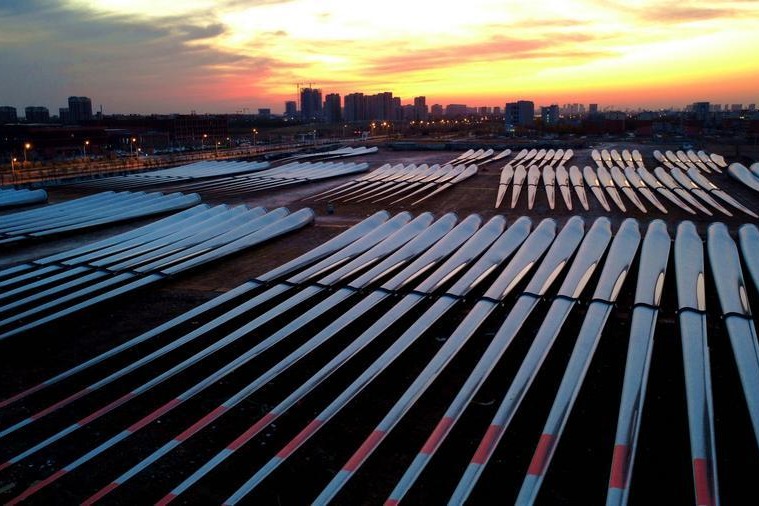
The air has become cleaner through efforts to keep the sky blue. In 2020, China's CO2 emissions per RMB 10,000 of GDP fell by 48.4 percent from 2005, achieving the goal of a 40-to-45-percent fall during this period ahead of schedule. The proportion of natural gas, hydropower, nuclear power, wind power and other types of clean energy in total energy consumption rose from 19.1 percent in 2016 to 24.3 percent in 2020. Among the 337 cities at and above prefecture level nationwide, 202 met the air quality standards in 2020.
Water quality is improving through efforts to keep waters clear. In 2020, 83.4 percent of the 1,940 surface water sections monitored by the state showed excellent and good quality (meeting Class I to Class III surface water quality standards), up 8.5 percentage points from 2019; 0.6 percent of sections suffered from poor water quality below Class V, down 2.8 percentage points from 2019. In 2020, 77.4 percent of offshore waters reached Class I and Class II sea water quality standards, up 0.8 percentage point from 2019; 9.4 percent of offshore waters were worse than Class IV, down 2.3 percentage points from 2019.
Effective measures have been taken to bring under control the risks associated with worsening soil qualities. The state has formulated the Law on Prevention and Control of Soil Pollution, and implemented its action plan for addressing soil pollution. National soil pollution surveys have been carried out, with the focus on land for agriculture and key industries and enterprises. From 2014 to 2019, more than 3,500 heavy-metal enterprises were shut down in accordance with laws and regulations, and more than 850 heavy-metal discharge reduction projects were carried out. The soil quality of agricultural land is subject to classification and restoration, and the soil environment of agricultural land remains stable. China has banned the import of foreign waste, and imports have largely fallen to zero.
The living environment is improving. In 2020, sanitary toilets were used by more than 68 percent of rural households. The system for the collection, transport, treatment and disposal of domestic waste covered more than 90 percent of villages. Domestic sewage treatment covered 25.5 percent of rural areas. In 46 major cities, 83 million households in 94.6 percent of communities were involved in domestic waste sorting programs. More than 90 percent of black and fetid water bodies in built-up areas of cities at and above prefecture level had been eliminated.
China enforces stringent eco-environmental conservation. As of 2020, nearly 10,000 nature reserves had been established across the country, covering 18 percent of China's land mass, and bringing some 90 percent of land ecosystems and 85 percent of key wild animal populations under effective protection. China's forest coverage rose from 12.7 percent in the early 1970s to 23 percent in 2020. While the global forest stock decreased by 178 million ha between 1990 and 2020, China's forest area has seen an average annual increase of 2.5 million ha in the past decade, ranking top in the world. Between 2012 and June 2021, China completed desertification control work involving over 19 million ha of land, and 1.8 million ha have been closed off to prevent deterioration. China has become the first country to achieve a zero increase in desertification, making a great contribution to the UN 2030 Sustainable Development goal of zero increase in land degradation across the globe.
9. Achieving a Higher HDI Score
According to the Human Development Report released by the United Nations Development Programme (UNDP), China was among the low-ranked countries in terms of the human development index (HDI) score in 1990; it moved into the ranks of countries with medium HDI scores in 1996; it ascended into the ranks of countries with high HDI scores in 2011. From 1990 to 2019, China's HDI score increased from 0.499 to 0.761. China is the only country to have risen from a low-ranked country to a high-ranked country since 1990, when the UNDP first started to calculate countries 'HDI ratings.